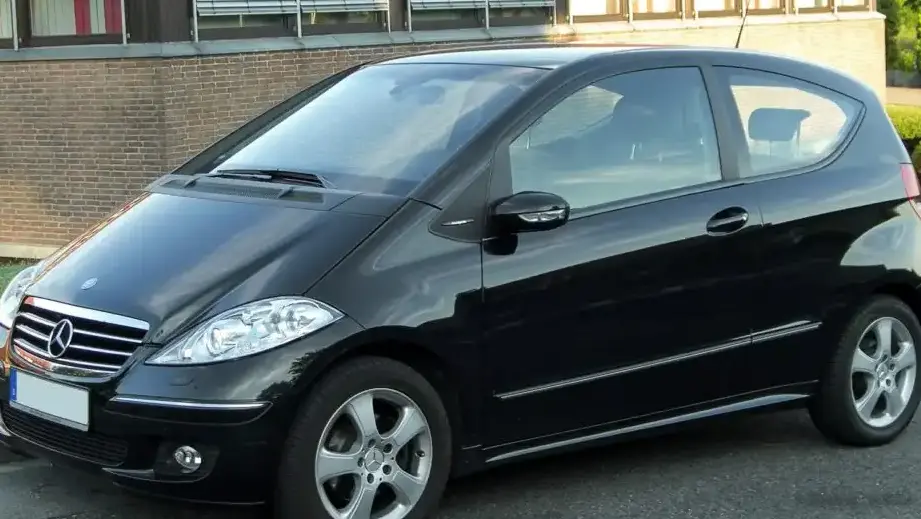
The Mercedes-Benz A-Class (W176) A 250 4MATIC DCT, produced from 2015 to 2018, represents a significant iteration of Mercedes-Benz’s entry-level hatchback. This facelifted version of the W176 generation, introduced in 2015, brought styling updates and refined technology to the A-Class range. The A 250 4MATIC DCT occupied a premium position within the lineup, offering a blend of performance, luxury, and all-weather capability. It was designed to appeal to buyers seeking a compact, yet sophisticated vehicle with a sporty driving experience. This variant was primarily marketed in Europe and other global markets where compact premium hatchbacks are highly sought after, offering a compelling alternative to rivals like the Audi A3 and BMW 1 Series.
Technical Specifications
| Brand | Mercedes-Benz |
| Model | A-Class |
| Generation | A-Class (W176, facelift 2015) |
| Type (Engine) | A 250 (211 Hp) 4MATIC DCT |
| Start of production | 2015 |
| End of production | 2018 |
| Powertrain Architecture | Internal Combustion engine |
| Body type | Hatchback |
| Seats | 5 |
| Doors | 5 |
| Fuel consumption (urban) | 8.4 l/100 km (28 US mpg, 33.6 UK mpg, 11.9 km/l) |
| Fuel consumption (extra urban) | 5.5-5.4 l/100 km (42.8 – 43.6 US mpg, 51.4 – 52.3 UK mpg, 18.2 – 18.5 km/l) |
| Fuel consumption (combined) | 6.6-6.5 l/100 km (35.6 – 36.2 US mpg, 42.8 – 43.5 UK mpg, 15.2 – 15.4 km/l) |
| CO2 emissions | 154-152 g/km |
| Fuel Type | Petrol (Gasoline) |
| Acceleration 0 – 100 km/h | 6.4 sec |
| Acceleration 0 – 62 mph | 6.4 sec |
| Acceleration 0 – 60 mph | 6.1 sec |
| Maximum speed | 240 km/h (149.13 mph) |
| Emission standard | Euro 6 |
| Weight-to-power ratio | 6.8 kg/Hp, 147.6 Hp/tonne |
| Weight-to-torque ratio | 4.1 kg/Nm, 244.8 Nm/tonne |
| Power | 211 Hp @ 5500 rpm |
| Torque | 350 Nm @ 1200-4000 rpm (258.15 lb.-ft. @ 1200-4000 rpm) |
| Engine layout | Front, Transverse |
| Engine Model/Code | M 270.920 |
| Engine displacement | 1991 cm3 (121.5 cu. in.) |
| Number of cylinders | 4 |
| Engine configuration | Inline |
| Compression ratio | 9.8:1 |
| Number of valves per cylinder | 4 |
| Fuel injection system | Direct injection |
| Engine aspiration | Turbocharger, Intercooler |
| Engine oil capacity | 5.6 l (5.92 US qt | 4.93 UK qt) |
| Coolant capacity | 7.8 l (8.24 US qt | 6.86 UK qt) |
| Kerb Weight | 1430 kg (3152.61 lbs.) |
| Max. weight | 2030 kg (4475.38 lbs.) |
| Max load | 600 kg (1322.77 lbs.) |
| Trunk (boot) space – minimum | 341 l (12.04 cu. ft.) |
| Trunk (boot) space – maximum | 1157 l (40.86 cu. ft.) |
| Fuel tank capacity | 56 l (14.79 US gal | 12.32 UK gal) |
| Max. roof load | 100 kg (220.46 lbs.) |
| Permitted trailer load with brakes (12%) | 1500 kg (3306.93 lbs.) |
| Permitted trailer load without brakes | 750 kg (1653.47 lbs.) |
| Length | 4299 mm (169.25 in.) |
| Width | 1780 mm (70.08 in.) |
| Width including mirrors | 2022 mm (79.61 in.) |
| Height | 1433 mm (56.42 in.) |
| Wheelbase | 2699 mm (106.26 in.) |
| Front track | 1553 mm (61.14 in.) |
| Rear track | 1552 mm (61.1 in.) |
| Front overhang | 913 mm (35.94 in.) |
| Rear overhang | 687 mm (27.05 in.) |
| Ride height (ground clearance) | 93 mm (3.66 in.) |
| Drag coefficient (Cd) | 0.33 |
| Minimum turning circle | 11.00 m (36.09 ft.) |
| Approach angle | 13.7° |
| Departure angle | 17.3° |
| Ramp-over angle | 9.3° |
| Drive wheel | All wheel drive (4×4) |
| Number of gears and type of gearbox | 7 gears, automatic transmission G-DCT |
| Front suspension | Independent type McPherson |
| Rear suspension | Independent multi-link suspension |
| Front brakes | Ventilated discs |
| Rear brakes | Disc |
| Assisting systems | ABS (Anti-lock braking system) |
| Steering type | Steering rack and pinion |
| Power steering | Electric Steering |
| Tires size | 225/45 R17 |
| Wheel rims size | 17 |
INTRODUCTION
The W176 A-Class, launched in 2012, marked a significant departure for Mercedes-Benz, moving away from the sandwich-floor design of its predecessors to a more conventional front-wheel-drive platform (though 4MATIC all-wheel drive was available). The 2015 facelift brought a more refined aesthetic and updated technology. The A 250 4MATIC DCT, positioned as a performance-oriented variant, offered a substantial upgrade over the base A 180 and A 200 models. It catered to drivers who desired a more engaging driving experience without sacrificing the practicality and comfort expected from a Mercedes-Benz. The A 250 4MATIC DCT was a key component in Mercedes-Benz’s strategy to attract a younger demographic to the brand.
Powertrain & Engine Architecture
The heart of the A 250 4MATIC DCT is the M 270.920 2.0-liter inline-four cylinder engine. This engine utilizes direct fuel injection and a single turbocharger with an intercooler to produce 211 horsepower at 5500 rpm and 350 Nm (258 lb-ft) of torque between 1200 and 4000 rpm. The engine’s aluminum block and head contribute to its relatively lightweight construction. The M 270 engine family is known for its efficiency and responsiveness. The A 250 utilizes a 7G-DCT (7-speed dual-clutch transmission) which provides quick and smooth gear changes. This transmission is renowned for its efficiency and contributes to the car’s sporty feel. The 4MATIC all-wheel-drive system is a fully variable system that distributes torque between the front and rear axles as needed, enhancing traction and stability, particularly in adverse weather conditions.
Driving Characteristics
The A 250 4MATIC DCT delivers a noticeably more spirited driving experience compared to lower-powered A-Class variants. The 211 hp engine and the quick-shifting 7G-DCT transmission allow for brisk acceleration, with a 0-60 mph time of around 6.1 seconds. The 4MATIC system provides excellent grip, inspiring confidence in corners and during acceleration. The gear ratios are tuned for a balance of performance and fuel efficiency, with the lower gears providing strong acceleration and the higher gears optimizing fuel economy during cruising. While not a dedicated sports car, the A 250 offers a refined and engaging driving experience that is well-suited for both daily commutes and spirited weekend drives. Compared to a manual transmission equipped A 250, the DCT offers faster and more consistent shifts, but some drivers may prefer the greater control offered by a manual gearbox.
Equipment & Trim Levels
The A 250 4MATIC DCT typically came well-equipped as standard. Features included automatic climate control, a multi-function steering wheel, power windows and locks, and a high-quality audio system. Interior upholstery was typically a combination of fabric and synthetic leather, with optional upgrades to full leather available. The dashboard featured a prominent infotainment screen, controlled via a rotary dial and buttons. Optional extras included a panoramic sunroof, navigation system, upgraded sound system, and various driver assistance features such as lane keeping assist and blind spot monitoring. The A 250 also offered a range of customization options, allowing buyers to personalize their vehicle with different exterior colors, interior trims, and wheel designs.
Chassis & Braking
The W176 A-Class features an independent McPherson strut suspension at the front and a multi-link suspension at the rear. This setup provides a good balance of ride comfort and handling precision. The A 250 4MATIC DCT typically featured slightly stiffer suspension components compared to the base models to enhance handling. The braking system consists of ventilated discs at the front and solid discs at the rear. Anti-lock brakes (ABS) and electronic stability control (ESC) are standard features, providing enhanced safety and control. The 4MATIC system contributes to improved braking performance by distributing braking force optimally between the wheels.
Market Reception & Comparison
The A 250 4MATIC DCT was generally well-received by automotive critics. It was praised for its strong performance, refined handling, and luxurious interior. The 4MATIC all-wheel-drive system was particularly appreciated for its ability to provide confident traction in all weather conditions. Compared to the A 200, the A 250 offered a significant performance upgrade, while maintaining comparable fuel economy. The A 250 also offered a more compelling alternative to rivals like the Audi A3 and BMW 1 Series, offering a similar level of performance and luxury at a competitive price point. Some critics noted that the ride could be slightly firm on rough roads, but this was generally considered a worthwhile trade-off for the improved handling.
Legacy
The M 270 engine family, including the version used in the A 250, has proven to be relatively reliable, although regular maintenance is crucial. Common issues include occasional oil leaks and potential problems with the turbocharger. The 7G-DCT transmission is generally robust, but requires regular fluid changes to ensure smooth operation. On the used car market, the A 250 4MATIC DCT holds its value relatively well, due to its desirable combination of performance, luxury, and all-wheel-drive capability. It remains a popular choice for buyers seeking a compact premium hatchback that offers a refined and engaging driving experience.