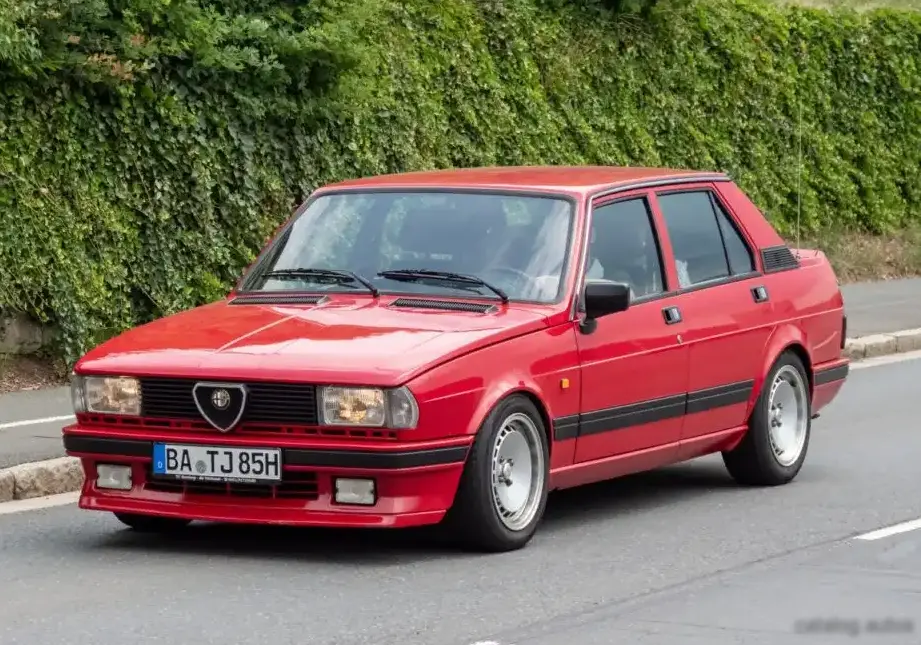
The Alfa Romeo Giulietta (116) 2.0 Turbo, produced from 1983 to 1984, represents a significant, though short-lived, chapter in the Giulietta’s history. Positioned as the performance variant of the second-generation Giulietta (Tipo 116), it aimed to deliver a more engaging driving experience than the standard models. This iteration was a response to market demands for a sportier Alfa Romeo sedan, leveraging turbocharging technology to boost power output. The 2.0 Turbo was a relatively rare offering, intended for enthusiasts seeking a blend of Italian style and respectable performance. It sat at the top of the Giulietta range, offering a substantial power increase over the 1.3 and 1.6 liter naturally aspirated engines.
Technical Specifications
| Brand | Alfa Romeo |
| Model | Giulietta |
| Generation | Giulietta (116) |
| Type (Engine) | 2.0 Turbo (170 Hp) |
| Start of Production | 1983 |
| End of Production | 1984 |
| Powertrain Architecture | Internal Combustion Engine |
| Body Type | Sedan |
| Seats | 5 |
| Doors | 4 |
| Fuel Type | Petrol (Gasoline) |
| Power | 170 Hp |
| Engine Model/Code | 016.55 |
| Engine Aspiration | Turbocharger |
| Engine Oil Capacity | 6.1 l (6.45 US qt | 5.37 UK qt) |
| Coolant Capacity | 8 l (8.45 US qt | 7.04 UK qt) |
Powertrain & Engine Architecture
The heart of the Giulietta 2.0 Turbo is the Alfa Romeo 016.55 engine, a 1995cc inline-four cylinder powerplant. This engine builds upon the existing Alfa Romeo twin-cam, four-valve-per-cylinder design, but crucially adds a turbocharger and intercooler. The turbocharger, a Garrett T25 unit, significantly increases the engine’s output. Fuel delivery is managed by Bosch mechanical fuel injection, a system common for the era, providing a balance between performance and reliability. The engine features a cast iron block and an aluminum cylinder head, a typical Alfa Romeo construction. The valvetrain utilizes double overhead camshafts (DOHC) driven by a timing chain, ensuring precise valve control. While specific transmission options varied by market, the Giulietta 2.0 Turbo was primarily offered with a five-speed manual gearbox. An automatic transmission was available in some markets, but it was less common and generally considered less suited to the engine’s performance characteristics.
Driving Characteristics
The 2.0 Turbo Giulietta offered a noticeable performance upgrade over its naturally aspirated siblings. With 170 horsepower, it could achieve a top speed of around 130 mph (210 km/h) and accelerate from 0 to 60 mph (0 to 97 km/h) in approximately 7.8 seconds – respectable figures for a sedan of its size and era. The turbocharger introduces a degree of turbo lag, meaning there’s a slight delay between pressing the accelerator and feeling the full power delivery. However, once the turbo spools up, the engine provides a strong surge of torque, making for exhilarating acceleration. The five-speed manual transmission allows for precise control over the engine’s power band. Compared to the 1.6 liter models, the 2.0 Turbo feels significantly more responsive and capable, particularly during overtaking maneuvers. The automatic transmission, when equipped, diminishes some of this responsiveness due to its inherent inefficiencies and slower shift times.
Equipment & Trim Levels
The Giulietta 2.0 Turbo was generally well-equipped for its time, though the level of standard features varied depending on the market. Standard equipment typically included power-assisted steering, front disc brakes, and cloth upholstery. The interior featured a wood-trimmed dashboard and door panels, lending a touch of Italian elegance. Optional extras included a sunroof, air conditioning, and upgraded audio systems. The 2.0 Turbo often received unique exterior touches, such as a rear spoiler and distinctive alloy wheels, to visually differentiate it from the lower-spec models. Interior trim was typically a combination of dark colors, with options for leather upholstery available at an additional cost. The instrument cluster featured additional gauges, such as a turbo boost gauge, to monitor the engine’s performance.
Chassis & Braking
The Giulietta 116 series utilized a traditional body-on-frame construction, providing a robust and durable chassis. The suspension consisted of independent front suspension with MacPherson struts and a live axle with trailing arms at the rear. The 2.0 Turbo variant often featured a slightly stiffer suspension setup compared to the standard models, aimed at improving handling and reducing body roll. Braking was initially provided by disc brakes at the front and drum brakes at the rear. Later models, and those equipped with higher trim levels, often received disc brakes all around. The braking system was generally adequate for the car’s performance, but it lacked the sophistication of more modern systems. A stabilizer bar was fitted to both the front and rear axles to further enhance handling stability.
Market Reception & Comparison
The Alfa Romeo Giulietta 2.0 Turbo received generally positive reviews from automotive journalists of the time. Critics praised its performance, handling, and distinctive Italian styling. However, some noted the turbo lag and the relatively high price compared to other sedans in its class. Compared to the naturally aspirated Giulietta models, the 2.0 Turbo offered a significant performance advantage, but it also came with increased fuel consumption and potentially higher maintenance costs. Against competitors like the BMW 320i and Mercedes-Benz 190E, the Giulietta 2.0 Turbo offered a more characterful driving experience, but it often lagged behind in terms of outright refinement and build quality. Fuel economy was typically in the range of 22-26 mpg (US) depending on driving conditions.
Legacy
The Alfa Romeo Giulietta 2.0 Turbo, despite its short production run, remains a sought-after classic car among Alfa Romeo enthusiasts. The 016.55 engine, while not without its quirks, is considered a robust and capable powerplant when properly maintained. Finding parts can be challenging due to the car’s rarity, but a dedicated network of Alfa Romeo specialists and parts suppliers exists. The Giulietta 2.0 Turbo’s legacy lies in its demonstration of Alfa Romeo’s commitment to performance and its willingness to embrace turbocharging technology. Today, well-maintained examples command a premium in the used car market, appealing to collectors and drivers who appreciate the car’s unique blend of style, performance, and Italian character. The engine’s reliability is generally good, but regular maintenance, including oil changes and timing chain inspections, is crucial to prevent issues.