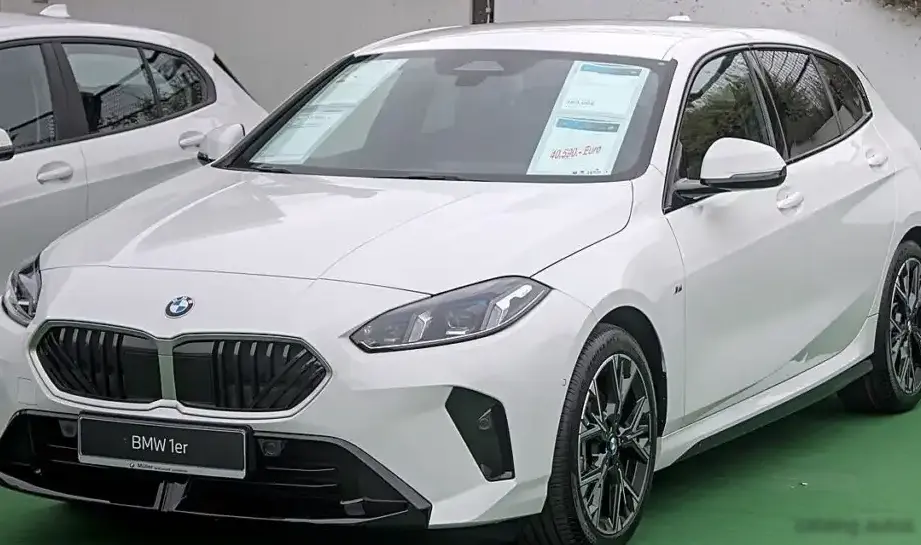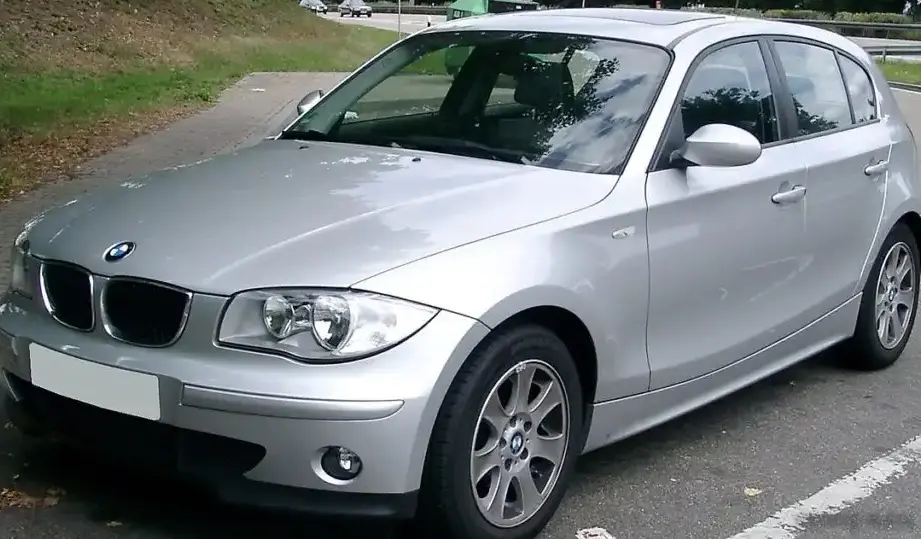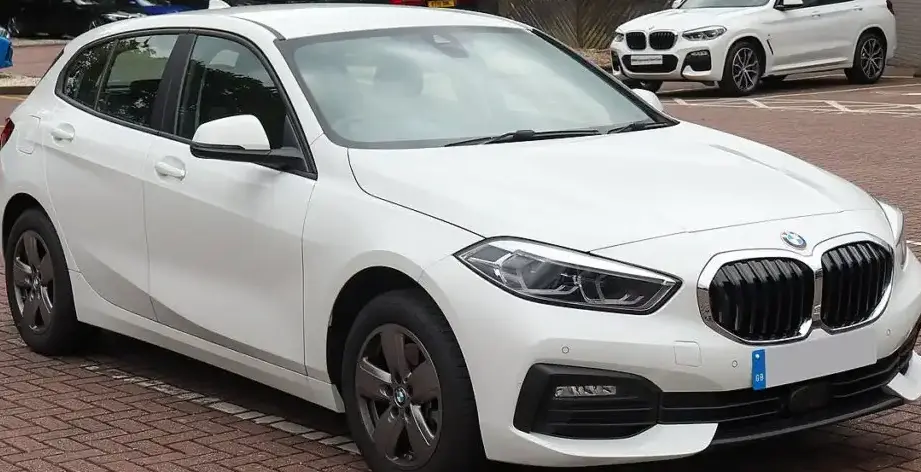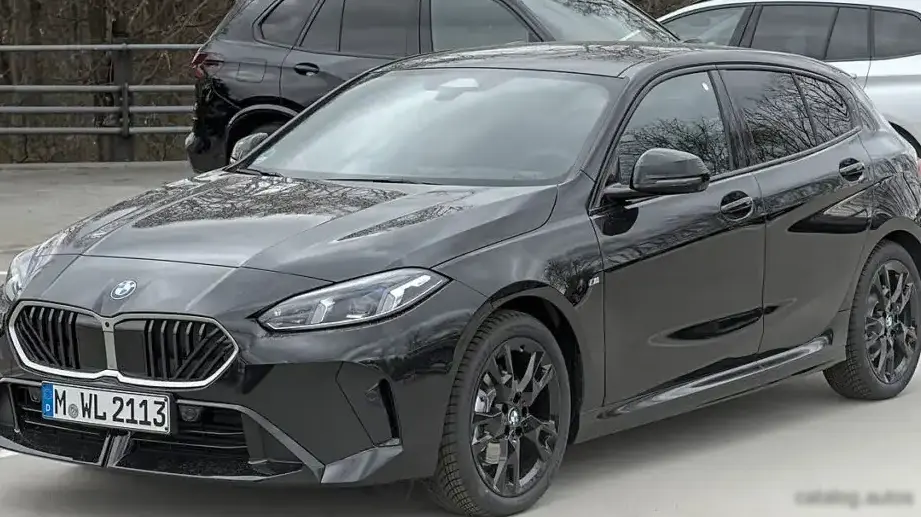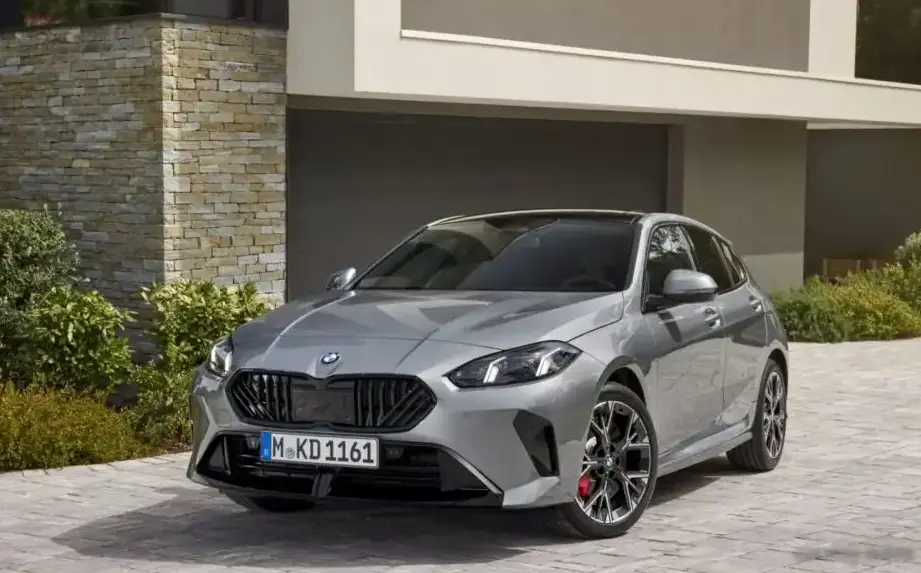
The BMW 123, introduced in November 2024 as part of the F70 1 Series Hatchback generation, represents a mid-range offering within the lineup. This variant combines a 2.0-liter turbocharged four-cylinder engine with a 48-volt mild hybrid system and BMW’s seven-speed Steptronic dual-clutch transmission (DCT), coupled with xDrive all-wheel drive. Positioned above the base 118i models and below the more performance-focused M135i, the 123 aims to deliver a balance of efficiency, performance, and everyday usability. It is primarily marketed towards European and global markets where the 1 Series Hatchback is sold, offering a premium compact experience.
Technical Specifications
| Brand | BMW |
| Model | 1 Series |
| Generation | 1 Series Hatchback (F70) |
| Type | 123 (218 Hp) Mild Hybrid xDrive Steptronic DCT |
| Start of production | November, 2024 |
| Powertrain Architecture | MHEV (Mild Hybrid Electric Vehicle) |
| Body type | Hatchback |
| Seats | 5 |
| Doors | 5 |
| Combined fuel consumption (WLTP) | 5.9-6.4 l/100 km (39.9 – 36.8 US mpg, 47.9 – 44.1 UK mpg, 16.9 – 15.6 km/l) |
| CO2 emissions (WLTP) | 134-145 g/km |
| Fuel Type | Petrol (Gasoline) |
| Acceleration 0 – 100 km/h | 6.3 sec |
| Acceleration 0 – 62 mph | 6.3 sec |
| Acceleration 0 – 60 mph | 6 sec |
| Maximum speed | 246 km/h (152.86 mph) |
| Emission standard | Euro 6e |
| Weight-to-power ratio | 7 kg/Hp, 142.5 Hp/tonne |
| Weight-to-torque ratio | 4.3 kg/Nm, 235.3 Nm/tonne |
| Gross battery capacity | 0.9 kWh |
| Battery voltage | 48 V |
| Battery technology | Lithium-ion (Li-Ion) |
| Battery location | Under the trunk |
| Recuperation output | 15 kW |
| Electric motor power | 20 Hp |
| Electric motor Torque | 55 Nm (40.57 lb.-ft.) |
| Electric motor location | Integrated into the transmission |
| System power | 218 Hp |
| System torque | 360 Nm (265.52 lb.-ft.) |
| Power | 204 Hp @ 5000-6500 rpm |
| Torque | 320 Nm @ 1500-4000 rpm (236.02 lb.-ft. @ 1500-4000 rpm) |
| Engine layout | Front, Transverse |
| Engine Model/Code | B48A20P |
| Engine displacement | 1998 cm3 (121.93 cu. in.) |
| Number of cylinders | 4 |
| Engine configuration | Inline |
| Cylinder Bore | 82 mm (3.23 in.) |
| Piston Stroke | 94.6 mm (3.72 in.) |
| Compression ratio | 11.1:1 |
| Number of valves per cylinder | 4 |
| Fuel injection system | Direct injection and Multi-port manifold injection |
| Engine aspiration | Twin-scroll turbo, Intercooler |
| Valvetrain | VALVETRONIC, Double VANOS |
| Engine oil capacity | 5.25 l (5.55 US qt | 4.62 UK qt) |
| Kerb Weight | 1530 kg (3373.07 lbs.) |
| Max. weight | 2085 kg (4596.64 lbs.) |
| Max load | 555 kg (1223.57 lbs.) |
| Trunk (boot) space – minimum | 300 l (10.59 cu. ft.) |
| Trunk (boot) space – maximum | 1135 l (40.08 cu. ft.) |
| Fuel tank capacity | 49 l (12.94 US gal | 10.78 UK gal) |
| Max. roof load | 75 kg (165.35 lbs.) |
| Permitted trailer load with brakes (12%) | 1300 kg (2866.01 lbs.) |
| Permitted trailer load without brakes | 750 kg (1653.47 lbs.) |
| Permitted towbar download | 75 kg (165.35 lbs.) |
| Length | 4361 mm (171.69 in.) |
| Width | 1800 mm (70.87 in.) |
| Width including mirrors | 2072 mm (81.57 in.) |
| Height | 1459 mm (57.44 in.) |
| Wheelbase | 2670 mm (105.12 in.) |
| Front track | 1561 mm (61.46 in.) |
| Rear (Back) track | 1562 mm (61.5 in.) |
| Front overhang | 899 mm (35.39 in.) |
| Rear overhang | 792 mm (31.18 in.) |
| Ride height (ground clearance) | 156 mm (6.14 in.) |
| Drag coefficient (Cd) | 0.27 |
| Minimum turning circle (turning diameter) | 11.7 m (38.39 ft.) |
| Drivetrain Architecture | ICE and electric motor drive all wheels, with rear wheel engagement via clutch. |
| Drive wheel | All wheel drive (4×4) |
| Number of gears and type of gearbox | 7 gears, automatic transmission Steptronic DCT |
| Front suspension | Spring Strut, Transverse stabilizer |
| Rear suspension | Independent multi-link spring suspension with stabilizer |
| Front brakes | Ventilated discs |
| Rear brakes | Ventilated discs |
| Assisting systems | ABS (Anti-lock braking system) |
| Steering type | Steering rack and pinion |
| Power steering | Electric Steering |
| Tires size | 205/55 R17; 225/45 R18; 225/40 R19 |
| Wheel rims size | 7.5J x 17; 8J x 18; 8J x 19 |
INTRODUCTION
The BMW 123, launched in late 2024, is a front-engined, all-wheel-drive hatchback built on the UKL2 platform, also known as the F70 generation 1 Series. This model year marked a significant step in BMW’s electrification strategy, incorporating a 48V mild-hybrid system to enhance fuel efficiency and reduce emissions. The 123 is positioned as a versatile option, appealing to buyers seeking a premium compact car with a blend of performance and practicality. It slots into the 1 Series range between the entry-level 118i and the high-performance M135i, offering a compelling alternative for those prioritizing a balanced driving experience.
Powertrain & Engine Architecture
At the heart of the 123 lies BMW’s B48A20P 2.0-liter turbocharged inline-four cylinder engine. This engine benefits from direct injection and multi-port manifold injection, optimizing combustion efficiency and power delivery. The addition of a twin-scroll turbocharger and intercooler further enhances performance. The engine produces 204 horsepower at 5000-6500 rpm and 320 Nm (236 lb-ft) of torque between 1500-4000 rpm. The mild-hybrid system, utilizing a 48V lithium-ion battery and a 20 hp electric motor integrated into the transmission, provides a power boost during acceleration and enables smoother start-stop operation. The electric motor also assists with energy recuperation, capturing kinetic energy during braking to recharge the battery. Power is transmitted to all four wheels via BMW’s seven-speed Steptronic dual-clutch transmission (DCT), known for its rapid and precise gear changes. The DCT’s programming is tuned to prioritize both efficiency and responsiveness, adapting to driving conditions and driver input.
Driving Characteristics
The 123 offers a refined and engaging driving experience. The combination of the turbocharged engine, mild-hybrid assistance, and all-wheel drive provides brisk acceleration, achieving 0-60 mph in approximately 6 seconds. While not as overtly sporty as the M135i, the 123 delivers ample power for everyday driving and confident overtaking maneuvers. The DCT transmission contributes to smooth and seamless gear changes, enhancing both comfort and performance. The xDrive all-wheel-drive system provides excellent traction in various weather conditions, inspiring confidence on both dry and wet roads. Compared to the manual transmission options available on lower trims, the DCT offers convenience and quicker shifts, albeit with a slightly less direct feel. The mild-hybrid system is largely transparent to the driver, providing a subtle boost in power and improving fuel economy without significantly altering the driving character.
Equipment & Trim Levels
The 123 typically comes well-equipped as standard. Common features include BMW’s Live Cockpit Plus infotainment system with a digital instrument cluster and a central touchscreen display, automatic climate control, and a suite of driver-assistance systems such as lane departure warning and collision warning. Interior upholstery is typically a combination of cloth and synthetic leather, with optional upgrades to full leather available. Optional extras often include a panoramic sunroof, premium sound system, adaptive cruise control, and parking assist features. Trim levels may vary slightly depending on the market, but generally offer a range of customization options to tailor the vehicle to individual preferences.
Chassis & Braking
The 123 utilizes a MacPherson strut front suspension and a multi-link rear suspension, providing a comfortable yet controlled ride. Stabilizer bars are fitted to both axles to minimize body roll during cornering. The braking system consists of ventilated discs on all four wheels, providing ample stopping power. ABS (Anti-lock Braking System) is standard, along with electronic brake-force distribution and brake assist. The suspension tuning is geared towards providing a balance between comfort and handling, making the 123 suitable for both city driving and longer journeys.
Market Reception & Comparison
The BMW 123 has been generally well-received by automotive critics, praised for its blend of performance, efficiency, and practicality. Reviewers have noted the smooth operation of the mild-hybrid system and the responsiveness of the DCT transmission. Compared to the base 118i models, the 123 offers a noticeable performance upgrade, while remaining more affordable and fuel-efficient than the range-topping M135i. Fuel economy figures of 5.9-6.4 l/100 km (39.9-36.8 US mpg) are competitive within its class. Reliability reports are still emerging given the model’s recent introduction, but BMW’s reputation for build quality and engineering suggests a generally reliable powertrain.
Legacy
As a relatively new model, the long-term reliability of the F70 123 is yet to be fully established. However, the B48 engine family has proven to be robust in other BMW applications. The integration of mild-hybrid technology represents a significant step towards electrification, and the 123 is likely to be viewed as a transitional model in BMW’s powertrain evolution. On the used car market, the 123 is expected to hold its value well, appealing to buyers seeking a premium compact car with a modern powertrain and a well-equipped interior. Its all-wheel-drive system and efficient engine will likely make it a desirable option in regions with challenging weather conditions.