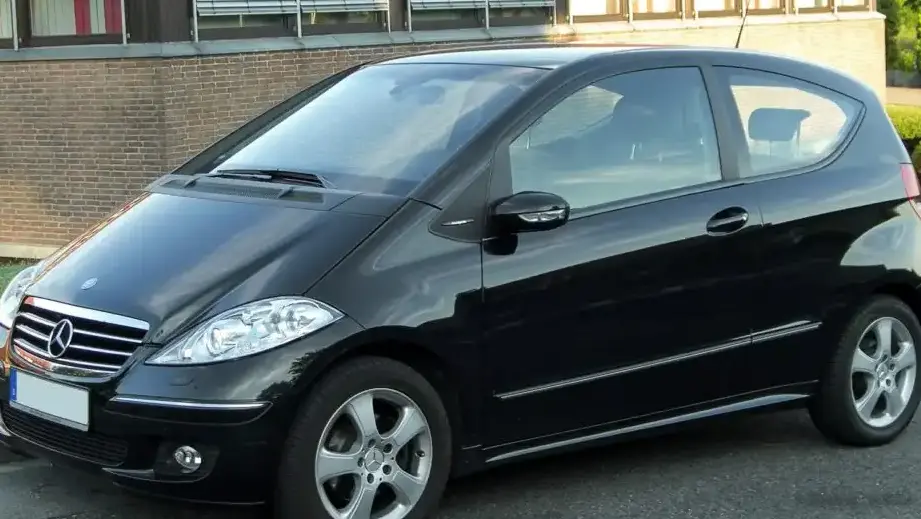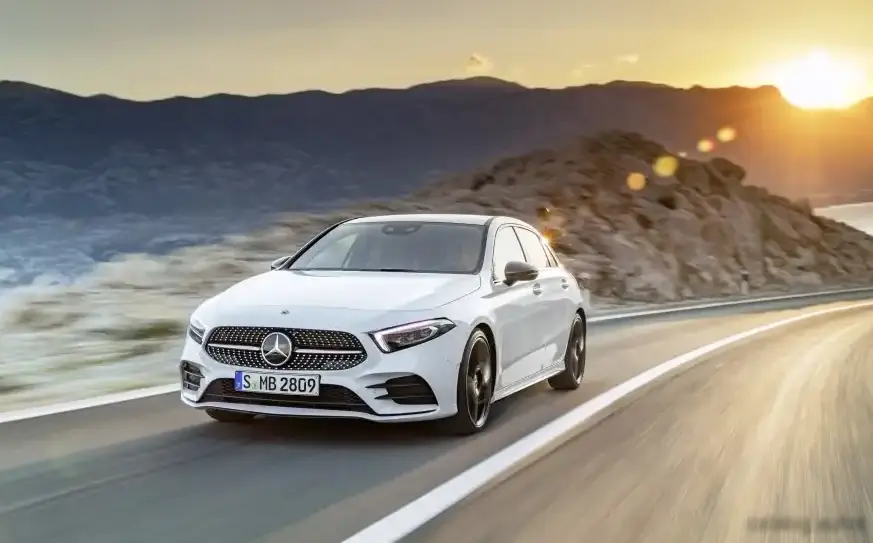
The Mercedes-Benz A-Class (W177) A 200, producing 163 horsepower, was a key variant in the fourth generation of the A-Class, produced from 2018 to 2022. Positioned as a mainstream offering within the W177 range, it served as a popular entry point into the premium compact hatchback segment, appealing to buyers seeking a balance of efficiency, technology, and brand prestige. This model represented a significant step forward for the A-Class, moving it towards a more sophisticated and technologically advanced vehicle compared to its predecessors. It was a crucial model for Mercedes-Benz in the European market, and increasingly, in North America as the brand expanded its presence.
Technical Specifications
| Brand | Mercedes-Benz |
| Model | A-Class |
| Generation | A-Class (W177) |
| Type (Engine) | A 200 (163 Hp) |
| Start of production | 2018 |
| End of production | 2022 |
| Powertrain Architecture | Internal Combustion engine |
| Body type | Hatchback |
| Seats | 5 |
| Doors | 5 |
| Fuel consumption at Low speed (WLTP) | 5.9 l/100 km (39.9 US mpg, 47.9 UK mpg, 16.9 km/l) |
| Fuel consumption at very high speed (WLTP) | 6.7 l/100 km (35.1 US mpg, 42.2 UK mpg, 14.9 km/l) |
| CO2 emissions (WLTP) | 157-168 g/km |
| Fuel consumption (economy) – urban | 7.9-8.5 l/100 km (29.8 – 27.7 US mpg, 35.8 – 33.2 UK mpg, 12.7 – 11.8 km/l) |
| Fuel consumption (economy) – extra urban | 4.6-5.0 l/100 km (51.1 – 47 US mpg, 61.4 – 56.5 UK mpg, 21.7 – 20 km/l) |
| Fuel consumption (economy) – combined | 5.8-6.3 l/100 km (40.6 – 37.3 US mpg, 48.7 – 44.8 UK mpg, 17.2 – 15.9 km/l) |
| CO2 emissions | 133-144 g/km |
| Fuel Type | Petrol (Gasoline) |
| Acceleration 0 – 100 km/h | 8.2 sec |
| Acceleration 0 – 62 mph | 8.2 sec |
| Acceleration 0 – 60 mph | 7.8 sec |
| Maximum speed | 225 km/h (139.81 mph) |
| Emission standard | Euro 6 |
| Weight-to-power ratio | 7.9 kg/Hp, 127.3 Hp/tonne |
| Weight-to-torque ratio | 5.1 kg/Nm, 195.3 Nm/tonne |
| Power | 163 Hp @ 5500 rpm |
| Power per litre | 122.4 Hp/l |
| Torque | 250 Nm @ 1620 rpm (184.39 lb.-ft. @ 1620 rpm) |
| Engine layout | Front, Transverse |
| Engine Model/Code | M 282.914 |
| Engine displacement | 1332 cm3 (81.28 cu. in.) |
| Number of cylinders | 4 |
| Engine configuration | Inline |
| Number of valves per cylinder | 4 |
| Fuel injection system | Direct injection |
| Engine aspiration | Turbocharger, Intercooler |
| Engine oil capacity | 5.1 l (5.39 US qt | 4.49 UK qt) |
| Coolant | 6.8 l (7.19 US qt | 5.98 UK qt) |
| Kerb Weight | 1280 kg (2821.92 lbs.) |
| Max. weight | 1870 kg (4122.64 lbs.) |
| Max load | 590 kg (1300.73 lbs.) |
| Trunk (boot) space – maximum | 370 l (13.07 cu. ft.) |
| Fuel tank capacity | 43 l (11.36 US gal | 9.46 UK gal) |
| Permitted trailer load with brakes (12%) | 1600 kg (3527.4 lbs.) |
| Permitted trailer load without brakes | 675 kg (1488.12 lbs.) |
| Length | 4419 mm (173.98 in.) |
| Width | 1796 mm (70.71 in.) |
| Width including mirrors | 1992 mm (78.43 in.) |
| Height | 1440 mm (56.69 in.) |
| Wheelbase | 2729 mm (107.44 in.) |
| Front track | 1567 mm (61.69 in.) |
| Rear (Back) track | 1547 mm (60.91 in.) |
| Front overhang | 914 mm (35.98 in.) |
| Rear overhang | 776 mm (30.55 in.) |
| Ride height (ground clearance) | 104 mm (4.09 in.) |
| Approach angle | 13.4° |
| Departure angle | 17.2° |
| Ramp-over (brakeover) angle | 9.4° |
| Drivetrain Architecture | The Internal combustion engine (ICE) drives the front wheels of the vehicle. |
| Drive wheel | Front wheel drive |
| Number of gears and type of gearbox | 6 gears, manual transmission |
| Front brakes | Ventilated discs |
| Rear brakes | Disc |
| Assisting systems | ABS (Anti-lock braking system) |
| Steering type | Steering rack and pinion |
| Power steering | Electric Steering |
INTRODUCTION
The W177 generation Mercedes-Benz A-Class, launched in 2018, marked a significant departure from its predecessors. It moved away from the sandwich floor platform of the previous generation and adopted the more conventional (and cost-effective) MFA2 platform shared with other compact Mercedes-Benz models. The A 200, powered by a 1.3-liter turbocharged four-cylinder engine producing 163 horsepower, was a core model in the lineup. It aimed to provide a premium experience with modern technology and a comfortable ride, appealing to a broad customer base. This variant was particularly popular in Europe, where compact hatchbacks are highly sought after, and it gained traction in the US market as Mercedes-Benz expanded its compact car offerings.
Powertrain & Engine Architecture
The A 200 utilizes the M 282.914 engine, a 1.332-liter inline-four cylinder gasoline engine. This engine is part of Mercedes-Benz’s modular engine family, designed for efficiency and scalability. It features direct fuel injection and a single turbocharger with an intercooler, boosting power and torque. The engine code is crucial for identifying specific components and service requirements. The engine’s output of 163 hp at 5500 rpm and 250 Nm (184 lb-ft) of torque at 1620 rpm provides a good balance between performance and fuel economy. The A 200 was typically paired with a 7-speed dual-clutch transmission (DCT), although a 6-speed manual transmission was also available in some markets. The DCT offers quick and smooth gear changes, enhancing the driving experience. The engine’s design prioritizes thermal management, with careful attention paid to cooling and lubrication systems to ensure reliability and longevity.
Driving Characteristics
The A 200, with its 163 hp and DCT transmission, delivers adequate performance for everyday driving. Acceleration from 0 to 60 mph takes around 7.8 seconds, and the top speed is electronically limited to 139.81 mph. While not a sports car, the A 200 offers sufficient power for overtaking and merging onto highways. Compared to the more powerful A 250 variant, the A 200 feels less urgent in its acceleration, but the difference is often negligible in typical driving conditions. The DCT transmission provides responsive shifts, and the engine is relatively quiet and refined. The suspension is tuned for comfort, providing a smooth ride over most road surfaces. The steering is precise and well-weighted, offering a good level of feedback. The front-wheel-drive configuration provides good traction in most conditions, but can exhibit some torque steer under hard acceleration.
Equipment & Trim Levels
The A 200 came standard with a generous amount of equipment, reflecting Mercedes-Benz’s commitment to luxury and technology. Standard features typically included automatic climate control, a touchscreen infotainment system with Apple CarPlay and Android Auto compatibility, a suite of safety features (including automatic emergency braking and lane keeping assist), and LED headlights. Interior upholstery was typically fabric, with options for leather available as upgrades. Higher trim levels offered additional features such as a larger touchscreen display, a premium sound system, and a panoramic sunroof. Optional extras included navigation, adaptive cruise control, and a head-up display. The interior design was modern and minimalist, with a focus on high-quality materials and a user-friendly interface.
Chassis & Braking
The W177 A-Class features a MacPherson strut front suspension and a multi-link rear suspension. This setup provides a good balance between ride comfort and handling. The A 200 typically came equipped with ventilated disc brakes at the front and solid disc brakes at the rear. ABS (Anti-lock Braking System) is standard, along with electronic stability control and traction control. The chassis is relatively lightweight, contributing to the car’s agility and fuel efficiency. The steering system is an electric power steering system, providing precise and responsive steering feel. The suspension tuning is geared towards comfort, but the car still handles well in corners.
Market Reception & Comparison
The A 200 was generally well-received by automotive critics. It was praised for its stylish design, comfortable ride, and advanced technology. However, some critics noted that the engine could feel a bit underpowered, especially when fully loaded. Compared to the A 250, the A 200 offered a more affordable entry point into the A-Class range, but at the expense of some performance. In terms of fuel economy, the A 200 performed well, achieving combined fuel consumption figures of around 40.6-37.3 US mpg. Reliability has been generally good, with few major issues reported. The A 200 competed with other premium compact hatchbacks such as the Audi A3 and the BMW 1 Series.
Legacy
The W177 A-Class A 200 has proven to be a reliable and popular vehicle in the used car market. The 1.3-liter turbocharged engine has a good reputation for durability, and the DCT transmission is generally well-maintained. The A 200’s combination of style, technology, and affordability has made it a desirable option for buyers looking for a premium compact hatchback. As with any used vehicle, regular maintenance is crucial to ensure long-term reliability. The A 200 represents a significant step forward for the A-Class, establishing it as a serious contender in the premium compact segment.