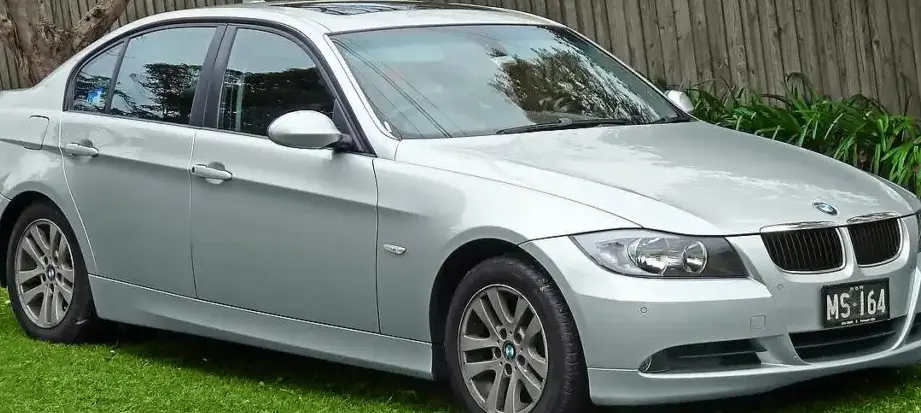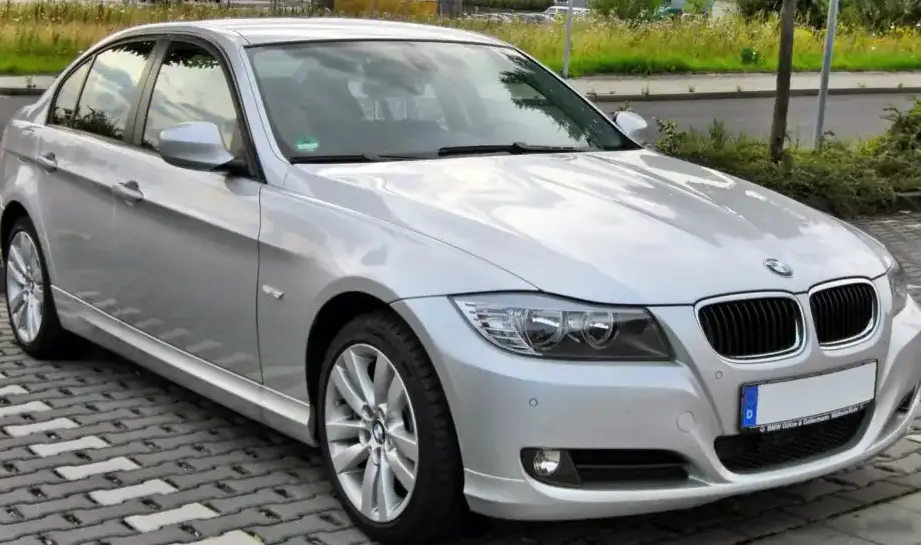
The BMW 3 Series Sedan (E90 LCI), specifically the 325i variant produced from 2008 to 2009, represented a significant mid-cycle refresh of the E90 generation. This facelift, known as the LCI (Life Cycle Impulse) in BMW terminology, brought updated styling, improved efficiency, and refined technology to the popular executive sedan. The 325i, powered by the naturally aspirated 3.0-liter inline-six engine producing 218 horsepower, occupied a sweet spot in the 3 Series lineup, offering a balance of performance and affordability. It served as a step up from the base 320i, while remaining more accessible than the higher-performance 335i models.
Technical Specifications
| Brand | BMW |
| Model | 3 Series |
| Generation | 3 Series Sedan (E90 LCI, facelift 2008) |
| Type (Engine) | 325i (218 Hp) |
| Start of production | 2008 |
| End of production | 2009 |
| Powertrain Architecture | Internal Combustion engine |
| Body type | Sedan |
| Seats | 5 |
| Doors | 4 |
| Fuel consumption (economy) – urban (NEDC) | 9.8 l/100 km (24 US mpg, 28.8 UK mpg, 10.2 km/l) |
| Fuel consumption (economy) – extra urban (NEDC) | 5.5 l/100 km (42.8 US mpg, 51.4 UK mpg, 18.2 km/l) |
| Fuel consumption (economy) – combined (NEDC) | 7.1 l/100 km (33.1 US mpg, 39.8 UK mpg, 14.1 km/l) |
| CO2 emissions (NEDC) | 170 g/km |
| Fuel Type | Petrol (Gasoline) |
| Acceleration 0 – 100 km/h | 6.7 sec |
| Acceleration 0 – 62 mph | 6.7 sec |
| Acceleration 0 – 60 mph | 6.4 sec |
| Maximum speed | 250 km/h (155.34 mph), Electronically limited |
| Emission standard | Euro 4 |
| Weight-to-power ratio | 6.6 kg/Hp, 152.4 Hp/tonne |
| Weight-to-torque ratio | 5.3 kg/Nm, 188.8 Nm/tonne |
| Power | 218 Hp @ 6100 rpm |
| Torque | 270 Nm @ 2400-4200 rpm (199.14 lb.-ft. @ 2400-4200 rpm) |
| Engine layout | Front, Longitudinal |
| Engine Model/Code | N53B30U0 |
| Engine displacement | 2996 cm3 (182.83 cu. in.) |
| Number of cylinders | 6 |
| Engine configuration | Inline |
| Cylinder Bore | 85 mm (3.35 in.) |
| Piston Stroke | 88 mm (3.46 in.) |
| Compression ratio | 12:1 |
| Number of valves per cylinder | 4 |
| Fuel injection system | Direct injection |
| Engine aspiration | Naturally aspirated engine |
| Valvetrain | DOHC, Double-VANOS |
| Engine oil capacity | 6.5 l (6.87 US qt | 5.72 UK qt) |
| Coolant | 8.2 l (8.66 US qt | 7.21 UK qt) |
| Kerb Weight | 1430 kg (3152.61 lbs.) |
| Max. weight | 1950 kg (4299.01 lbs.) |
| Max load | 520 kg (1146.4 lbs.) |
| Trunk (boot) space – minimum | 460 l (16.24 cu. ft.) |
| Fuel tank capacity | 63 l (16.64 US gal | 13.86 UK gal) |
| Max. roof load | 75 kg (165.35 lbs.) |
| Permitted trailer load with brakes (8%) | 1700 kg (3747.86 lbs.) |
| Permitted trailer load with brakes (12%) | 1600 kg (3527.4 lbs.) |
| Permitted trailer load without brakes | 745 kg (1642.44 lbs.) |
| Permitted towbar download | 75 kg (165.35 lbs.) |
| Length | 4531 mm (178.39 in.) |
| Width | 1817 mm (71.54 in.) |
| Width including mirrors | 1989 mm (78.31 in.) |
| Height | 1421 mm (55.94 in.) |
| Wheelbase | 2760 mm (108.66 in.) |
| Front track | 1506 mm (59.29 in.) |
| Rear (Back) track | 1535 mm (60.43 in.) |
| Front overhang | 757 mm (29.8 in.) |
| Rear overhang | 1014 mm (39.92 in.) |
| Drag coefficient (Cd) | 0.27 |
| Drivetrain Architecture | The Internal combustion engine (ICE) drives the rear wheels of the vehicle. |
| Drive wheel | Rear wheel drive |
| Number of gears and type of gearbox | 6 gears, manual transmission |
| Front suspension | Spring Strut, Transverse stabilizer |
| Rear suspension | Independent multi-link suspension, Transverse stabilizer |
| Front brakes | Ventilated discs |
| Rear brakes | Ventilated discs |
| Assisting systems | ABS (Anti-lock braking system) |
| Steering type | Steering rack and pinion |
| Power steering | Electric Steering |
| Tires size | Front wheel tires: 205/55 R16; 225/45 R17Rear wheel tires: 205/55 R16; 225/45 R17; 255/40 R17 |
| Wheel rims size | Front wheel rims: 7J x 16; 8J x 17Rear wheel rims: 7J x 16; 8J x 17; 8.5J x 17 |
INTRODUCTION
The E90 LCI 325i was a key model in BMW’s lineup during its production run. Building upon the success of the E90 platform, the LCI brought a more aggressive front fascia, revised taillights, and a host of interior refinements. The 325i, with its 218-horsepower 3.0-liter inline-six, was designed to appeal to buyers seeking a sporty and refined driving experience without the higher price tag of the 335i. It was primarily sold in North America and Europe, where BMW traditionally enjoys strong market share in the premium compact executive segment.
Powertrain & Engine Architecture
At the heart of the 325i lies the N53B30U0 engine, a 3.0-liter naturally aspirated inline-six. This engine is a descendant of the highly regarded M54 engine, but incorporates direct fuel injection, a more efficient valvetrain (Double-VANOS), and a revised engine management system. The direct injection system allowed for more precise fuel delivery, improving both power and fuel economy. The Double-VANOS system, controlling both intake and exhaust valve timing, optimized engine breathing across the rev range. The engine produced 218 hp at 6100 rpm and 270 Nm (199.14 lb-ft) of torque between 2400 and 4200 rpm. The 325i was typically paired with a six-speed manual transmission, but a six-speed automatic transmission was also available. The automatic transmission featured adaptive shift programming, adjusting shift points based on driving style.
Driving Characteristics
The 325i offered a balanced driving experience. While not as brutally quick as the turbocharged 335i, the 325i’s naturally aspirated engine provided a linear power delivery and a pleasing exhaust note. The six-speed manual transmission offered precise shifts, while the automatic transmission provided smooth and responsive gear changes. The rear-wheel-drive configuration contributed to the car’s balanced handling. Compared to the 320i, the 325i offered noticeably more power and a more engaging driving experience. The automatic transmission, while convenient, did slightly diminish the car’s overall responsiveness compared to the manual version. The gear ratios were tuned for a blend of acceleration and fuel efficiency, making it a comfortable daily driver.
Equipment & Trim Levels
The 325i came standard with a respectable array of features, including automatic climate control, power windows and locks, a multi-function steering wheel, and a basic audio system. Optional extras included leather upholstery, a premium sound system, navigation, sunroof, and sport suspension. The interior design was typical BMW, with a driver-focused layout and high-quality materials. Trim levels varied slightly depending on the market, but generally, the 325i offered a good balance of comfort and convenience features. Sport packages added features like sport seats, a sport steering wheel, and upgraded suspension components.
Chassis & Braking
The E90 3 Series featured a sophisticated chassis design. The front suspension utilized MacPherson struts with a transverse stabilizer bar, while the rear suspension employed a multi-link setup, also with a stabilizer bar. This configuration provided a good balance of ride comfort and handling precision. The 325i was equipped with ventilated disc brakes on all four wheels, providing ample stopping power. ABS (Anti-lock Braking System) was standard. The suspension tuning was generally geared towards comfort, but the optional sport suspension package offered a firmer ride and improved handling.
Market Reception & Comparison
The E90 LCI 325i was generally well-received by automotive critics. It was praised for its refined engine, balanced handling, and comfortable interior. However, some critics noted that the styling was conservative and that the car lacked the outright performance of its rivals. Compared to the 320i, the 325i offered a significant performance upgrade, making it the more desirable choice for driving enthusiasts. Compared to the 335i, the 325i was more affordable and offered better fuel economy, but lacked the turbocharged engine’s extra power and torque. Reliability was generally good, although some owners reported issues with oil leaks and cooling system components.
Legacy
The E90 LCI 325i remains a popular choice in the used car market. Its combination of performance, refinement, and relative affordability makes it an attractive option for buyers seeking a premium compact executive sedan. The N53 engine, while generally reliable, requires regular maintenance to prevent oil leaks and ensure optimal performance. Parts availability is good, and the car’s relatively simple mechanical design makes it relatively easy to maintain. The E90 3 Series, and the 325i in particular, is often regarded as one of the last truly analog BMWs, offering a driving experience that is both engaging and rewarding.