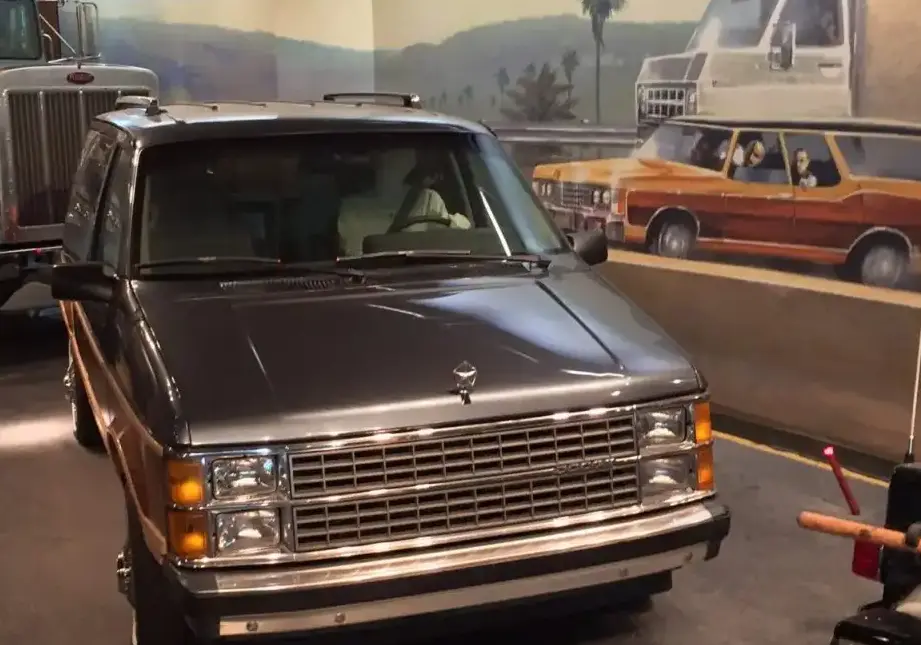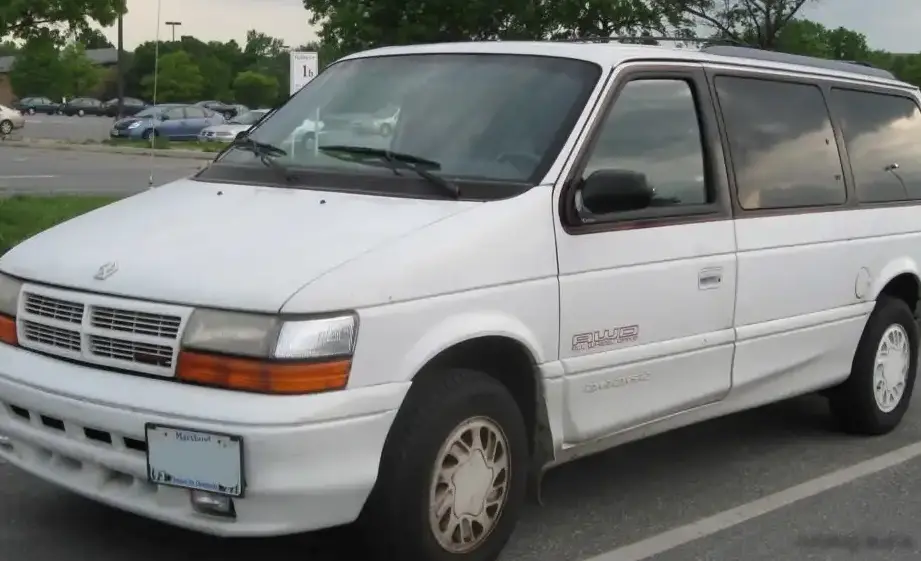
The Dodge Caravan II LWB 3.3 V6 Automatic, produced from 1991 to 1995, represented a significant evolution in the American minivan segment. As part of the second generation of the Caravan (AS body code), the “LWB” designation indicated a longer wheelbase, offering increased interior space and practicality. This variant occupied a mid-range position within the Caravan II lineup, offering a balance between affordability and performance, appealing to families seeking a spacious and comfortable vehicle. It was a key player in Dodge’s continued dominance of the minivan market during the early 1990s, competing directly with the Ford Windstar and Chevrolet Lumina APV.
Technical Specifications
| Brand | Dodge |
| Model | Caravan |
| Generation | Caravan II LWB |
| Type (Engine) | 3.3 V6 (164 Hp) Automatic |
| Start of production | 1991 |
| End of production | 1995 |
| Powertrain Architecture | Internal Combustion engine |
| Body type | Minivan |
| Seats | 7 |
| Doors | 4 |
| Fuel consumption (urban) | 13.1 l/100 km (18 US mpg, 21.6 UK mpg, 7.6 km/l) |
| Fuel consumption (extra urban) | 10.2 l/100 km (23.1 US mpg, 27.7 UK mpg, 9.8 km/l) |
| Fuel consumption (combined) | 11.8 l/100 km (19.9 US mpg, 23.9 UK mpg, 8.5 km/l) |
| Fuel Type | Petrol (Gasoline) |
| Weight-to-power ratio | 9.9 kg/Hp, 101.3 Hp/tonne |
| Weight-to-torque ratio | 6.2 kg/Nm, 162.4 Nm/tonne |
| Power | 164 Hp @ 4800 rpm |
| Power per litre | 49.7 Hp/l |
| Torque | 263 Nm @ 3600 rpm (193.98 lb.-ft. @ 3600 rpm) |
| Engine layout | Front, Transverse |
| Engine displacement | 3301 cm3 (201.44 cu. in.) |
| Number of cylinders | 6 |
| Engine configuration | V-engine |
| Cylinder Bore | 93 mm (3.66 in.) |
| Piston Stroke | 81 mm (3.19 in.) |
| Compression ratio | 8.9:1 |
| Number of valves per cylinder | 2 |
| Fuel injection system | Multi-port manifold injection |
| Engine aspiration | Naturally aspirated engine |
| Engine oil capacity | 4.3 l (4.54 US qt | 3.78 UK qt) |
| Coolant | 9.5 l (10.04 US qt | 8.36 UK qt) |
| Kerb Weight | 1619 kg (3569.28 lbs.) |
| Trunk (boot) space (minimum) | 1020 l (36.02 cu. ft.) |
| Fuel tank capacity | 76 l (20.08 US gal | 16.72 UK gal) |
| Length | 4897 mm (192.8 in.) |
| Width | 1829 mm (72.01 in.) |
| Height | 1685 mm (66.34 in.) |
| Wheelbase | 3030 mm (119.29 in.) |
| Front track | 1521 mm (59.88 in.) |
| Rear track | 1578 mm (62.13 in.) |
| Ride height (ground clearance) | 130 mm (5.12 in.) |
| Drag coefficient (Cd) | 0.39 |
| Minimum turning circle | 13.1 m (42.98 ft.) |
| Drivetrain Architecture | The Internal combustion engine (ICE) drives the front wheels of the vehicle. |
| Drive wheel | Front wheel drive |
| Number of gears | 4 |
| Gearbox type | automatic transmission |
| Front suspension | Wishbone |
| Rear suspension | Rigid axle suspension |
| Front brakes | Ventilated discs |
| Rear brakes | Drum |
| Power steering | Hydraulic Steering |
| Tires size | 205/70 R15 |
| Wheel rims size | 15 |
Powertrain & Engine Architecture
The heart of the Caravan II LWB 3.3 V6 was the 3.3-liter (3301 cc) Chrysler LA engine. This V6, internally designated as the 3.3L, was a naturally aspirated, two-valve-per-cylinder engine utilizing multi-port fuel injection. The LA engine family was known for its durability and relatively simple design. The 8.9:1 compression ratio was a compromise between performance and the fuel quality available at the time. The engine produced 164 horsepower at 4800 rpm and 263 Nm (194 lb-ft) of torque at 3600 rpm. This power was delivered to the front wheels through a four-speed automatic transmission, a Torqueflite A727 variant. This transmission was a workhorse, known for its reliability, but not particularly refined in its shifting characteristics. The automatic transmission was a key selling point for many minivan buyers, prioritizing ease of use over outright performance.
Driving Characteristics
The 3.3L V6 and four-speed automatic combination provided adequate, though not exhilarating, performance. Acceleration was sufficient for everyday driving and highway merging, but the Caravan II LWB wasn’t designed for sporty driving. The automatic transmission’s gear ratios were optimized for fuel economy and smooth cruising rather than quick acceleration. Compared to the optional 3.8L V6, the 3.3L felt noticeably less powerful, especially when fully loaded with passengers and cargo. The longer wheelbase of the LWB model contributed to a more stable ride, but also slightly reduced maneuverability compared to the standard wheelbase Caravan. Steering was light and easy, typical of American vehicles of the era.
Equipment & Trim Levels
The 3.3L V6 Automatic trim typically included features such as air conditioning, power steering, AM/FM stereo, cloth upholstery, and a rear window wiper. Higher trim levels, such as the SE and LE, added features like alloy wheels, upgraded sound systems, power windows and locks, and a more luxurious interior. Optional extras included a sunroof, cruise control, and leather upholstery. The interior design was functional and family-oriented, with ample storage compartments and comfortable seating for seven passengers. The LWB model’s extended wheelbase provided significantly more cargo space behind the third-row seat compared to the standard Caravan.
Chassis & Braking
The Caravan II LWB utilized a front-wheel-drive layout with an independent wishbone suspension in the front and a solid axle suspension in the rear. The rear suspension was relatively simple, prioritizing cost-effectiveness and durability over sophisticated handling. Braking duties were handled by ventilated discs in the front and drum brakes in the rear. Power-assisted steering was standard. The suspension was tuned for comfort, providing a relatively soft ride, but it could feel somewhat wallowy when cornering. The 205/70R15 tires offered a reasonable balance between ride comfort and handling.
Market Reception & Comparison
The Dodge Caravan II LWB 3.3 V6 Automatic was generally well-received by critics and consumers. It was praised for its spacious interior, comfortable ride, and relatively affordable price. However, the 3.3L engine was sometimes criticized for being underpowered, especially when compared to the available 3.8L V6. Fuel economy was average for the segment, around 19.9 US mpg combined. Reliability was generally good, although some owners reported issues with the automatic transmission over the long term. Compared to the 3.8L V6, the 3.3L offered a lower purchase price and slightly better fuel economy, making it an attractive option for budget-conscious families.
Legacy
The Dodge Caravan II LWB 3.3 V6 Automatic remains a relatively common sight on used car lots today. The 3.3L LA engine is known for its durability and relatively simple maintenance requirements. While not a performance powerhouse, the powertrain is generally reliable and can provide years of service with proper maintenance. Parts availability is good, and the vehicle’s relatively simple design makes it accessible to amateur mechanics. The Caravan II LWB continues to be appreciated for its practicality and spaciousness, making it a popular choice for families seeking an affordable and reliable minivan.