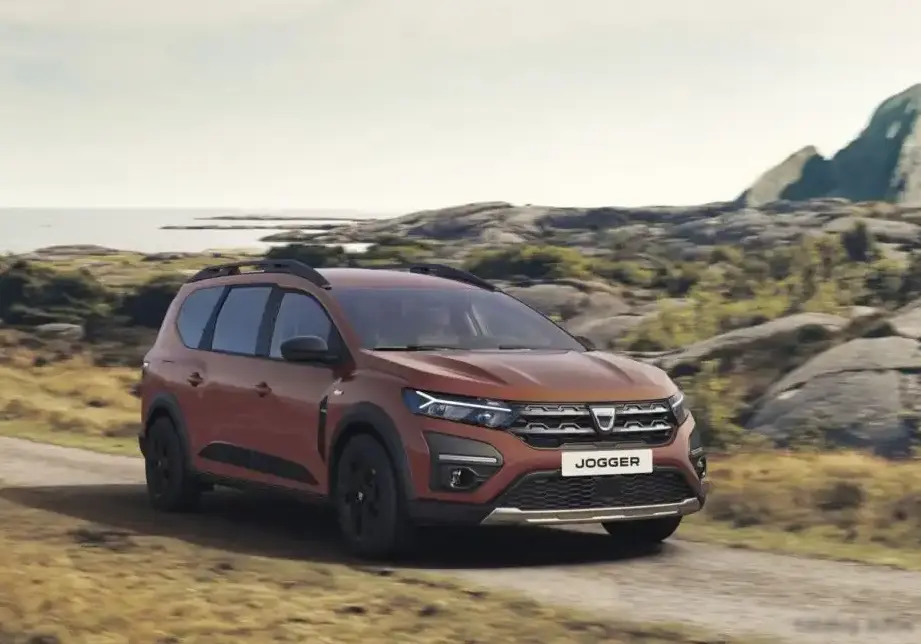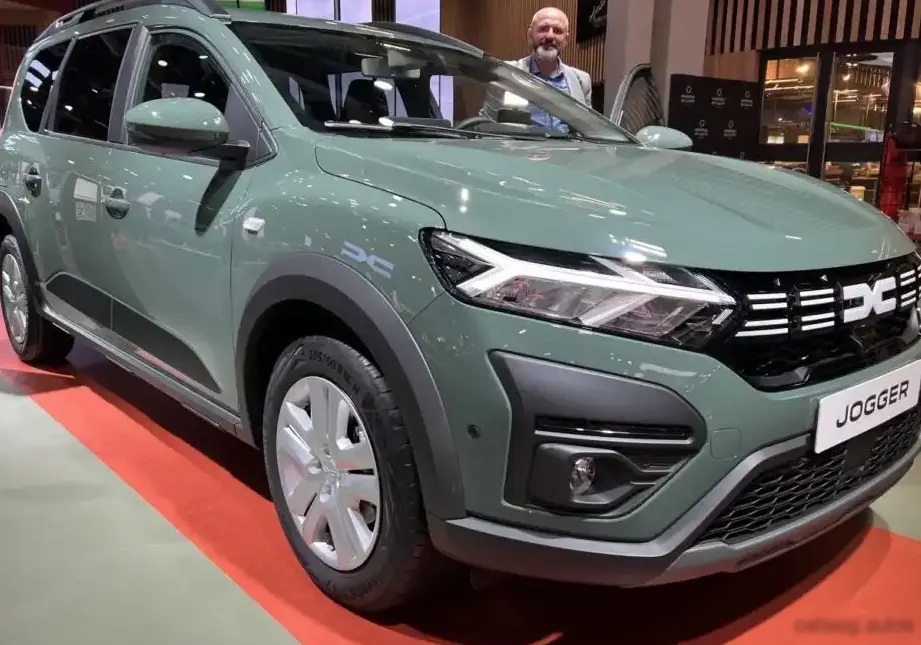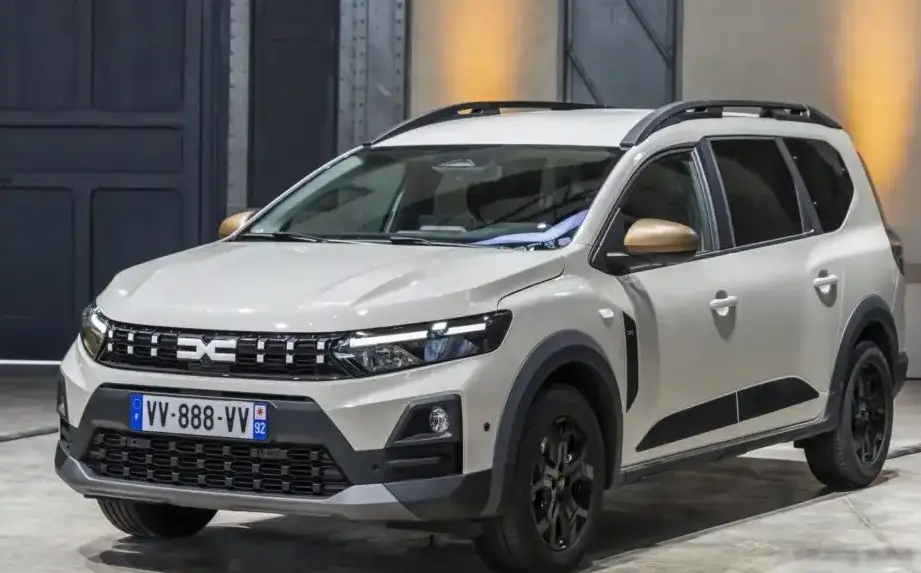
The Dacia Jogger 1.2 Eco-G 120 (producing 114/122 horsepower) with the EDC (Efficient Dual Clutch) automatic transmission represents a significant offering in the budget-friendly MPV (Multi-Purpose Vehicle) segment. Introduced in December 2025 as part of the Jogger facelift, this variant combines a petrol engine with dedicated LPG capability, aiming to balance affordability, practicality, and reduced emissions. It builds upon the foundation of the original Jogger, which utilizes the extended version of the 1HX0/A3 platform, shared with other Renault Group vehicles. This particular engine and transmission pairing positions itself as a mid-range option within the Jogger lineup, appealing to families and drivers seeking a versatile and economical vehicle.
Technical Specifications
| Brand | Dacia |
| Model | Jogger |
| Generation | Jogger (facelift 2025) |
| Type (Engine) | 1.2 Eco-G 120 (114/122 Hp) LPG EDC |
| Start of production | December, 2025 |
| Powertrain Architecture | Internal Combustion engine |
| Body type | MPV |
| Seats | 5 |
| Doors | 5 |
| Fuel consumption at Low speed (WLTP) | 8 l/100 km (29.4 US mpg, 35.3 UK mpg, 12.5 km/l) |
| Fuel consumption at Low speed (WLTP) (LPG) | 9 l/100 km |
| Fuel consumption at Medium speed (WLTP) | 5.6 l/100 km (42 US mpg, 50.4 UK mpg, 17.9 km/l) |
| Fuel consumption at Medium speed (WLTP) (LPG) | 7.1 l/100 km |
| Fuel consumption at high speed (WLTP) | 5.1 l/100 km (46.1 US mpg, 55.4 UK mpg, 19.6 km/l) |
| Fuel consumption at high speed (WLTP) (LPG) | 6.4 l/100 km |
| Fuel consumption at very high speed (WLTP) | 6.4 l/100 km (36.8 US mpg, 44.1 UK mpg, 15.6 km/l) |
| Fuel consumption at very high speed (WLTP) (LPG) | 7.8 l/100 km |
| Combined fuel consumption (WLTP) | 6.0 l/100 km (39.2 US mpg, 47.1 UK mpg, 16.7 km/l) |
| Combined fuel consumption (WLTP) (LPG) | 7.5 l/100 km |
| CO2 emissions (WLTP) | 137 g/km |
| CO2 emissions (LPG) (WLTP) | 122 g/km |
| Fuel Type | Petrol / LPG |
| Acceleration 0 – 100 km/h | 11.4 sec |
| Acceleration 0 – 62 mph | 11.4 sec |
| Acceleration 0 – 100 km/h (LPG) | 10.4 sec |
| Acceleration 0 – 60 mph (Calculated) | 10.8 sec |
| Maximum speed | 180 km/h (111.85 mph) |
| Maximum speed (LPG) | 180 km/h |
| Emission standard | Euro 6e |
| Weight-to-power ratio | 11.6 kg/Hp, 86 Hp/tonne |
| Weight-to-torque ratio | 7 kg/Nm, 143.3 Nm/tonne |
| Power | 114 Hp @ 4500-5750 rpm |
| Power per litre | 95.1 Hp/l |
| Power (LPG) | 122 Hp @ 4500-5000 rpm |
| Power per litre (LPG) | 101.8 Hp/l |
| Torque | 190 Nm @ 2000-4000 rpm (140.14 lb.-ft. @ 2000-4000 rpm) |
| Torque (LPG) | 197 Nm @ 1750-3750 rpm |
| Engine layout | Front, Transverse |
| Engine displacement | 1199 cm3 (73.17 cu. in.) |
| Number of cylinders | 3 |
| Engine configuration | Inline |
| Number of valves per cylinder | 4 |
| Fuel injection system | Direct injection and Multi-port manifold injection |
| Engine aspiration | Naturally aspirated engine |
| Kerb Weight | 1326 kg (2923.33 lbs.) |
| Max. weight | 1785 kg (3935.25 lbs.) |
| Max load | 459 kg (1011.92 lbs.) |
| Trunk (boot) space – minimum | 607 l (21.44 cu. ft.) |
| Trunk (boot) space – maximum | 1819 l (64.24 cu. ft.) |
| Fuel tank capacity | 50 l (13.21 US gal | 11 UK gal) |
| Fuel tank capacity (LPG) | 50 l |
| Max. roof load | 80 kg (176.37 lbs.) |
| Permitted trailer load with brakes (12%) | 1200 kg (2645.55 lbs.) |
| Permitted trailer load without brakes | 700 kg (1543.24 lbs.) |
| Permitted towbar download | 75 kg (165.35 lbs.) |
| Length | 4550 mm (179.13 in.) |
| Width | 1784 mm (70.24 in.) |
| Width with mirrors folded | 1853 mm (72.95 in.) |
| Width including mirrors | 2012 mm (79.21 in.) |
| Height | 1684 mm (66.3 in.) |
| Wheelbase | 2898 mm (114.09 in.) |
| Front track | 1520 mm (59.84 in.) |
| Rear track | 1509 mm (59.41 in.) |
| Front overhang | 833 mm (32.8 in.) |
| Rear overhang | 819 mm (32.24 in.) |
| Ride height (ground clearance) | 195 mm (7.68 in.) |
| Minimum turning circle | 11.39 m (37.37 ft.) |
| Drivetrain Architecture | ICE drives front wheels |
| Drive wheel | Front wheel drive |
| Number of gears and type of gearbox | 6 gears, automatic transmission EDC |
| Front suspension | Independent, McPherson with coil spring and anti-roll bar |
| Rear suspension | Transverse stabilizer, Coil spring, Torsion |
| Front brakes | Ventilated discs |
| Rear brakes | Drum |
| Assisting systems | ABS (Anti-lock braking system) |
| Steering type | Steering rack and pinion |
| Power steering | Electric Steering |
| Tires size | 205/60 R16 |
| Wheel rims size | 16 |
Powertrain & Engine Architecture
The heart of this Jogger variant is the Renault-developed 1.2 TCe (Turbo Control Efficiency) engine, specifically tuned for both petrol and LPG operation. This is a three-cylinder, naturally aspirated engine with a displacement of 1199cc. It utilizes direct fuel injection combined with multi-point injection to optimize combustion efficiency. The engine features four valves per cylinder and operates with a compression ratio optimized for both fuel types. When running on LPG, the engine management system adjusts parameters to take advantage of the fuel’s different characteristics, resulting in a slight power increase to 122 hp. The EDC (Efficient Dual Clutch) automatic transmission is a six-speed unit, chosen for its smooth shifting and contribution to fuel economy. It’s a dry-clutch system, offering quicker gear changes compared to traditional torque-converter automatics.
Driving Characteristics
The 1.2 Eco-G 120 with the EDC transmission delivers adequate, though not exhilarating, performance. Acceleration from 0-60 mph takes around 10.8 seconds, and 0-100 km/h in 11.4 seconds. The EDC transmission is well-suited to urban driving, providing smooth and responsive gear changes. On the highway, the engine feels less strained, but overtaking maneuvers require planning. Compared to the higher-powered petrol variants, this version prioritizes fuel efficiency over outright speed. The LPG system provides a noticeable boost in torque when running on gas, improving responsiveness. The gear ratios are tuned for economy, meaning the engine can feel slightly busy under hard acceleration.
Equipment & Trim Levels
The 1.2 Eco-G 120 typically comes with a reasonable level of standard equipment. This includes air conditioning, a touchscreen infotainment system with smartphone integration (Apple CarPlay and Android Auto), electric front windows, and basic safety features like ABS and multiple airbags. Higher trim levels add features such as rear parking sensors, a reversing camera, cruise control, and upgraded interior upholstery. The interior generally features durable, practical materials, reflecting the Jogger’s value-oriented positioning. Optional extras often include alloy wheels, a panoramic sunroof, and more advanced driver-assistance systems.
Chassis & Braking
The Jogger utilizes a McPherson strut front suspension and a torsion beam rear suspension. This setup provides a comfortable ride quality, well-suited for everyday driving. The front brakes are ventilated discs, while the rear brakes are drums, a cost-saving measure common in this segment. The steering is electrically assisted, offering light and easy maneuverability. Stabilizer bars are fitted to both the front and rear axles to reduce body roll during cornering. The suspension is tuned for comfort rather than sporty handling.
Market Reception & Comparison
The Dacia Jogger 1.2 Eco-G 120 has been well-received in markets where affordability and practicality are key considerations. Critics have praised its spacious interior, versatile seating configuration, and low running costs, particularly when utilizing the LPG system. Compared to other Jogger trims, this variant offers a compelling balance between price and efficiency. The higher-powered petrol versions provide more performance, but at the expense of fuel economy. The diesel variants, while offering good fuel economy, are often more expensive to purchase and maintain. The LPG system provides a significant cost saving on fuel, making it an attractive option for high-mileage drivers.
Legacy
The 1.2 Eco-G engine, combined with the EDC transmission, represents a solid and reliable powertrain. While long-term reliability data is still emerging, the Renault-sourced engine has proven to be generally durable in other applications. The LPG system, when properly maintained, adds minimal complexity and can significantly extend the vehicle’s range and reduce fuel costs. In the used car market, this variant is likely to hold its value well, particularly among buyers seeking an economical and practical family vehicle. Its combination of fuel versatility and affordability positions it as a strong contender in the budget MPV segment.