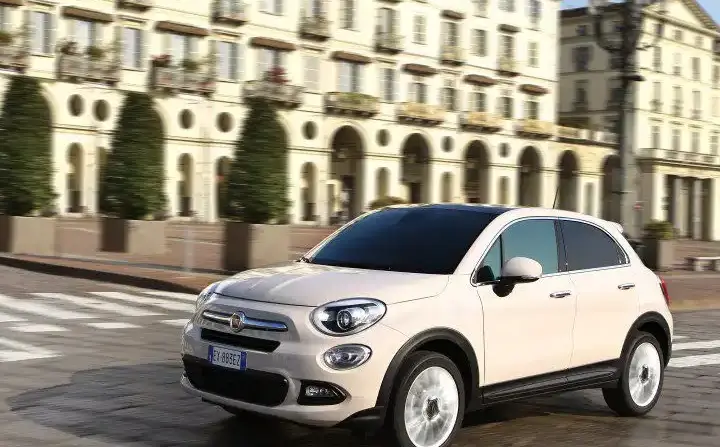
The Fiat 500X Cross/City Cross, specifically the facelifted version introduced in August 2018 and produced through January 2020, represented Fiat’s entry into the increasingly popular subcompact crossover SUV segment. This variant, powered by a 1.6 MultiJet II turbodiesel engine producing 120 horsepower and paired with a dual-clutch transmission (DCT), aimed to offer a balance of fuel efficiency, practicality, and a touch of Italian style. It sat within the 500X lineup as a mid-range offering, positioned above the base models and below the more powerful petrol-fueled trims. The 500X itself is based on the Small Wide architecture, shared with other Stellantis vehicles, and was designed to appeal to buyers seeking a more versatile and spacious alternative to the iconic Fiat 500 city car.
Technical Specifications
| Brand | Fiat |
| Model | 500X |
| Generation | 500X Cross/City Cross (facelift 2018) |
| Type (Engine) | 1.6 MultiJet II (120 Hp) DCT |
| Start of production | August, 2018 |
| End of production | January, 2020 |
| Powertrain Architecture | Internal Combustion engine |
| Body type | SUV, Crossover |
| Seats | 5 |
| Doors | 5 |
| Fuel consumption (urban) | 5.0-5.5 l/100 km (47 – 42.8 US mpg) |
| Fuel consumption (extra urban) | 4.5-4.9 l/100 km (52.3 – 48 US mpg) |
| Fuel consumption (combined) | 4.7-5.1 l/100 km (50 – 46.1 US mpg) |
| CO2 emissions | 122-134 g/km |
| Fuel Type | Diesel |
| Acceleration 0 – 100 km/h | 10.7 sec |
| Acceleration 0 – 62 mph | 10.7 sec |
| Acceleration 0 – 60 mph | 10.2 sec |
| Maximum speed | 186 km/h (115.58 mph) |
| Emission standard | Euro 6 d-TEMP |
| Weight-to-power ratio | 11 kg/Hp, 90.9 Hp/tonne |
| Weight-to-torque ratio | 4.1 kg/Nm, 242.4 Nm/tonne |
| Power | 120 Hp @ 3750 rpm |
| Torque | 320 Nm @ 1750 rpm (236.02 lb.-ft. @ 1750 rpm) |
| Engine layout | Front, Transverse |
| Engine Model/Code | 55260384 |
| Engine displacement | 1598 cm3 (97.52 cu. in.) |
| Number of cylinders | 4 |
| Engine configuration | Inline |
| Cylinder Bore | 79.5 mm (3.13 in.) |
| Piston Stroke | 80.5 mm (3.17 in.) |
| Compression ratio | 16.5:1 |
| Number of valves per cylinder | 4 |
| Fuel injection system | Diesel Commonrail |
| Engine aspiration | Turbocharger, Intercooler |
| Engine oil capacity | 4.8 l (5.07 US qt | 4.22 UK qt) |
| Coolant | 6.1 l (6.45 US qt | 5.37 UK qt) |
| Kerb Weight | 1320 kg (2910.1 lbs.) |
| Trunk (boot) space – minimum | 350 l (12.36 cu. ft.) |
| Trunk (boot) space – maximum | 1000 l (35.31 cu. ft.) |
| Fuel tank capacity | 55 l (14.53 US gal | 12.1 UK gal) |
| Length | 4269 mm (168.07 in.) |
| Width | 1796 mm (70.71 in.) |
| Width including mirrors | 2025 mm (79.72 in.) |
| Height | 1603 mm (63.11 in.) |
| Wheelbase | 2570 mm (101.18 in.) |
| Ride height (ground clearance) | 157 mm (6.18 in.) |
| Minimum turning circle | 11.05 m (36.25 ft.) |
| Drivetrain Architecture | Front wheel drive |
| Number of gears and type of gearbox | 6 gears, automatic transmission DCT |
| Front brakes | Ventilated discs |
| Rear brakes | Disc |
Powertrain & Engine Architecture
The heart of this 500X variant is the 1.6-liter MultiJet II turbodiesel engine, identified by engine code 55260384. This engine is a four-cylinder, inline configuration, featuring a common-rail direct fuel injection system and a turbocharger with an intercooler. The MultiJet II technology utilizes multiple injection events per combustion cycle, optimizing fuel atomization and combustion efficiency. The engine boasts a relatively high compression ratio of 16.5:1, contributing to its efficiency. The 120 horsepower output is achieved at 3750 rpm, while the peak torque of 320 Nm (236 lb-ft) is available from a low 1750 rpm, providing good responsiveness in everyday driving situations. Paired with this engine is a six-speed dual-clutch transmission (DCT). This DCT offers quicker and smoother gear changes compared to a traditional automatic transmission, enhancing both performance and fuel economy. The DCT’s programming prioritizes fuel efficiency, with taller gear ratios in the higher gears.
Driving Characteristics
The 1.6 MultiJet II with the DCT delivers a comfortable and refined driving experience. While not a performance-oriented setup, the 320 Nm of torque provides adequate acceleration for merging onto highways and overtaking. The 0-60 mph time of around 10.2 seconds is respectable for a vehicle in this class. The DCT contributes to smooth gear changes, although some drivers may notice a slight hesitation at lower speeds. Compared to the 1.4-liter petrol versions of the 500X, the diesel offers significantly better fuel economy and more low-end torque. However, it lacks the petrol engine’s higher-revving character. Against higher-powered diesel variants (like those with 130 or 150 hp), this 120 hp version feels less energetic, particularly when fully loaded or tackling steep inclines. The front-wheel-drive configuration provides predictable handling, but it doesn’t offer the all-weather capability of the available all-wheel-drive system on other 500X trims.
Equipment & Trim Levels
The 1.6 MultiJet II DCT trim typically included standard features such as air conditioning, a touchscreen infotainment system with Bluetooth connectivity, alloy wheels, and a leather-wrapped steering wheel. Safety features included ABS, electronic stability control, and multiple airbags. Optional extras often included a rearview camera, parking sensors, a navigation system, and upgraded upholstery. The “Cross” and “City Cross” designations indicated a slightly more rugged appearance with unique styling elements, such as skid plates and off-road-inspired bumpers. Interior upholstery was typically cloth, with the option of upgrading to leatherette or full leather. Dashboard configurations were generally consistent across the 500X range, featuring a retro-modern design inspired by the original Fiat 500.
Chassis & Braking
The 500X utilizes a front-wheel-drive platform with independent suspension at the front (typically MacPherson struts) and a torsion beam setup at the rear. The suspension is tuned for comfort, providing a relatively smooth ride over most road surfaces. Braking duties are handled by ventilated discs at the front and solid discs at the rear. ABS (Anti-lock Braking System) is standard, providing enhanced braking performance in emergency situations. Stabilizer bars are fitted to both the front and rear axles to reduce body roll during cornering. The steering system employs a rack-and-pinion setup, offering precise and responsive steering feel.
Market Reception & Comparison
The Fiat 500X 1.6 MultiJet II DCT received generally positive reviews for its fuel efficiency and comfortable ride. Critics praised the engine’s torque and the DCT’s smooth shifting. However, some reviewers noted that the interior materials felt somewhat low-rent compared to some competitors. In terms of fuel economy, this variant consistently outperformed the petrol-powered 500X models, achieving combined fuel consumption figures in the range of 4.7-5.1 l/100 km. Compared to rivals like the Renault Captur and Peugeot 2008, the 500X offered a unique blend of Italian styling and practicality. However, it often lagged behind in terms of interior space and overall refinement.
Legacy
The 1.6 MultiJet II engine has proven to be a relatively reliable unit, although, like all diesel engines, it requires regular maintenance, including oil changes and diesel particulate filter (DPF) regeneration. The DCT transmission is generally durable, but it’s important to ensure that it’s serviced according to the manufacturer’s recommendations. On the used car market, the 500X 1.6 MultiJet II DCT represents a good value proposition for buyers seeking a fuel-efficient and stylish crossover. However, potential buyers should be aware of the potential costs associated with diesel engine maintenance and the importance of ensuring that the DPF is functioning correctly. The 500X, in general, has established itself as a popular choice in the subcompact crossover segment, offering a distinctive alternative to more mainstream competitors.