
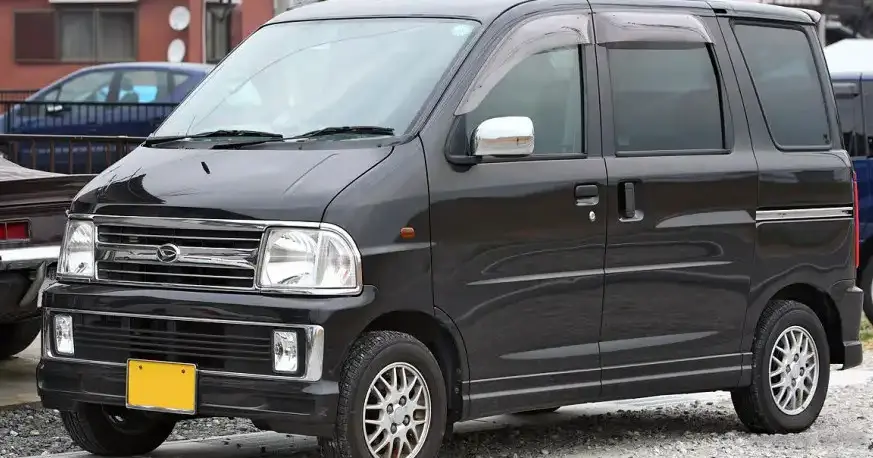
The Daihatsu Atrai and its rebadged counterpart, the Extol, represent a series of compact, rear-wheel-drive minivans produced by the Japanese manufacturer Daihatsu between 1982 and 2005. The generation spanning from 1999 to 2005, often referred to as the third generation, saw the introduction of a unique 0.7-liter inline-three cylinder engine in the V12 trim, producing 64 horsepower. This variant occupied the entry-level position within the Atrai/Extol lineup, aimed at buyers prioritizing affordability and practicality over outright performance. It was primarily sold in the Japanese domestic market (JDM), catering to the demand for small, versatile vehicles in densely populated urban areas.
Technical Specifications
| Brand | Daihatsu |
| Model | Atrai/Extol |
| Generation | Atrai/Extol (Third Generation) |
| Type (Engine) | 0.7 i V12 (64 Hp) |
| Start of production | 1999 |
| End of production | 2005 |
| Powertrain Architecture | Internal Combustion Engine |
| Body type | Minivan |
| Seats | 7 |
| Doors | 4 |
| Fuel Type | Petrol (Gasoline) |
| Weight-to-power ratio | 15 kg/Hp, 66.7 Hp/tonne |
| Weight-to-torque ratio | 9 kg/Nm, 111.5 Nm/tonne |
| Power | 64 Hp @ 6400 rpm |
| Power per litre | 97.1 Hp/l |
| Torque | 107 Nm @ 3600 rpm (78.92 lb.-ft. @ 3600 rpm) |
| Engine layout | Front, Longitudinal |
| Engine displacement | 659 cm3 (40.21 cu. in.) |
| Number of cylinders | 3 |
| Engine configuration | Inline |
| Cylinder Bore | 68 mm (2.68 in.) |
| Piston Stroke | 60.5 mm (2.38 in.) |
| Compression ratio | 8.6:1 |
| Number of valves per cylinder | 4 |
| Fuel injection system | Multi-port manifold injection |
| Engine aspiration | Naturally Aspirated |
| Valvetrain | DOHC |
| Kerb Weight | 960 kg (2116.44 lbs.) |
| Fuel tank capacity | 46 l (12.15 US gal | 10.12 UK gal) |
| Length | 3395 mm (133.66 in.) |
| Width | 1475 mm (58.07 in.) |
| Height | 1865 mm (73.43 in.) |
| Wheelbase | 2420 mm (95.28 in.) |
| Front track | 1285 mm (50.59 in.) |
| Rear track | 1290 mm (50.79 in.) |
| Drivetrain Architecture | Rear Wheel Drive, Internal Combustion Engine |
| Drive wheel | Rear wheel drive |
| Number of gears and type of gearbox | 5 gears, manual transmission |
| Front suspension | Coil spring |
| Rear suspension | Coil spring |
| Front brakes | Ventilated discs |
| Rear brakes | Drum |
| Assisting systems | ABS (Anti-lock braking system) |
| Steering type | Steering rack and pinion |
| Power steering | Hydraulic Steering |
| Tires size | 145/ R12 |
Powertrain & Engine Architecture
The heart of the Atrai/Extol 0.7 i V12 is the Daihatsu EB07 engine, a 659cc inline-three cylinder petrol engine. This engine utilizes a double overhead camshaft (DOHC) valvetrain with four valves per cylinder, contributing to its relatively high power output for its displacement. Fuel delivery is managed by a multi-port fuel injection system. While not turbocharged, the engine’s design focused on maximizing efficiency and drivability within the constraints of its small size. The engine is mounted longitudinally in the front of the vehicle. The five-speed manual transmission was the standard offering for this trim, providing a direct connection between the engine and the rear wheels. The transmission’s gear ratios were tuned for fuel economy and ease of use in urban driving conditions.
Driving Characteristics
The 64 horsepower output of the 0.7-liter engine translates to modest performance. Acceleration is best described as adequate for city driving, with limited reserves for highway overtaking. The rear-wheel-drive configuration provides a unique driving experience, particularly in slippery conditions, offering a degree of stability not found in front-wheel-drive competitors. The five-speed manual transmission allows the driver to keep the engine in its optimal power band, but the overall experience is geared towards practicality rather than sporty handling. Compared to higher-spec Atrai/Extol models equipped with larger engines, the 0.7-liter version feels significantly less powerful, but it compensates with improved fuel economy and a lighter overall weight.
Equipment & Trim Levels
The V12 trim, as the entry-level variant, typically featured basic amenities. Standard equipment generally included cloth upholstery, a simple dashboard layout, and manual windows and door locks. Air conditioning was often an optional extra. The interior prioritized functionality and durability over luxury. The Atrai/Extol was designed as a workhorse vehicle, and the V12 trim reflected this ethos. Available options included upgraded audio systems and different exterior color choices.
Chassis & Braking
The Atrai/Extol utilizes a body-on-frame construction, contributing to its robust nature. The front suspension consists of coil springs, while the rear also employs coil springs. The braking system features ventilated discs on the front wheels and drum brakes on the rear. Anti-lock Braking System (ABS) was included as a standard safety feature. The relatively lightweight nature of the vehicle, combined with the modest engine output, meant that the braking system was generally adequate for its intended purpose. Steering is handled by a hydraulic power steering rack and pinion system, providing reasonable maneuverability.
Market Reception & Comparison
The Daihatsu Atrai/Extol 0.7 i V12 was well-received in Japan as an affordable and practical transportation solution. Critics praised its fuel efficiency and compact size, making it ideal for navigating crowded city streets. However, its limited power output was often noted. Compared to other trims in the Atrai/Extol lineup, such as those equipped with larger engines, the 0.7-liter version offered a more economical option, but at the expense of performance. It competed with other kei-class vans and microvans from manufacturers like Suzuki and Honda, offering a similar blend of affordability and practicality.
Legacy
The Daihatsu Atrai/Extol 0.7 i V12, while not a performance icon, holds a significant place in the history of Japanese microvans. Its robust construction and relatively simple engine design contribute to its continued reliability in the used car market. Parts availability can be a challenge outside of Japan, but the engine’s simplicity makes it relatively easy to maintain for experienced mechanics. Today, these vans are often sought after by enthusiasts looking for a unique and affordable vehicle with a distinct retro charm. The EB07 engine, while small, proved to be a durable and dependable powerplant, contributing to the Atrai/Extol’s enduring appeal.
