
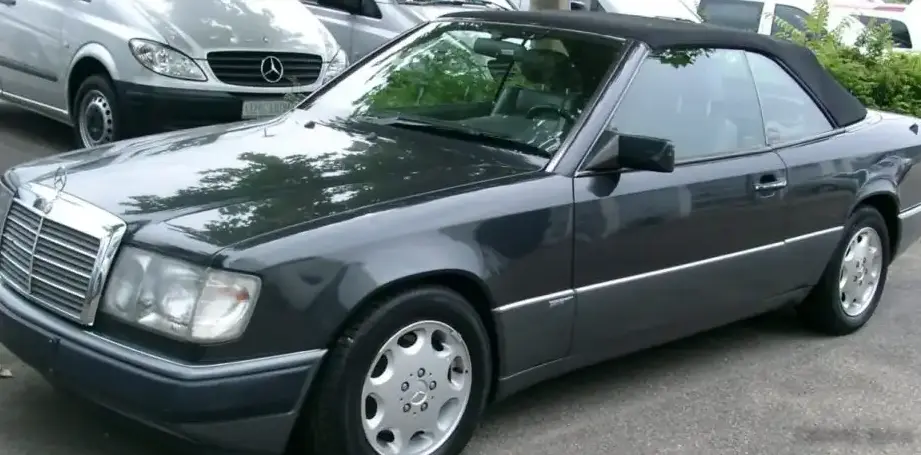
The Mercedes-Benz A124 300 CE-24 CAT Automatic, produced between August 1990 and July 1993, represents a sophisticated iteration of the W124 Cabriolet range. Positioned as a premium offering within the lineup, it combined a potent 3.0-liter inline-six engine with a four-speed automatic transmission, targeting buyers seeking a blend of performance and comfortable open-top motoring. This variant was a key part of the second series of the W124 Cabriolet, benefitting from updates to the engine and emissions control systems. The “CAT” designation signifies the inclusion of a catalytic converter, reflecting Mercedes-Benz’s commitment to meeting increasingly stringent environmental regulations.
Technical Specifications
| Brand | Mercedes-Benz |
| Model | W124 |
| Generation | A124 |
| Type | 300 CE-24 CAT (220 Hp) Automatic |
| Start of production | August, 1990 |
| End of production | July, 1993 |
| Powertrain Architecture | Internal Combustion engine |
| Body type | Cabriolet |
| Seats | 4 |
| Doors | 2 |
| Fuel consumption (urban) | 14.7 l/100 km (16 US mpg, 19.2 UK mpg) |
| Fuel consumption (extra urban) | 9.3 l/100 km (25.3 US mpg, 30.4 UK mpg) |
| Fuel Type | Petrol (Gasoline) |
| Acceleration 0 – 100 km/h | 8.8 sec |
| Acceleration 0 – 62 mph | 8.8 sec |
| Acceleration 0 – 60 mph | 8.4 sec |
| Maximum speed | 230 km/h (142.92 mph) |
| Weight-to-power ratio | 7.8 kg/Hp |
| Weight-to-torque ratio | 6.5 kg/Nm |
| Power | 220 Hp @ 6400 rpm |
| Power per litre | 74.3 Hp/l |
| Torque | 265 Nm @ 4600 rpm (195.45 lb.-ft. @ 4600 rpm) |
| Engine layout | Front, Longitudinal |
| Engine Model/Code | M 104 E 30 / 104.980 |
| Engine displacement | 2960 cm3 (180.63 cu. in.) |
| Number of cylinders | 6 |
| Engine configuration | Inline |
| Cylinder Bore | 88.5 mm (3.48 in.) |
| Piston Stroke | 80.2 mm (3.16 in.) |
| Compression ratio | 10:1 |
| Number of valves per cylinder | 4 |
| Fuel injection system | Multi-port manifold injection |
| Engine aspiration | Naturally aspirated engine |
| Valvetrain | DOHC |
| Engine oil capacity | 6.5 l (6.87 US qt | 5.72 UK qt) |
| Coolant capacity | 9 l (9.51 US qt | 7.92 UK qt) |
| Kerb Weight | 1710 kg (3769.9 lbs.) |
| Max. weight | 2160 kg (4761.98 lbs.) |
| Max load | 450 kg (992.08 lbs.) |
| Fuel tank capacity | 70 l (18.49 US gal | 15.4 UK gal) |
| Length | 4655 mm (183.27 in.) |
| Width | 1740 mm (68.5 in.) |
| Height | 1391 mm (54.76 in.) |
| Wheelbase | 2715 mm (106.89 in.) |
| Front track | 1501 mm (59.09 in.) |
| Rear track | 1491 mm (58.7 in.) |
| Drivetrain Architecture | Rear wheel drive |
| Number of gears | 4 |
| Gearbox type | Automatic transmission |
| Front suspension | Wishbone |
| Rear suspension | Independent multi-link suspension |
| Front brakes | Ventilated discs |
| Rear brakes | Disc |
| Assisting systems | ABS (Anti-lock braking system) |
| Steering type | Cone worm with recirculation balls |
| Power steering | Hydraulic Steering |
| Tires size | 195/65 R15 |
| Wheel rims size | 6.5J x 15 |
Powertrain & Engine Architecture
The heart of the 300 CE-24 CAT is the M104.980 3.0-liter inline-six engine. This engine, a descendant of the renowned Mercedes-Benz inline-six family, featured a cast iron block and aluminum cylinder head. It employed multi-port fuel injection and a double overhead camshaft (DOHC) valvetrain, contributing to its smooth power delivery and relatively high specific output. The catalytic converter, integral to the “CAT” designation, reduced harmful emissions. The four-speed automatic transmission, a common unit in Mercedes-Benz vehicles of the era, was designed for smooth and refined shifts, prioritizing comfort over outright performance. While not a particularly advanced transmission by modern standards, it was known for its durability and reliability.
Driving Characteristics
The 300 CE-24 CAT Automatic offered a distinctly grand touring experience. The 220 horsepower engine provided ample power for comfortable cruising and confident overtaking, though it wasn’t as overtly sporty as the manual transmission versions or the higher-output 300 CE-24 models. The automatic transmission, while smooth, did result in some power loss compared to the manual, and gear changes weren’t as immediate. The gear ratios were tuned for relaxed highway driving, with a focus on fuel efficiency and minimizing engine noise. The rear-wheel drive configuration provided balanced handling, but the relatively heavy weight of the vehicle (1710 kg / 3769.9 lbs) meant it wasn’t a particularly nimble car.
Equipment & Trim Levels
The 300 CE-24 CAT Automatic came standard with a generous array of features, befitting its premium positioning. These included leather upholstery, power windows, central locking, and an automatically adjusting climate control system. Optional extras were plentiful, allowing buyers to customize their vehicles with features such as a sunroof, upgraded audio systems, and heated seats. The interior trim was typically finished in wood veneer, adding to the luxurious ambiance. The Cabriolet body style itself was a significant feature, offering open-air driving enjoyment.
Chassis & Braking
The W124 Cabriolet chassis featured independent suspension all around, with a wishbone setup at the front and a multi-link suspension at the rear. This configuration provided a comfortable ride and good handling characteristics. The 300 CE-24 CAT was equipped with ventilated disc brakes at the front and solid disc brakes at the rear. An Anti-lock Braking System (ABS) was standard, enhancing safety by preventing wheel lockup during hard braking. The steering was a recirculating ball system with hydraulic power assistance, offering a balance of precision and ease of use.
Market Reception & Comparison
The 300 CE-24 CAT Automatic was generally well-received by automotive critics. It was praised for its comfortable ride, refined engine, and luxurious interior. However, some reviewers noted that the automatic transmission dulled the engine’s performance somewhat, and the car wasn’t as engaging to drive as its manual counterparts. Compared to the 300 CE-24 with a manual transmission, the automatic version offered slightly slower acceleration and reduced fuel economy. Against diesel variants like the 300 D, it offered significantly more power but at the cost of fuel efficiency. The 300 CE-24 CAT aimed for a middle ground, appealing to buyers who prioritized comfort and refinement over outright performance.
Legacy
The M104 engine, found in the 300 CE-24 CAT, is known for its durability and longevity. When properly maintained, these engines can reliably exceed 200,000 miles. The automatic transmission, while not as sophisticated as modern units, is also generally robust. Today, the W124 Cabriolet, including the 300 CE-24 CAT Automatic, is a sought-after classic car. Values have been steadily increasing, particularly for well-maintained examples. The combination of classic Mercedes-Benz styling, comfortable driving characteristics, and relative reliability makes it a desirable vehicle for collectors and enthusiasts alike. Finding parts can still be manageable, though some specific trim pieces may be challenging to source.
