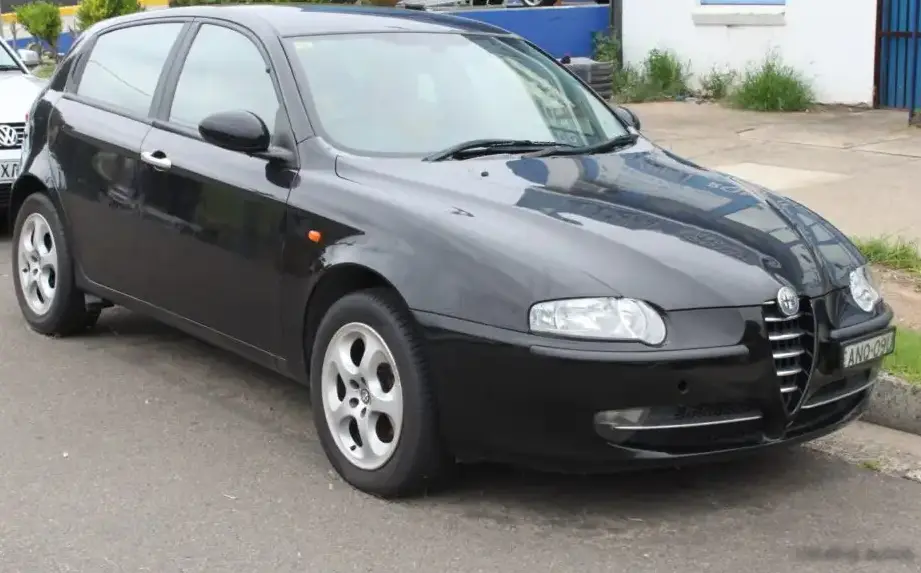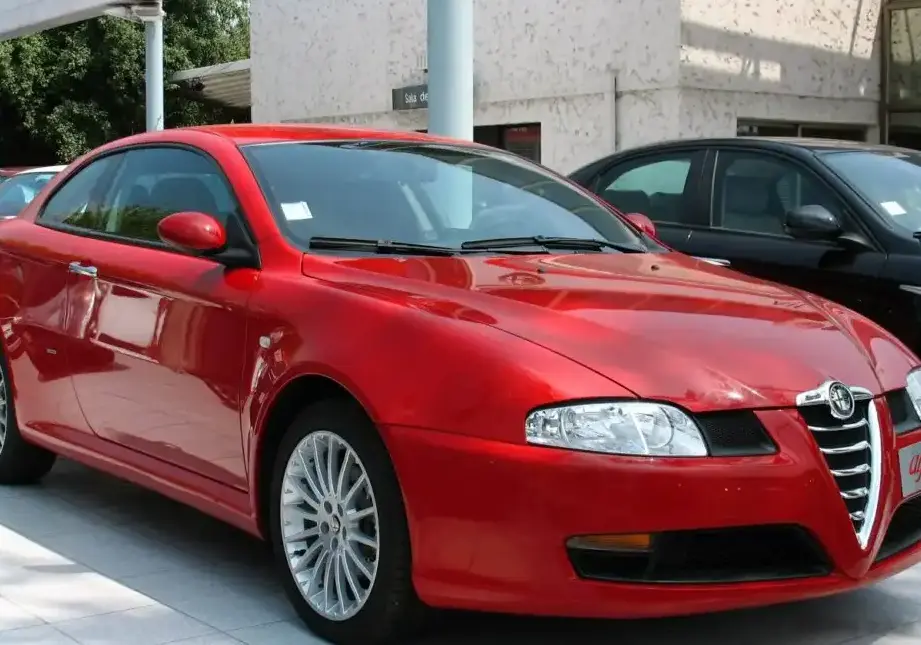
The Alfa Romeo GT Coupe (937), specifically the 2.0 i 16V JTS variant producing 165 horsepower, was a front-wheel-drive coupe manufactured from 2003 to 2010. Positioned as a stylish and relatively affordable entry point into the Alfa Romeo lineup, it aimed to recapture the spirit of the classic Giulia GT while offering modern performance and features. This model occupied a middle ground within the 937 range, offering a balance between the base 1.9 JTS and the more potent 2.0 JTS with higher output. It was primarily marketed in Europe, where the demand for compact, sporty coupes remained strong.
Technical Specifications
| Brand | Alfa Romeo |
| Model | GT |
| Generation | GT Coupe (937) |
| Type (Engine) | 2.0 i 16V JTS (165 Hp) |
| Start of production | 2003 |
| End of production | 2010 |
| Powertrain Architecture | Internal Combustion engine |
| Body type | Coupe |
| Seats | 4 |
| Doors | 2 |
| Fuel consumption (urban) | 12.2 l/100 km (19.3 US mpg) |
| Fuel consumption (extra urban) | 6.7 l/100 km (35.1 US mpg) |
| Fuel consumption (combined) | 8.7 l/100 km (27 US mpg) |
| CO2 emissions | 207 g/km |
| Fuel Type | Petrol (Gasoline) |
| Acceleration 0 – 100 km/h | 8.7 sec |
| Acceleration 0 – 62 mph | 8.7 sec |
| Acceleration 0 – 60 mph | 8.3 sec |
| Maximum speed | 216 km/h (134.22 mph) |
| Weight-to-power ratio | 8 kg/Hp |
| Weight-to-torque ratio | 6.4 kg/Nm |
| Power | 165 Hp @ 6400 rpm |
| Torque | 206 Nm @ 3250 rpm (151.94 lb.-ft. @ 3250 rpm) |
| Engine layout | Front, Transverse |
| Engine Model/Code | 937A1000 |
| Engine displacement | 1970 cm3 (120.22 cu. in.) |
| Number of cylinders | 4 |
| Engine configuration | Inline |
| Cylinder Bore | 83 mm (3.27 in.) |
| Piston Stroke | 91 mm (3.58 in.) |
| Compression ratio | 11.3:1 |
| Number of valves per cylinder | 4 |
| Fuel injection system | Direct injection |
| Engine oil capacity | 4.4 l (4.65 US qt | 3.87 UK qt) |
| Coolant capacity | 7.2 l (7.61 US qt | 6.34 UK qt) |
| Kerb Weight | 1320 kg (2910.1 lbs.) |
| Max. weight | 1750 kg (3858.09 lbs.) |
| Max load | 430 kg (947.99 lbs.) |
| Trunk (boot) space – minimum | 320 l (11.3 cu. ft.) |
| Trunk (boot) space – maximum | 905 l (31.96 cu. ft.) |
| Fuel tank capacity | 63 l (16.64 US gal | 13.86 UK gal) |
| Length | 4480 mm (176.38 in.) |
| Width | 1760 mm (69.29 in.) |
| Height | 1390 mm (54.72 in.) |
| Wheelbase | 2596 mm (102.2 in.) |
| Front track | 1511 mm (59.49 in.) |
| Rear track | 1494 mm (58.82 in.) |
| Drivetrain Architecture | Front wheel drive |
| Number of gears | 5 |
| Gearbox type | Manual transmission |
| Front suspension | Spring Strut |
| Rear suspension | Coil spring |
| Front brakes | Ventilated discs |
| Rear brakes | Disc |
| Assisting systems | ABS (Anti-lock braking system) |
| Steering type | Steering rack and pinion |
| Tires size | 205/55 R16 |
| Wheel rims size | 6.5J x 16 |
Powertrain & Engine Architecture
The heart of the 2.0 i 16V JTS is the 937A1000 engine, a 1.97-liter inline-four cylinder powerplant. “JTS” stands for Jet Traction System, denoting Alfa Romeo’s direct injection technology. This system, developed in conjunction with Magneti Marelli, aimed to improve fuel efficiency and power output compared to traditional multi-point injection. The engine features a relatively high compression ratio of 11.3:1 and utilizes a dual continuously variable valve timing (CVVT) system on both intake and exhaust valves, optimizing performance across the rev range. The 5-speed manual transmission was the standard offering, chosen for its balance of cost and driver engagement. The transmission’s gear ratios were tuned to provide reasonable acceleration while maintaining acceptable fuel economy.
Driving Characteristics
The 165 horsepower and 152 lb-ft of torque delivered by the 2.0 JTS engine provided adequate, though not exhilarating, performance. Acceleration from 0-60 mph took around 8.3 seconds, and top speed was approximately 134 mph. Compared to the higher-output 2.0 JTS variants, this version felt less urgent, particularly at higher speeds. The manual transmission offered precise shifts, but the gear ratios weren’t particularly aggressive, prioritizing fuel economy over outright performance. The front-wheel-drive configuration, while contributing to lower weight and cost, could exhibit torque steer under hard acceleration. The overall driving experience was characterized by a comfortable ride and predictable handling, making it a suitable daily driver.
Equipment & Trim Levels
The 2.0 i 16V JTS typically came equipped with a reasonable level of standard features. Interior appointments included cloth upholstery, air conditioning, power windows and mirrors, and a basic audio system. Optional extras included leather upholstery, a sunroof, alloy wheels, and upgraded audio systems. Alfa Romeo offered various trim packages that bundled popular options together. The GT’s interior design was driver-focused, with a sporty three-spoke steering wheel and well-placed controls. The rear seats, while present, were best suited for occasional use due to limited legroom.
Chassis & Braking
The Alfa Romeo GT Coupe utilized a MacPherson strut front suspension and a multi-link rear suspension, providing a good balance of ride comfort and handling. The front brakes were ventilated discs, while the rear brakes were solid discs. Anti-lock Braking System (ABS) was standard. The chassis was relatively lightweight, contributing to the car’s nimble handling characteristics. The steering was a rack-and-pinion system, providing precise and responsive steering feel. The standard tire size was 205/55 R16, offering a good compromise between grip and ride comfort.
Market Reception & Comparison
The 2.0 i 16V JTS variant of the Alfa Romeo GT Coupe was generally well-received by automotive critics as a stylish and affordable coupe. However, some reviewers noted that the engine lacked the punch of its higher-output counterparts. Fuel economy was considered average for its class. Compared to the 1.9 JTS, the 2.0 offered a noticeable performance improvement, justifying the slightly higher price. Compared to the more powerful 2.0 JTS, it represented a more economical option, appealing to buyers who prioritized fuel efficiency and affordability over outright performance.
Legacy
The Alfa Romeo GT Coupe, including the 2.0 i 16V JTS variant, has developed a modest following among enthusiasts. The JTS engine, while generally reliable, can be prone to issues with the direct injection system, requiring careful maintenance. The car’s stylish design and engaging driving dynamics have ensured its continued appeal in the used car market. Parts availability can be a concern, as the GT is no longer in production. However, a dedicated community of Alfa Romeo enthusiasts helps to keep these cars on the road. The 937 GT represents a final flourish of Alfa Romeo’s traditional coupe styling before the brand shifted its focus towards more mainstream models.