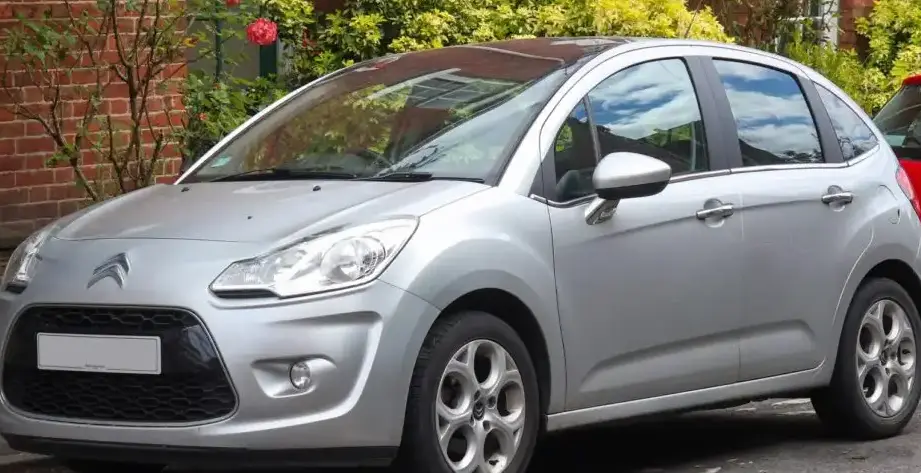
The Citroen C3 II 1.4 VTi 95 Hp VTR+ EGS, produced between 2011 and 2013, represents a key variant within the second generation of Citroen’s popular supermini. Positioned as a mid-range offering in the C3 II lineup, this model aimed to balance affordability with a reasonable level of equipment and convenience. It was primarily marketed in Europe, where the demand for fuel-efficient and practical hatchbacks was high. This particular version utilized Citroen’s electronically controlled gearbox (EGS) paired with the 1.4-liter VTi engine, offering an alternative to the standard manual transmission. The C3 II itself was built on the PF1 platform, shared with the Peugeot 207, and represented a significant step forward in design and technology compared to its predecessor.
Technical Specifications
| Brand | Citroen |
| Model | C3 |
| Generation | C3 II (Phase I, 2009) |
| Type (Engine) | 1.4 VTi (95 Hp) VTR+ EGS |
| Start of production | 2011 |
| End of production | 2013 |
| Powertrain Architecture | Internal Combustion engine |
| Body type | Hatchback |
| Seats | 5 |
| Doors | 5 |
| Fuel consumption (urban) | 7.4 l/100 km (31.8 US mpg) |
| Fuel consumption (extra urban) | 4.4 l/100 km (53.5 US mpg) |
| Fuel consumption (combined) | 5.5 l/100 km (42.8 US mpg) |
| CO2 emissions | 127 g/km |
| Fuel Type | Petrol (Gasoline) |
| Acceleration 0 – 100 km/h | 13.2 sec |
| Acceleration 0 – 62 mph | 13.2 sec |
| Acceleration 0 – 60 mph | 12.5 sec |
| Maximum speed | 184 km/h (114.33 mph) |
| Emission standard | Euro 5 |
| Weight-to-power ratio | 11.4 kg/Hp |
| Weight-to-torque ratio | 7.9 kg/Nm |
| Power | 95 Hp @ 6000 rpm |
| Torque | 136 Nm @ 4000 rpm (100.31 lb.-ft. @ 4000 rpm) |
| Engine layout | Front, Transverse |
| Engine Model/Code | 8FR EP3C |
| Engine displacement | 1397 cm3 (85.25 cu. in.) |
| Number of cylinders | 4 |
| Engine configuration | Inline |
| Cylinder Bore | 77 mm (3.03 in.) |
| Piston Stroke | 75 mm (2.95 in.) |
| Compression ratio | 11:1 |
| Number of valves per cylinder | 4 |
| Fuel injection system | Multi-port manifold injection |
| Engine aspiration | Naturally aspirated engine |
| Valvetrain | DOHC |
| Engine oil capacity | 4.25 l (4.49 US qt | 3.74 UK qt) |
| Coolant capacity | 5.7 l (6.02 US qt | 5.02 UK qt) |
| Kerb Weight | 1079 kg (2378.79 lbs.) |
| Max. weight | 1581 kg (3485.51 lbs.) |
| Max load | 502 kg (1106.72 lbs.) |
| Trunk (boot) space – minimum | 300 l (10.59 cu. ft.) |
| Fuel tank capacity | 48 l (12.68 US gal | 10.56 UK gal) |
| Permitted trailer load without brakes | 570 kg (1256.63 lbs.) |
| Length | 3941 mm (155.16 in.) |
| Width | 1728 mm (68.03 in.) |
| Height | 1524 mm (60 in.) |
| Wheelbase | 2466 mm (97.09 in.) |
| Front track | 1469 mm (57.83 in.) |
| Rear track | 1440 mm (56.69 in.) |
| Front overhang | 815 mm (32.09 in.) |
| Rear overhang | 660 mm (25.98 in.) |
| Drag coefficient (Cd) | 0.31 |
| Minimum turning circle | 10.2 m (33.46 ft.) |
| Drivetrain Architecture | Front wheel drive |
| Number of gears and type of gearbox | 5 gears, automatic transmission EGS |
| Front suspension | Independent, type McPherson with coil spring and anti-roll bar |
| Rear suspension | Semi-independent, coil spring |
| Front brakes | Ventilated discs |
| Rear brakes | Drum |
| Assisting systems | ABS (Anti-lock braking system) |
| Steering type | Steering rack and pinion |
| Tires size | 185/65 R15 |
| Wheel rims size | 15 |
Powertrain & Engine Architecture
The heart of the C3 II 1.4 VTi VTR+ EGS is the 8FR (EP3C) engine, a 1.4-liter inline-four cylinder petrol engine. This engine belongs to Citroen/Peugeot’s Prince engine family, developed in collaboration with BMW. It features a naturally aspirated configuration, multi-point fuel injection, and a double overhead camshaft (DOHC) valvetrain with four valves per cylinder. The engine produces 95 horsepower at 6000 rpm and 136 Nm (100.31 lb-ft) of torque at 4000 rpm. The EGS (Electronically Controlled Gearbox) transmission is a semi-automatic system, essentially a conventional manual gearbox with automated clutch operation and gear changes. It differs from a traditional automatic transmission in that it doesn’t use a torque converter, resulting in slightly improved fuel efficiency but potentially less smooth shifts. The EGS unit in the C3 II has 5 forward gears.
Driving Characteristics
The 1.4 VTi 95 Hp EGS variant of the C3 II delivers modest performance. Acceleration from 0 to 60 mph takes around 12.5 seconds, and the top speed is approximately 114 mph. The EGS transmission, while offering convenience, can feel somewhat hesitant and jerky during gear changes, particularly at lower speeds. Compared to the manual transmission version of the same engine, the EGS offers slightly reduced responsiveness. Higher-output versions of the C3 II, such as those equipped with the 1.6 VTi engine, provided significantly more spirited performance. The gear ratios in the EGS transmission are tuned for fuel economy rather than outright acceleration, making it well-suited for urban driving but less engaging on open roads.
Equipment & Trim Levels
The VTR+ trim level, as found in this variant, represented a step up from the base models. Standard equipment typically included air conditioning, electric front windows, a CD player with MP3 compatibility, remote central locking, and ABS brakes. The interior featured cloth upholstery and a functional, if somewhat basic, dashboard layout. Optional extras available for the VTR+ included alloy wheels, a panoramic sunroof, and parking sensors. The C3 II generally offered a comfortable and practical interior, with a focus on usability rather than luxury.
Chassis & Braking
The C3 II utilizes a McPherson strut front suspension and a semi-independent coil spring rear suspension. This setup provides a reasonable balance between ride comfort and handling. The front brakes are ventilated discs, while the rear brakes are drums. The steering is a rack and pinion system, offering adequate precision for everyday driving. The relatively lightweight nature of the vehicle (approximately 1079 kg or 2379 lbs) helps to mitigate the effects of the modest engine output.
Market Reception & Comparison
The Citroen C3 II 1.4 VTi 95 Hp EGS was generally well-received as an affordable and economical city car. Critics praised its fuel efficiency and practicality, but some noted the EGS transmission’s occasionally clunky operation. Compared to other trims in the C3 II lineup, this variant offered a good compromise between price and features. The 1.6 VTi models were more powerful and enjoyable to drive, but also more expensive. The diesel-powered variants (e.g., 1.6 HDi) offered superior fuel economy but came with a higher initial cost and potentially more complex maintenance requirements.
Legacy
The 8FR (EP3C) 1.4 VTi engine, while not known for exceptional performance, proved to be relatively reliable. The EGS transmission, however, has a reputation for being less durable than traditional automatic gearboxes, and repairs can be costly. In the used car market, the C3 II 1.4 VTi VTR+ EGS represents a budget-friendly option for those seeking a practical and economical supermini. However, potential buyers should be aware of the potential issues with the EGS transmission and ensure that it has been properly maintained.