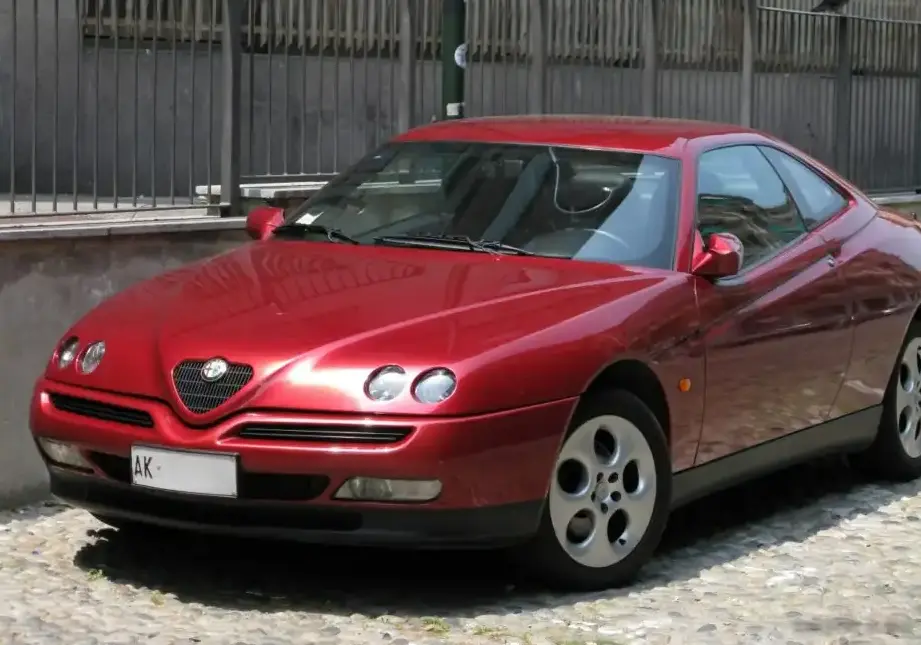
The Alfa Romeo GTV (916) 3.0 V6, produced from 1997 to 2003, represents the pinnacle of the 916 GTV series. Positioned as the flagship model, it offered a significant performance upgrade over the 1.8L and 2.0L Twin Spark variants. Built on the Type 916 platform, shared with the Alfa Romeo Spider, the 3.0 V6 aimed to deliver a true Italian sports car experience, blending distinctive styling with a potent engine. This variant was primarily marketed in Europe, where Alfa Romeo maintained a strong following for its driver-focused vehicles. While never officially sold in large numbers in the United States due to import regulations and market preferences, the 3.0 V6 GTV has gained a cult following among enthusiasts.
Technical Specifications
| Brand | Alfa Romeo |
| Model | GTV |
| Generation | GTV (916) |
| Type (Engine) | 3.0 V6 (220 Hp) |
| Start of production | 1997 |
| End of production | 2003 |
| Powertrain Architecture | Internal Combustion engine |
| Body type | Coupe |
| Seats | 4 |
| Doors | 2 |
| Fuel consumption (urban) | 17 l/100 km (13.8 US mpg) |
| Fuel consumption (extra urban) | 7.7 l/100 km (30.5 US mpg) |
| Fuel Type | Petrol (Gasoline) |
| Acceleration 0 – 100 km/h | 6.7 sec |
| Acceleration 0 – 62 mph | 6.7 sec |
| Acceleration 0 – 60 mph | 6.4 sec |
| Maximum speed | 240 km/h (149.13 mph) |
| Weight-to-power ratio | 6.4 kg/Hp |
| Weight-to-torque ratio | 5.3 kg/Nm |
| Power | 220 Hp @ 6300 rpm |
| Power per litre | 74.3 Hp/l |
| Torque | 265 Nm @ 5000 rpm (195.45 lb.-ft. @ 5000 rpm) |
| Engine layout | Front, Transverse |
| Engine Model/Code | AR 16102 |
| Engine displacement | 2959 cm3 (180.57 cu. in.) |
| Number of cylinders | 6 |
| Engine configuration | V-engine |
| Cylinder Bore | 93 mm (3.66 in.) |
| Piston Stroke | 72.6 mm (2.86 in.) |
| Compression ratio | 10:1 |
| Number of valves per cylinder | 4 |
| Fuel injection system | Multi-port manifold injection |
| Engine aspiration | Naturally aspirated engine |
| Valvetrain | DOHC |
| Engine oil capacity | 5.9 l (6.23 US qt | 5.19 UK qt) |
| Coolant | 11.7 l (12.36 US qt | 10.29 UK qt) |
| Kerb Weight | 1415 kg (3119.54 lbs.) |
| Max. weight | 1820 kg (4012.41 lbs.) |
| Max load | 405 kg (892.87 lbs.) |
| Trunk (boot) space – minimum | 110 l (3.88 cu. ft.) |
| Fuel tank capacity | 70 l (18.49 US gal | 15.4 UK gal) |
| Length | 4285 mm (168.7 in.) |
| Width | 1780 mm (70.08 in.) |
| Height | 1320 mm (51.97 in.) |
| Wheelbase | 2540 mm (100 in.) |
| Front track | 1510 mm (59.45 in.) |
| Rear (Back) track | 1530 mm (60.24 in.) |
| Drivetrain Architecture | Front wheel drive |
| Drive wheel | Front wheel drive |
| Number of gears and type of gearbox | 5 gears, manual transmission |
| Front suspension | Spring Strut |
| Rear suspension | Coil spring |
| Front brakes | Ventilated discs |
| Rear brakes | Disc |
| Assisting systems | ABS (Anti-lock braking system) |
| Steering type | Steering rack and pinion |
| Power steering | Hydraulic Steering |
| Tires size | 205/50 ZR16 |
Introduction
The Alfa Romeo GTV 3.0 V6, launched in 1997, was the performance leader of the 916 GTV range. It represented a return to Alfa Romeo’s roots of building engaging, driver-focused coupes. The 916 platform, designed by Pininfarina, offered a sleek and modern aesthetic, a departure from the more angular designs of previous Alfa Romeo models. The 3.0 V6 was intended to appeal to enthusiasts seeking a sophisticated and powerful sports coupe, offering a more refined experience than the smaller-displacement Twin Spark engines. Production continued until 2003, with relatively limited numbers produced compared to the 1.8 and 2.0L models.
Powertrain & Engine Architecture
The heart of the GTV 3.0 V6 is the AR 16102 engine, a 2.959-liter naturally aspirated V6. This engine, derived from the Alfa Romeo Busso V6 family (named after its chief engineer, Giuseppe Busso), is renowned for its smooth power delivery and distinctive exhaust note. It features a 60-degree V-angle, contributing to its compact size and balance. The engine utilizes multi-port fuel injection and a double overhead camshaft (DOHC) valvetrain with four valves per cylinder. The engine produces 220 horsepower at 6300 rpm and 265 Nm (195 lb-ft) of torque at 5000 rpm. The engine is transversely mounted, driving the front wheels. The standard transmission was a five-speed manual gearbox, providing precise and engaging shifts. While an automatic transmission was offered on some GTV models, it was not typically paired with the 3.0 V6 due to its inability to handle the engine’s power output effectively.
Driving Characteristics
The GTV 3.0 V6 delivers a distinctly sporty driving experience. The engine’s power is readily available throughout the rev range, providing strong acceleration. The 0-60 mph sprint takes approximately 6.4 seconds, and it reaches a top speed of 149 mph. The front-wheel-drive configuration, while offering good traction, can exhibit torque steer under hard acceleration. The five-speed manual gearbox is well-matched to the engine, offering precise shifts and allowing the driver to fully exploit the V6’s performance. Compared to the 1.8L and 2.0L Twin Spark models, the 3.0 V6 offers a significantly more powerful and refined driving experience. The Twin Sparks, while enjoyable, lacked the outright performance and sophisticated character of the V6.
Equipment & Trim Levels
The GTV 3.0 V6 was generally well-equipped, reflecting its position as the range-topping model. Standard features included leather upholstery, air conditioning, power windows and mirrors, and an upgraded audio system. Alfa Romeo offered a range of optional extras, including a sunroof, heated seats, and upgraded alloy wheels. Interior trim was typically focused on sporty elegance, with a leather-wrapped steering wheel and aluminum accents. The dashboard layout was driver-focused, with clearly arranged instruments and controls. The GTV 3.0 V6 didn’t have distinct “trim levels” in the traditional sense; options were largely added individually.
Chassis & Braking
The GTV 3.0 V6 utilizes a MacPherson strut front suspension and a coil spring rear suspension. The suspension setup is tuned for a balance between comfort and handling, providing a relatively compliant ride while maintaining good body control. The braking system consists of ventilated discs at the front and solid discs at the rear, with ABS as standard. The braking performance is adequate for the car’s performance, but the system can feel somewhat lacking in feel compared to more modern sports cars. The car’s curb weight of 1415 kg (3119.54 lbs) contributes to its agile handling characteristics.
Market Reception & Comparison
The Alfa Romeo GTV 3.0 V6 was generally well-received by automotive critics, who praised its engine, styling, and driving dynamics. However, some criticisms were leveled at its front-wheel-drive configuration, which limited its handling potential compared to rear-wheel-drive competitors. Compared to the 1.8L and 2.0L Twin Spark models, the 3.0 V6 offered significantly better performance but also came with a higher price tag and slightly lower fuel economy. The 3.0 V6 was often compared to other sports coupes of the era, such as the BMW Z3 and the Porsche Boxster, but it offered a unique Italian flair and a more affordable price point.
Legacy
The Alfa Romeo GTV 3.0 V6 has become a sought-after classic among enthusiasts. The Busso V6 engine is highly regarded for its reliability and tunability, and well-maintained examples are becoming increasingly valuable. While the GTV 3.0 V6 is not without its quirks – Alfa Romeos of this era were known for occasional electrical gremlins – it offers a rewarding and engaging driving experience that continues to appeal to enthusiasts today. The car’s distinctive styling and potent engine ensure its place as a memorable and desirable Italian sports coupe.