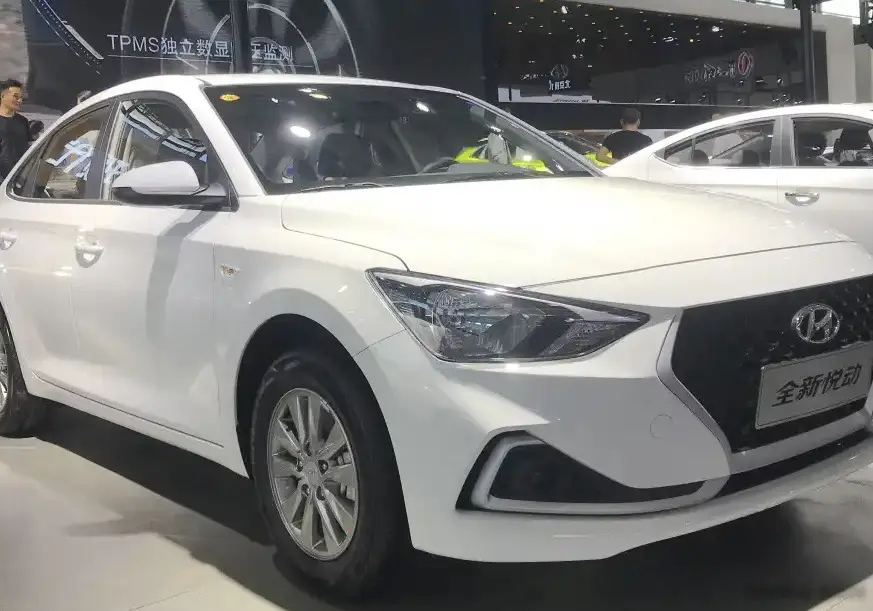
The Hyundai Celesta Station Wagon 1.6i, producing 123 horsepower, was a variant of the Celesta model specifically tailored for markets prioritizing practicality and fuel efficiency. Introduced in 2017, this version occupied a mid-range position within the Celesta lineup, offering a balance between performance and affordability. The Celesta itself was designed primarily for the Chinese market, where station wagons, or estates as they are also known, maintain a stronger consumer base than in North America. It’s built on Hyundai’s compact platform, aiming to provide a spacious and versatile vehicle for families.
Technical Specifications
| Brand | Hyundai |
| Model | Celesta |
| Generation | Celesta Station Wagon |
| Type (Engine) | 1.6i (123 Hp) |
| Start of production | 2017 |
| Powertrain Architecture | Internal Combustion engine |
| Body type | Station wagon (estate) |
| Seats | 5 |
| Doors | 5 |
| Fuel consumption (combined) | 5.7 l/100 km (41.3 US mpg, 49.6 UK mpg, 17.5 km/l) |
| Fuel Type | Petrol (Gasoline) |
| Maximum speed | 188 km/h (116.82 mph) |
| Weight-to-power ratio | 9.4 kg/Hp, 106.4 Hp/tonne |
| Weight-to-torque ratio | 7.7 kg/Nm, 130.6 Nm/tonne |
| Power | 123 Hp @ 6300 rpm |
| Power per litre | 77.3 Hp/l |
| Torque | 151 Nm @ 4850 rpm (111.37 lb.-ft. @ 4850 rpm) |
| Engine layout | Front, Transverse |
| Engine Model/Code | Gamma II / G4FG |
| Engine displacement | 1591 cm3 (97.09 cu. in.) |
| Number of cylinders | 4 |
| Engine configuration | Inline |
| Fuel injection system | Multi-port manifold injection |
| Engine aspiration | Naturally aspirated engine |
| Valvetrain | D-CVVT |
| Engine oil capacity | 3.6 l (3.8 US qt | 3.17 UK qt) |
| Kerb Weight | 1156 kg (2548.54 lbs.) |
| Trunk (boot) space – minimum | 468 l (16.53 cu. ft.) |
| Fuel tank capacity | 50 l (13.21 US gal | 11 UK gal) |
| Length | 4405 mm (173.43 in.) |
| Width | 1750 mm (68.9 in.) |
| Height | 1470 mm (57.87 in.) |
| Wheelbase | 2650 mm (104.33 in.) |
| Drivetrain Architecture | The Internal combustion engine (ICE) drives the front wheels of the vehicle. |
| Drive wheel | Front wheel drive |
| Number of gears and type of gearbox | 6 gears, manual transmission |
| Front suspension | Independent type McPherson |
| Rear suspension | independent torsion suspension |
| Front brakes | Disc |
| Rear brakes | Drum |
| Assisting systems | ABS (Anti-lock braking system) |
| Tires size | 195/65 R15 |
| Wheel rims size | 15 |
Powertrain & Engine Architecture
The Celesta 1.6i is powered by Hyundai’s Gamma II engine, specifically the G4FG code. This 1.6-liter inline-four engine utilizes a multi-point fuel injection system, a common setup for this class of vehicle, prioritizing fuel economy and smooth operation over outright performance. The engine also features Hyundai’s Dual Continuous Variable Valve Timing (D-CVVT) technology, which optimizes valve timing for improved efficiency and power delivery across the rev range. The 123 horsepower output is achieved at 6,300 rpm, while peak torque of 151 Nm (111.37 lb-ft) arrives at 4,850 rpm. This engine is known for its relative simplicity and reliability, making it a cost-effective choice for Hyundai. The six-speed manual transmission was the standard offering for this variant, providing drivers with full control over gear selection.
Driving Characteristics
The 1.6-liter engine paired with the six-speed manual transmission delivers adequate, though not exhilarating, performance. Acceleration is best described as steady, suitable for urban and highway driving, but not for spirited driving. The gear ratios are tuned for fuel efficiency, meaning the engine needs to be revved to access its full potential. Compared to higher-trim Celesta models equipped with larger engines, the 1.6i feels noticeably less powerful, particularly when fully loaded with passengers and cargo. The manual transmission provides a more engaging driving experience than an automatic would, allowing drivers to maintain control and optimize fuel economy. However, it requires more driver involvement, which may not appeal to all buyers.
Equipment & Trim Levels
The Celesta 1.6i typically came with a reasonable level of standard equipment, focusing on comfort and convenience. This included air conditioning, power windows, power door locks, and a basic audio system. Interior upholstery was typically cloth, with a straightforward dashboard layout. Optional extras could include alloy wheels, a more advanced audio system with a touchscreen display, and rear parking sensors. The trim level of the 1.6i was generally considered entry-level to mid-range, offering a good value proposition for buyers seeking a practical and affordable station wagon.
Chassis & Braking
The Celesta Station Wagon utilizes a front-wheel-drive layout with an independent McPherson strut suspension in the front and an independent torsion beam suspension in the rear. This suspension setup provides a comfortable ride quality, absorbing bumps and imperfections in the road surface effectively. The front brakes are disc brakes, offering good stopping power, while the rear brakes are drum brakes, a cost-saving measure common in this segment. ABS (Anti-lock Braking System) is standard, enhancing safety by preventing wheel lockup during hard braking. The 15-inch wheels are fitted with 195/65 R15 tires, providing a balance between ride comfort and handling.
Market Reception & Comparison
The Hyundai Celesta Station Wagon 1.6i was well-received in the Chinese market as a practical and affordable family vehicle. Critics praised its spacious interior, comfortable ride, and fuel efficiency. However, some noted that the 1.6-liter engine lacked the power of larger engine options. Compared to other trims in the Celesta lineup, the 1.6i offered the best fuel economy but the lowest performance. It competed with other compact station wagons and hatchbacks in the Chinese market, such as the Volkswagen Lavida Estate and the Skoda Octavia Combi. The Celesta 1.6i’s relatively simple engine and transmission contributed to its good reliability record.
Legacy
The Hyundai Celesta Station Wagon 1.6i has established a reputation as a reliable and economical vehicle in the used car market. The Gamma II engine is known for its durability, and the six-speed manual transmission is relatively maintenance-free. While not a performance standout, the 1.6i offers a practical and affordable option for buyers seeking a spacious and fuel-efficient station wagon. Its simplicity and relatively low running costs make it an attractive choice for budget-conscious buyers. As a representative of Hyundai’s expansion into the Chinese market, the Celesta 1.6i played a role in establishing the brand’s presence and reputation for value in that region.