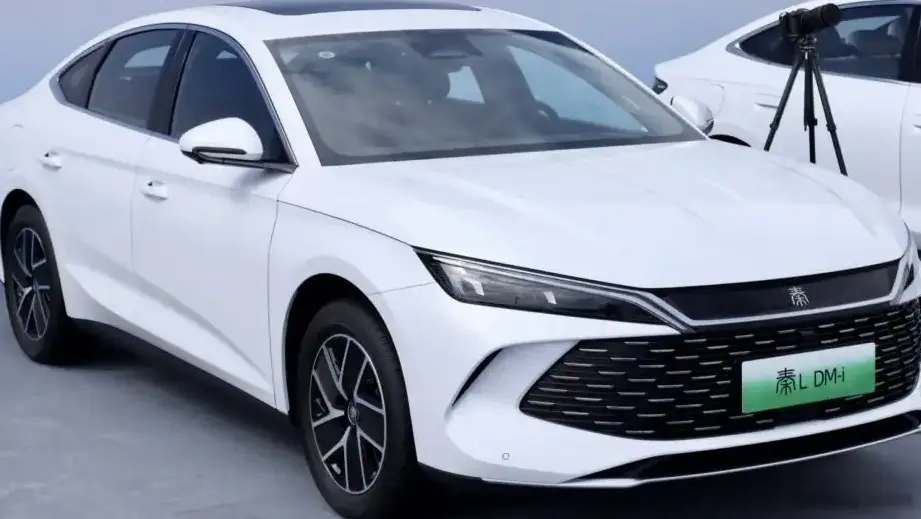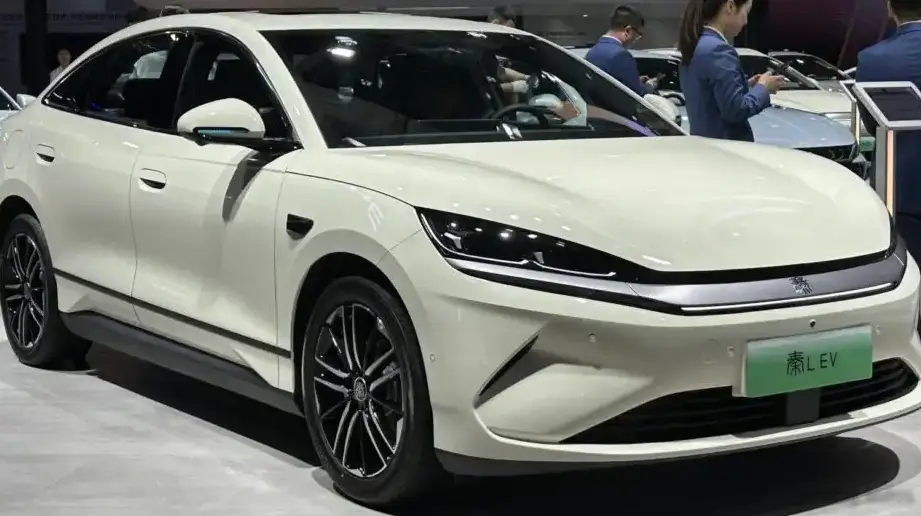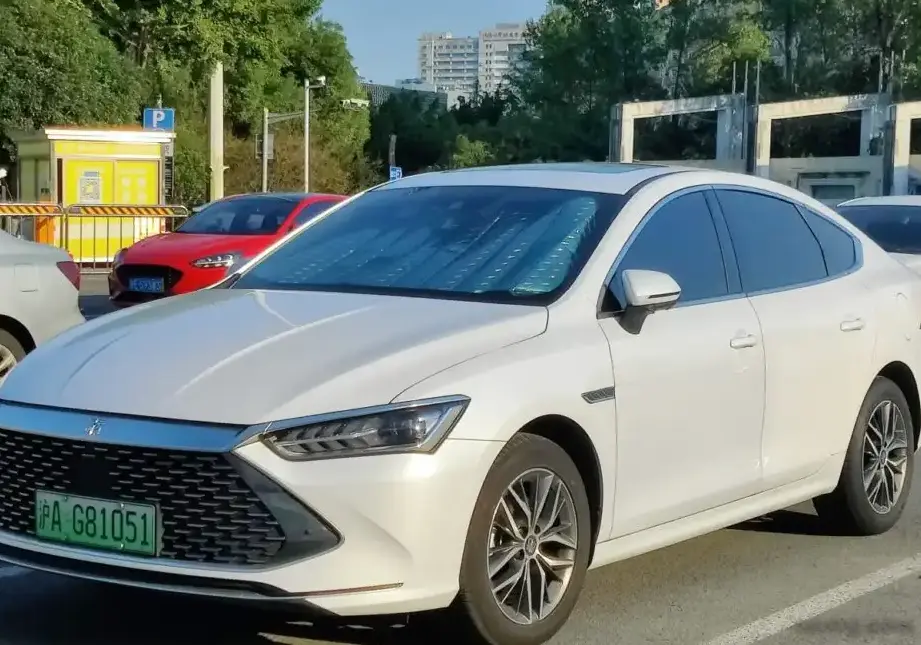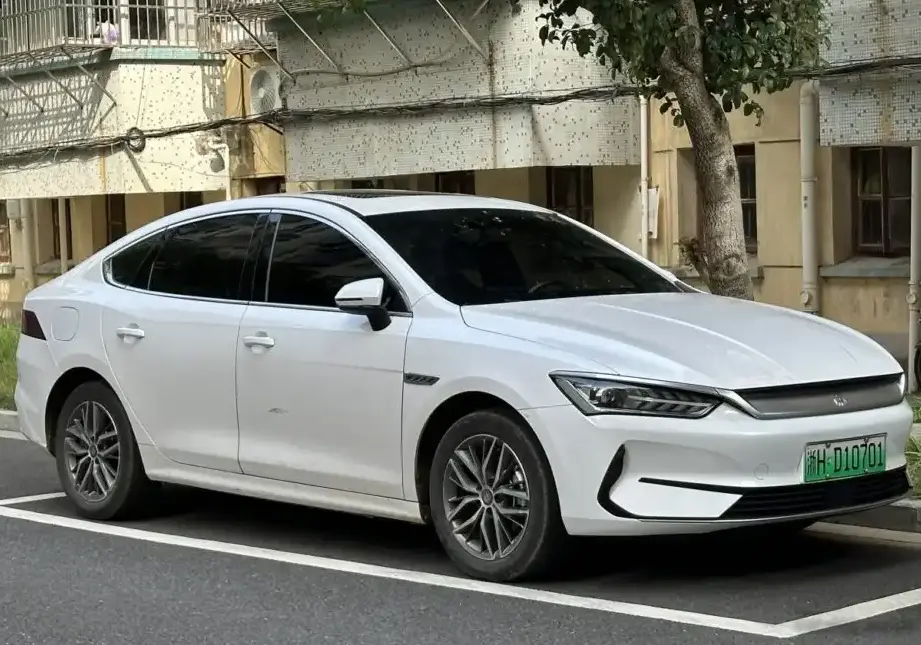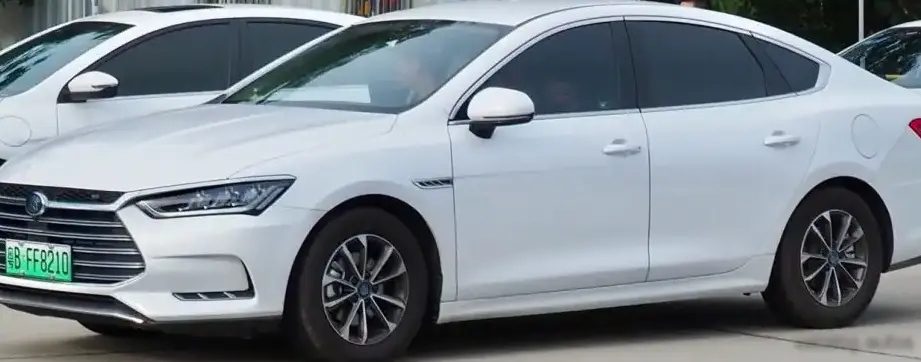
The BYD Qin Pro II EV 56.4 kWh (163 Hp) is a fully electric compact sedan produced by the Chinese automaker BYD from May 2019 to March 2021. Positioned as a mainstream electric vehicle, the Qin Pro II EV aimed to provide a practical and affordable zero-emission option within the rapidly expanding Chinese EV market. It represents BYD’s commitment to new energy vehicles and utilizes their expertise in battery technology. The vehicle is based on BYD’s e-Platform, designed specifically for electric vehicles, and falls within the broader Qin Pro II model range which also included gasoline-powered variants.
Technical Specifications
| Brand | BYD |
| Model | Qin |
| Generation | Qin Pro II |
| Type (Engine) | EV 56.4 kWh (163 Hp) |
| Start of production | May, 2019 |
| End of production | March, 2021 |
| Powertrain Architecture | BEV (Electric Vehicle) |
| Body type | Sedan |
| Seats | 5 |
| Doors | 4 |
| Fuel Type | Electricity |
| Acceleration 0 – 100 km/h | 8.9 sec |
| Acceleration 0 – 62 mph | 8.9 sec |
| Acceleration 0 – 60 mph | 8.5 sec |
| Maximum speed | 150 km/h (93.21 mph) |
| Weight-to-power ratio | 10.1 kg/Hp, 98.8 Hp/tonne |
| Weight-to-torque ratio | 5.9 kg/Nm, 169.7 Nm/tonne |
| Gross battery capacity | 56.4 kWh |
| Battery technology | Lithium nickel manganese cobalt oxides (Li-NMC) |
| Battery location | Below the floor |
| All-electric range (CLTC) | 420 km (260.98 mi) |
| Electric motor power | 163 Hp |
| Electric motor Torque | 280 Nm (206.52 lb.-ft.) |
| Electric motor location | Front axle, Transverse |
| Electric motor type | Synchronous |
| System power | 163 Hp |
| System torque | 280 Nm (206.52 lb.-ft.) |
| Kerb Weight | 1650 kg (3637.63 lbs.) |
| Max. weight | 2025 kg (4464.36 lbs.) |
| Max load | 375 kg (826.73 lbs.) |
| Trunk (boot) space – minimum | 450 l (15.89 cu. ft.) |
| Length | 4765 mm (187.6 in.) |
| Width | 1837 mm (72.32 in.) |
| Height | 1515 mm (59.65 in.) |
| Wheelbase | 2718 mm (107.01 in.) |
| Front track | 1580 mm (62.2 in.) |
| Rear (Back) track | 1580 mm (62.2 in.) |
| Drivetrain Architecture | One electric motor drives the front wheels. |
| Drive wheel | Front wheel drive |
| Number of gears and type of gearbox | 1 gears, automatic transmission |
| Front suspension | Independent type McPherson |
| Rear suspension | Independent multi-link suspension |
| Front brakes | Ventilated discs |
| Rear brakes | Disc |
| Assisting systems | ABS (Anti-lock braking system) |
| Steering type | Steering rack and pinion |
| Power steering | Electric Steering |
| Tires size | 225/55 R17 |
| Wheel rims size | 17 |
Powertrain & Engine Architecture
The Qin Pro II EV utilizes a front-wheel-drive, all-electric powertrain. The heart of the system is a single synchronous electric motor, transversely mounted at the front axle, producing 163 horsepower and 280 Nm (206.52 lb.-ft.) of torque. This motor is powered by a 56.4 kWh lithium nickel manganese cobalt oxide (Li-NMC) battery pack located under the vehicle floor, contributing to a lower center of gravity and improved handling. The single-speed automatic transmission is inherent to electric vehicle design, providing seamless acceleration. BYD’s battery management system (BMS) plays a crucial role in optimizing battery performance, longevity, and safety. The system monitors cell voltage, temperature, and current to prevent overcharging, overheating, and other potentially damaging conditions.
Driving Characteristics
The 163 hp electric motor provides brisk acceleration, achieving 0-60 mph in approximately 8.5 seconds. While not a performance-oriented EV, the instant torque delivery characteristic of electric motors offers responsive acceleration in everyday driving situations. The single-speed transmission provides a linear power delivery, without the gear changes associated with internal combustion engines. The Qin Pro II EV’s handling is generally considered competent, with the low-mounted battery pack contributing to stability. Compared to gasoline-powered Qin Pro II models, the EV offers a quieter and smoother driving experience. The regenerative braking system allows for one-pedal driving in certain conditions, enhancing efficiency and convenience.
Equipment & Trim Levels
The Qin Pro II EV typically came equipped with standard features such as air conditioning, power windows, power door locks, and a basic infotainment system with a touchscreen display. Higher trim levels added features like a larger touchscreen, navigation, a rearview camera, and various driver-assistance systems. Interior upholstery was typically cloth, with leatherette options available on higher trims. The dashboard layout was modern and functional, with a focus on ease of use. Optional extras included a panoramic sunroof, upgraded sound system, and various cosmetic enhancements.
Chassis & Braking
The Qin Pro II EV features an independent McPherson strut suspension at the front and an independent multi-link suspension at the rear, providing a comfortable ride and decent handling characteristics. The braking system consists of ventilated discs at the front and solid discs at the rear, coupled with an Anti-lock Braking System (ABS) for enhanced safety. The vehicle rides on 17-inch alloy wheels with 225/55 R17 tires. Electric power steering provides light and precise steering feel.
Market Reception & Comparison
The Qin Pro II EV was well-received in the Chinese market as an affordable and practical electric sedan. Critics praised its spacious interior, comfortable ride, and decent range. Compared to other EVs in its class, the Qin Pro II EV offered a competitive price point and a relatively long range for its cost. However, some reviewers noted that the interior materials were not as premium as those found in some competing models. Fuel economy, expressed as energy consumption, was a key selling point, significantly lower than comparable gasoline-powered vehicles. Reliability reports have been generally positive, with BYD’s established expertise in battery technology contributing to the longevity of the powertrain.
Legacy
The BYD Qin Pro II EV played a significant role in popularizing electric vehicles in China. It demonstrated that affordable and practical EVs were viable alternatives to gasoline-powered cars. While production ended in 2021, the Qin Pro II EV remains a common sight on Chinese roads. On the used car market, these vehicles generally hold their value well, particularly those with well-maintained batteries. The powertrain has proven to be relatively reliable, with many examples exceeding 100,000 kilometers without major issues. The Qin Pro II EV paved the way for BYD’s continued success in the electric vehicle market and helped establish the company as a leading global EV manufacturer.