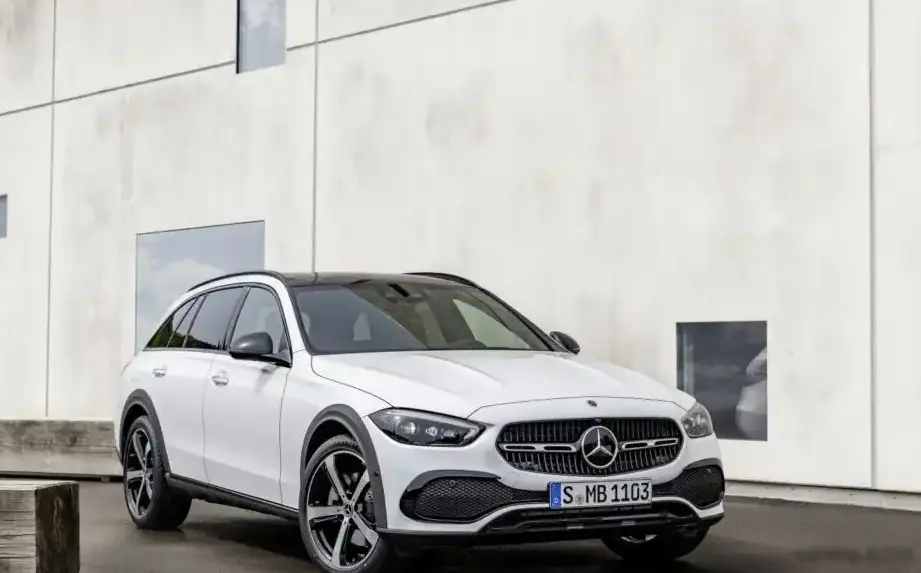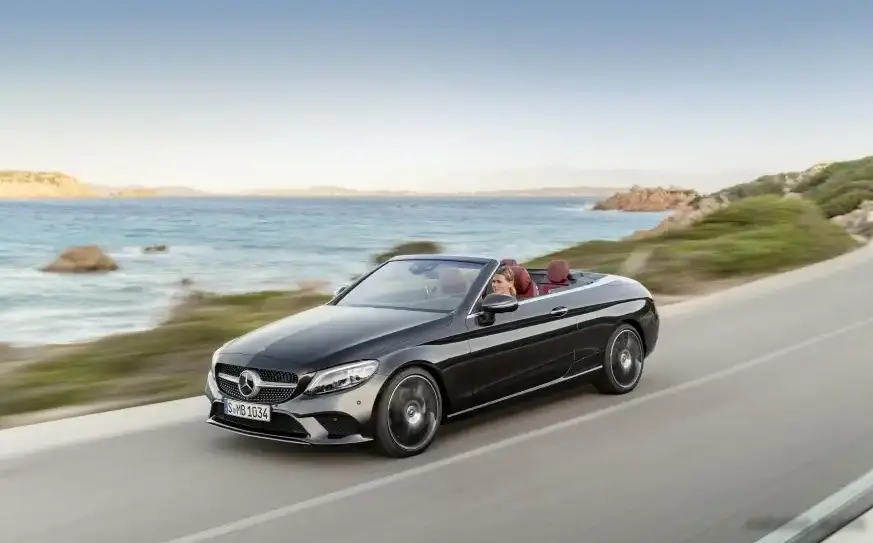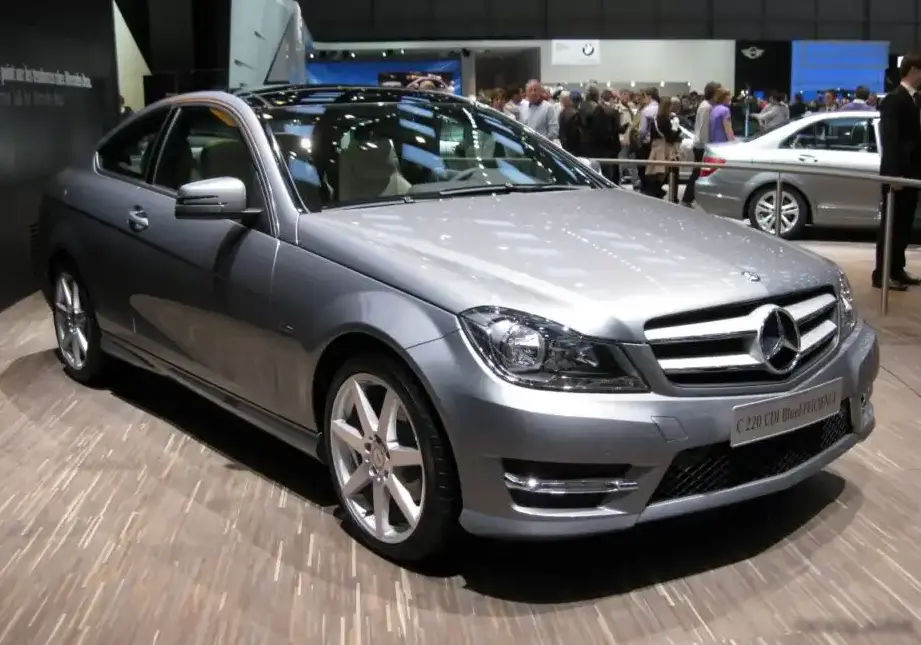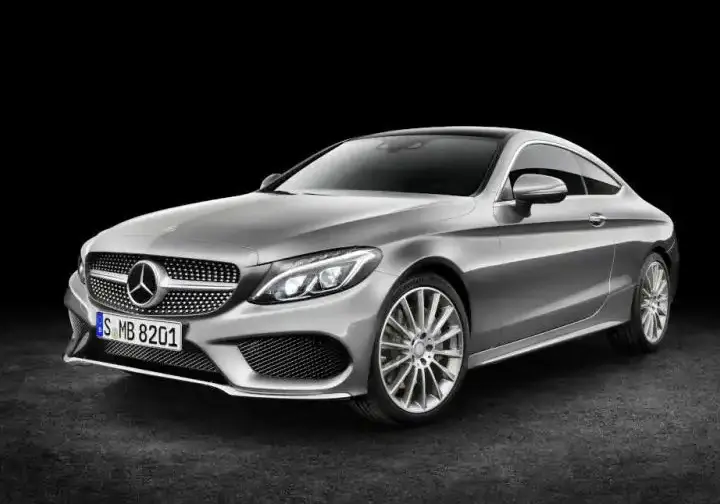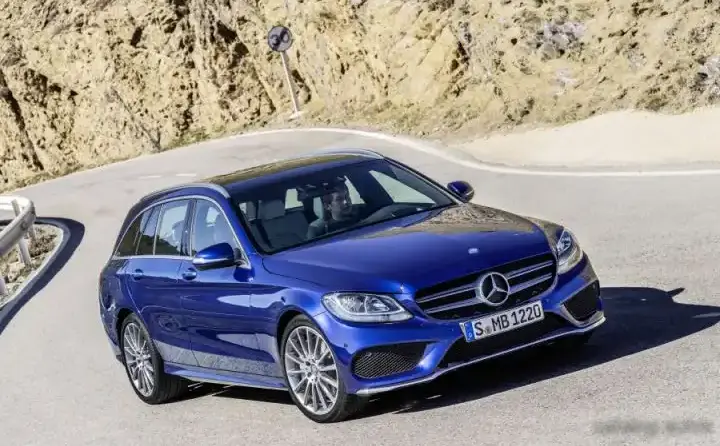
The Mercedes-Benz C-Class T-modell (S205) C 200d 2.1, equipped with a 2.1-liter diesel engine producing 136 horsepower and paired with a 9G-TRONIC automatic transmission, was a key variant within the fourth generation of the C-Class estate (wagon) range. Production of this specific configuration ran from March 2017 to April 2018. Positioned as a fuel-efficient and comfortable option, it catered to buyers prioritizing practicality and economy over outright performance within the C-Class lineup. The S205 generation represented a significant step forward for the C-Class, incorporating a more luxurious interior and advanced technology compared to its predecessor, the W204.
Technical Specifications
| Brand | Mercedes-Benz |
| Model | C-class |
| Generation | C-class T-modell (S205) |
| Type (Engine) | C 200d 2.1 (136 Hp) 9G-TRONIC |
| Start of production | March, 2017 |
| End of production | April, 2018 |
| Powertrain Architecture | Internal Combustion engine |
| Body type | Station wagon (estate) |
| Seats | 5 |
| Doors | 5 |
| Fuel consumption (economy) – urban (NEDC) | 5.3-5.6 l/100 km (44.4 – 42 US mpg, 53.3 – 50.4 UK mpg, 18.9 – 17.9 km/l) |
| Fuel consumption (economy) – extra urban (NEDC) | 3.8-4.1 l/100 km (61.9 – 57.4 US mpg, 74.3 – 68.9 UK mpg, 26.3 – 24.4 km/l) |
| Fuel consumption (economy) – combined (NEDC) | 4.4-4.7 l/100 km (53.5 – 50 US mpg, 64.2 – 60.1 UK mpg, 22.7 – 21.3 km/l) |
| CO2 emissions (NEDC) | 114-120 g/km |
| Fuel Type | Diesel |
| Acceleration 0 – 100 km/h | 10.6 sec |
| Acceleration 0 – 62 mph | 10.6 sec |
| Acceleration 0 – 60 mph | 10.1 sec |
| Maximum speed | 210 km/h (130.49 mph) |
| Emission standard | Euro 6 |
| Weight-to-power ratio | 11.3 kg/Hp, 88.3 Hp/tonne |
| Weight-to-torque ratio | 4.4 kg/Nm, 227.3 Nm/tonne |
| Power | 136 Hp |
| Power per litre | 63.5 Hp/l |
| Torque | 350 Nm @ 1200-2700 rpm (258.15 lb.-ft. @ 1200-2700 rpm) |
| Engine layout | Front, Longitudinal |
| Engine Model/Code | OM 651.921 |
| Engine displacement | 2143 cm3 (130.77 cu. in.) |
| Number of cylinders | 4 |
| Engine configuration | Inline |
| Cylinder Bore | 83 mm (3.27 in.) |
| Piston Stroke | 99 mm (3.9 in.) |
| Number of valves per cylinder | 4 |
| Fuel injection system | Diesel Commonrail |
| Engine aspiration | Turbocharger, Intercooler |
| Valvetrain | DOHC |
| Engine oil capacity | 6 l (6.34 US qt | 5.28 UK qt) |
| Coolant | 9.5 l (10.04 US qt | 8.36 UK qt) |
| Kerb Weight | 1540 kg (3395.12 lbs.) |
| Max. weight | 2190 kg (4828.12 lbs.) |
| Max load | 650 kg (1433 lbs.) |
| Trunk (boot) space – minimum | 490 l (17.3 cu. ft.) |
| Trunk (boot) space – maximum | 1510 l (53.33 cu. ft.) |
| Fuel tank capacity | 41 l (10.83 US gal | 9.02 UK gal) |
| AdBlue tank | 8.5 l (2.25 US gal | 1.87 UK gal) |
| Max. roof load | 75 kg (165.35 lbs.) |
| Permitted trailer load with brakes (12%) | 1800 kg (3968.32 lbs.) |
| Permitted trailer load without brakes | 750 kg (1653.47 lbs.) |
| Permitted towbar download | 75 kg (165.35 lbs.) |
| Length | 4702 mm (185.12 in.) |
| Width | 1810 mm (71.26 in.) |
| Width including mirrors | 2020 mm (79.53 in.) |
| Height | 1457 mm (57.36 in.) |
| Wheelbase | 2840 mm (111.81 in.) |
| Front track | 1584 mm (62.36 in.) |
| Rear (Back) track | 1566 mm (61.65 in.) |
| Front overhang | 790 mm (31.1 in.) |
| Rear overhang | 1072 mm (42.2 in.) |
| Minimum turning circle (turning diameter) | 11.22 m (36.81 ft.) |
| Front brakes | Ventilated discs, 305×28 mm |
| Rear brakes | Disc, 300×12 mm |
| Number of gears and type of gearbox | 9 gears, automatic transmission G-TRONIC |
Powertrain & Engine Architecture
The C 200d T-modell utilized the OM651.921 2.1-liter inline-four cylinder diesel engine. This engine, a mainstay in many Mercedes-Benz models, is known for its robust construction and fuel efficiency. It features a turbocharger with an intercooler to boost power and improve combustion. The engine employs a common-rail direct fuel injection system, delivering fuel at extremely high pressure for optimized atomization and cleaner combustion. The valvetrain is a Double Overhead Camshaft (DOHC) design, allowing for precise control of valve timing. The 9G-TRONIC nine-speed automatic transmission was a key component, offering smooth shifts and a wide range of gear ratios to maximize fuel economy and provide adequate acceleration. This transmission was designed to handle the engine’s torque output efficiently.
Driving Characteristics
The 136 horsepower and 350 Nm (258 lb-ft) of torque delivered by the C 200d, coupled with the nine-speed automatic, resulted in a comfortable and refined driving experience. Acceleration from 0-60 mph took around 10.1 seconds, which was adequate for everyday driving but not particularly sporty. The 9G-TRONIC transmission was programmed for fuel efficiency, often prioritizing higher gears at lower speeds. While this contributed to excellent fuel economy, it could sometimes feel sluggish during overtaking maneuvers. Compared to the more powerful C 300 variants, the C 200d offered a more relaxed and economical driving experience, sacrificing outright performance for efficiency. The automatic transmission, while smooth, didn’t offer the same level of driver engagement as a manual gearbox.
Equipment & Trim Levels
The C 200d T-modell typically came standard with features such as automatic climate control, a multi-function steering wheel, and the Mercedes-Benz infotainment system with a central display screen. Interior upholstery was generally Artico leatherette (synthetic leather), with options for genuine leather upgrades. Common optional extras included a panoramic sunroof, navigation system, upgraded sound system, and various driver assistance features like lane keeping assist and blind spot monitoring. Trim levels varied by market, but generally offered packages that bundled together popular options. The base trim focused on essential comfort and safety features, while higher trims added more luxury and technology.
Chassis & Braking
The S205 C-Class T-modell featured a sophisticated suspension system designed to balance comfort and handling. The front suspension utilized coil springs and an independent multi-link setup with a transverse stabilizer bar. The rear suspension also employed an independent multi-link spring suspension with a stabilizer bar. Braking duties were handled by ventilated discs at the front and solid discs at the rear. Anti-lock Braking System (ABS) was standard. The suspension tuning was geared towards providing a comfortable ride, prioritizing smoothness over aggressive handling. The chassis was designed to minimize body roll and provide stable cornering, but it wasn’t intended to be a performance-focused platform.
Market Reception & Comparison
The C 200d T-modell was generally well-received by critics for its fuel efficiency and practicality. It was seen as a sensible choice for buyers who needed a versatile estate car but didn’t require the higher performance of the more expensive models. Fuel economy figures of 4.4-4.7 l/100km (50-53.5 mpg US) were highly competitive in its class. Compared to the C 300 variants, the C 200d offered significantly better fuel economy but lacked the same level of acceleration and overall driving excitement. The C 200d also proved to be a more economical option than the diesel-particulate-filter equipped C 220d in some markets.
Legacy
The OM651 engine, used in the C 200d, has proven to be a reliable and durable powerplant when properly maintained. The 9G-TRONIC transmission, while complex, has also demonstrated good long-term reliability. In the used car market, the C 200d T-modell represents a good value proposition, offering a blend of practicality, comfort, and fuel efficiency. However, potential buyers should be aware of the importance of regular maintenance, particularly regarding the diesel particulate filter (DPF) and AdBlue system. Well-maintained examples continue to be sought after by buyers looking for a refined and economical estate car.