
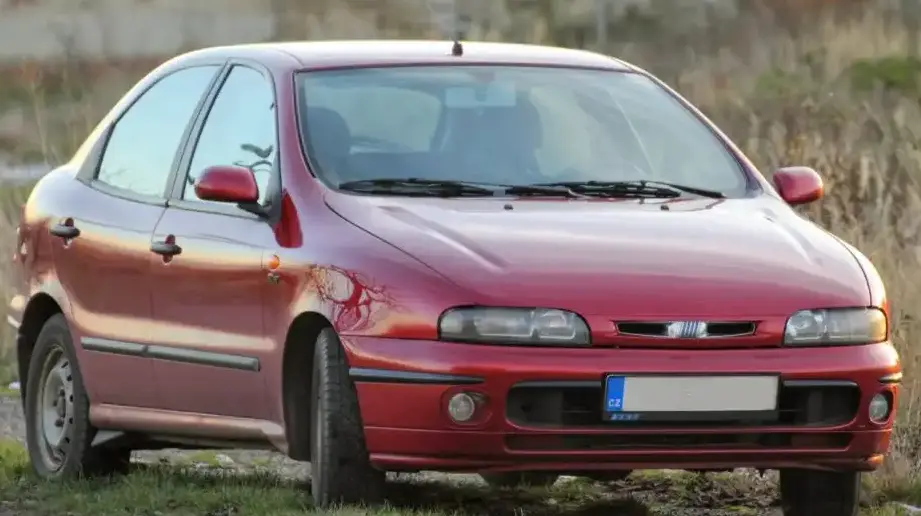
The Fiat Brava 1.2 16V 80 (82 Hp), produced between 1998 and 2001, represents an entry-level offering within the 182 series Brava range. Positioned as a practical and affordable hatchback, it aimed to provide economical transportation for families and individuals. The Brava, launched in 1995, was Fiat’s replacement for the Tipo, and represented a significant step forward in design and technology for the Italian automaker. This particular 1.2-liter variant was primarily marketed in Europe, where smaller displacement engines were favored due to tax regulations and fuel costs. It served as a gateway into the Brava lineup, offering a balance between affordability and acceptable performance.
Technical Specifications
| Brand | Fiat |
| Model | Brava |
| Generation | Brava (182) |
| Type (Engine) | 1.2 16V 80 (82 Hp) |
| Start of production | 1998 |
| End of production | 2001 |
| Powertrain Architecture | Internal Combustion engine |
| Body type | Hatchback |
| Seats | 5 |
| Doors | 5 |
| Fuel consumption (urban) | 9.5 l/100 km (24.8 US mpg) |
| Fuel consumption (extra urban) | 5.5 l/100 km (42.8 US mpg) |
| Fuel Type | Petrol (Gasoline) |
| Acceleration 0 – 100 km/h | 13 sec |
| Acceleration 0 – 62 mph | 13 sec |
| Acceleration 0 – 60 mph | 12.4 sec |
| Maximum speed | 173 km/h (107.5 mph) |
| Weight-to-power ratio | 12.4 kg/Hp |
| Weight-to-torque ratio | 9 kg/Nm |
| Power | 82 Hp @ 5500 rpm |
| Power per litre | 66 Hp/l |
| Torque | 113 Nm @ 4250 rpm (83.34 lb.-ft. @ 4250 rpm) |
| Engine layout | Front, Transverse |
| Engine Model/Code | 182B2000 |
| Engine displacement | 1242 cm3 (75.79 cu. in.) |
| Number of cylinders | 4 |
| Engine configuration | Inline |
| Cylinder Bore | 70.8 mm (2.79 in.) |
| Piston Stroke | 78.9 mm (3.11 in.) |
| Compression ratio | 10.2:1 |
| Number of valves per cylinder | 4 |
| Fuel injection system | Multi-port manifold injection |
| Engine aspiration | Naturally aspirated |
| Valvetrain | DOHC |
| Engine oil capacity | 2.8 l (2.96 US qt | 2.46 UK qt) |
| Coolant capacity | 6 l (6.34 US qt | 5.28 UK qt) |
| Kerb Weight | 1015 kg (2237.69 lbs.) |
| Max. weight | 1570 kg (3461.26 lbs.) |
| Max load | 555 kg (1223.57 lbs.) |
| Trunk (boot) space – minimum | 380 l (13.42 cu. ft.) |
| Trunk (boot) space – maximum | 775 l (27.37 cu. ft.) |
| Fuel tank capacity | 50 l (13.21 US gal | 11 UK gal) |
| Length | 4187 mm (164.84 in.) |
| Width | 1741 mm (68.54 in.) |
| Height | 1410 mm (55.51 in.) |
| Wheelbase | 2540 mm (100 in.) |
| Front track | 1461 mm (57.52 in.) |
| Rear track | 1463 mm (57.6 in.) |
| Drivetrain Architecture | Front wheel drive |
| Number of gears | 5 |
| Gearbox type | Manual transmission |
| Front suspension | Wishbone |
| Rear suspension | Coil spring |
| Front brakes | Disc |
| Rear brakes | Drum |
| Assisting systems | ABS (Anti-lock braking system) |
| Steering type | Steering rack and pinion |
| Power steering | Hydraulic |
| Tires size | 175/65 R14 |
Powertrain & Engine Architecture
The heart of the Brava 1.2 16V is the 182B2000 engine, a 1.2-liter inline-four cylinder gasoline engine. This engine featured a double overhead camshaft (DOHC) valvetrain operating four valves per cylinder, contributing to its relatively high output for its displacement. Fuel delivery was managed by a multi-port fuel injection system, providing precise fuel metering for improved efficiency and emissions. The engine’s 1242 cc displacement produced 82 horsepower at 5500 rpm and 113 Nm (83.34 lb-ft) of torque at 4250 rpm. The engine’s design prioritized fuel economy and drivability over outright performance. The five-speed manual transmission was the standard offering, providing a reasonable spread of gears for both urban and highway driving. The transmission was chosen to complement the engine’s torque curve, offering acceptable acceleration without sacrificing fuel efficiency.
Driving Characteristics
The Brava 1.2 16V Automatic offered a comfortable, if not particularly exhilarating, driving experience. Acceleration from 0-60 mph took approximately 12.4 seconds, and top speed was around 107.5 mph. The engine felt somewhat strained at higher speeds, and overtaking maneuvers required careful planning. The five-speed manual transmission allowed for better control and responsiveness compared to the optional automatic. The gear ratios were tuned for economy, resulting in a relatively high fifth gear for efficient cruising. Handling was generally safe and predictable, but the suspension was tuned for comfort rather than sporty handling. The steering, while hydraulically assisted, lacked significant feedback.
Equipment & Trim Levels
The 1.2 16V Brava typically came with a modest level of standard equipment. This included power steering, central locking, electric front windows, and an adjustable steering column. Interior upholstery was typically cloth, and the dashboard featured a simple, functional design. Optional extras included air conditioning, alloy wheels, and a radio/cassette player. Higher trim levels, such as the SX, added features like body-colored bumpers, upgraded interior trim, and additional safety equipment.
Chassis & Braking
The Brava 1.2 16V utilized a front-wheel-drive layout with independent wishbone suspension at the front and a coil spring rear suspension. The front brakes were discs, providing adequate stopping power, while the rear brakes were drums, a cost-saving measure common in this segment. Anti-lock Braking System (ABS) was available as an option, enhancing safety in emergency braking situations. The chassis was designed to provide a comfortable ride, prioritizing passenger comfort over sporty handling. The relatively lightweight construction of the vehicle helped to offset the modest engine output.
Market Reception & Comparison
The Fiat Brava 1.2 16V was generally well-received as an affordable and practical hatchback. Critics praised its fuel economy and comfortable ride, but noted its lack of outright performance. Compared to other engines in the Brava lineup, such as the 1.6-liter and 1.8-liter variants, the 1.2 offered significantly less power but superior fuel efficiency. The 1.9 TDI diesel engine provided even better fuel economy but lacked the refinement of the gasoline engines. In terms of reliability, the 1.2 engine was generally considered to be robust, but regular maintenance was essential to prevent issues.
Legacy
The Fiat Brava 1.2 16V has become a relatively affordable classic in the used car market. While not known for its performance or prestige, it remains a practical and economical option for those seeking a reliable hatchback. The 182B2000 engine, while not particularly sophisticated, proved to be durable and relatively easy to maintain. Parts availability is generally good, although some components may be becoming increasingly difficult to find. Today, the Brava 1.2 16V represents a snapshot of late-1990s European automotive design and engineering, offering a glimpse into a time when affordability and practicality were paramount.
