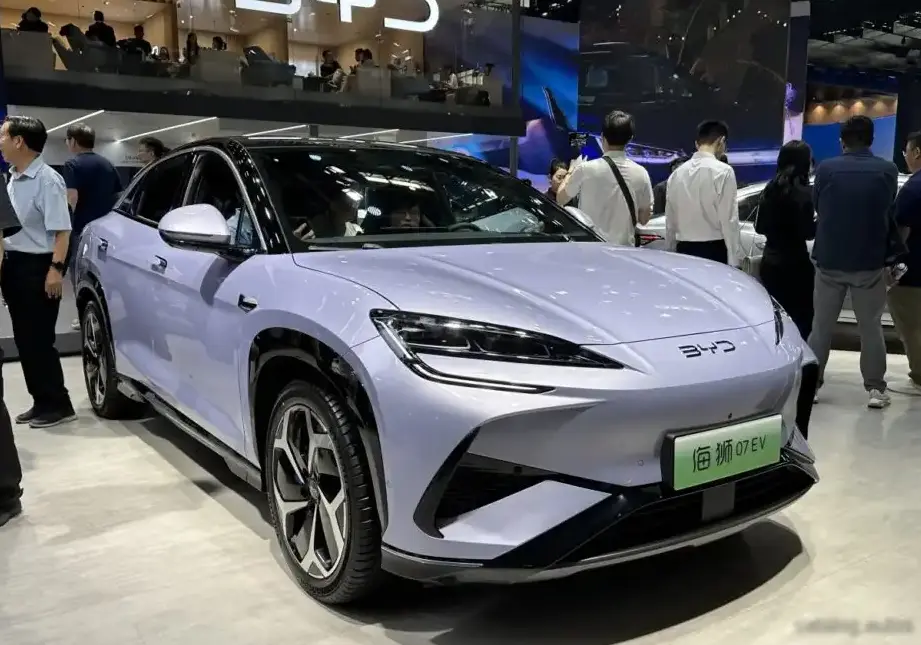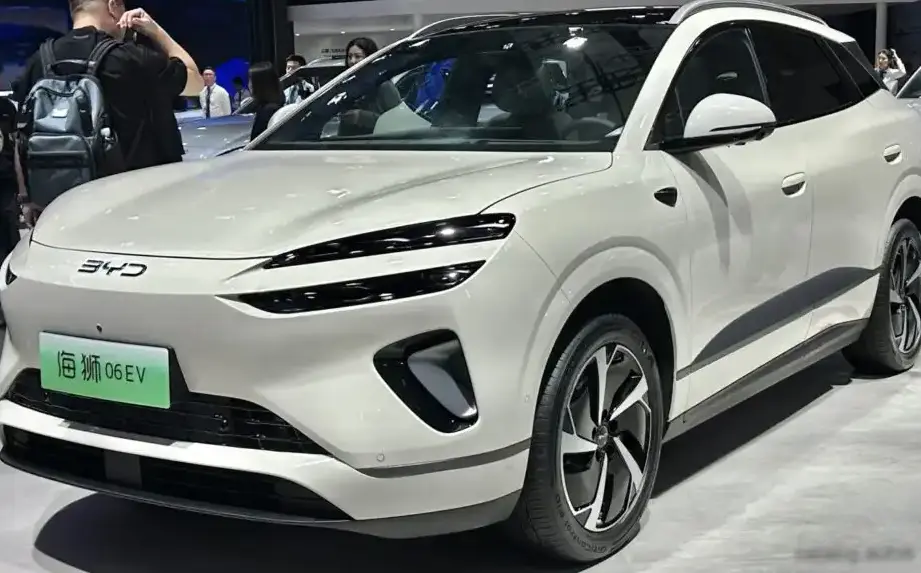
The BYD Sea Lion 06 65.28 kWh (231 Hp) Electric is a compact SUV produced by the Chinese manufacturer BYD (Build Your Dreams). Introduced in July 2025, it represents BYD’s continued expansion into the global electric vehicle market. The Sea Lion 06 is positioned as a mainstream, family-oriented EV, offering a balance of range, performance, and practicality. It’s built on BYD’s e-platform 3.0, designed specifically for electric vehicles, and aims to compete with established players in the rapidly growing EV SUV segment. The 65.28 kWh variant is a key model within the Sea Lion 06 lineup, offering a compelling combination of range and affordability.
Technical Specifications
| Brand | BYD |
| Model | Sea Lion 06 |
| Generation | Sea Lion 06 |
| Type (Engine) | 65.28 kWh (231 Hp) Electric |
| Start of production | July, 2025 |
| Powertrain Architecture | BEV (Electric Vehicle) |
| Body type | SUV |
| Seats | 5 |
| Doors | 5 |
| Fuel Type | Electricity |
| Acceleration 0 – 100 km/h | 7.5 sec |
| Acceleration 0 – 62 mph | 7.5 sec |
| Acceleration 0 – 60 mph | 7.1 sec |
| Gross battery capacity | 65.28 kWh |
| Battery technology | Lithium iron phosphate (LiFePO4) |
| Battery location | Below the floor |
| All-electric range (CLTC) | 520 km (323.11 mi) |
| Electric motor power | 231 Hp |
| Electric motor Torque | 330 Nm (243.4 lb.-ft.) |
| Electric motor model/code | TZ200XSBF |
| Electric motor location | Rear axle, Transverse |
| Electric motor type | Synchronous |
| System power | 231 Hp |
| System torque | 330 Nm (243.4 lb.-ft.) |
| Trunk (boot) space – minimum | 757 l (26.73 cu. ft.) |
| Trunk (boot) space – maximum | 1630 l (57.56 cu. ft.) |
| Length | 4810 mm (189.37 in.) |
| Width | 1920 mm (75.59 in.) |
| Height | 1675 mm (65.94 in.) |
| Wheelbase | 2820 mm (111.02 in.) |
| Front track | 1640 mm (64.57 in.) |
| Rear (Back) track | 1665 mm (65.55 in.) |
| Minimum turning circle | 11.1 m (36.42 ft.) |
| Drivetrain Architecture | One electric motor drives the rear wheels. |
| Drive wheel | Rear wheel drive |
| Number of gears | 1 |
| Gearbox type | Automatic transmission |
| Front suspension | Independent type McPherson |
| Rear suspension | Independent multi-link suspension |
| Front brakes | Ventilated discs |
| Rear brakes | Disc |
| Assisting systems | ABS (Anti-lock braking system) |
| Steering type | Steering rack and pinion |
| Power steering | Electric Steering |
| Tires size | 235/50 R19 |
| Wheel rims size | 19 |
Powertrain & Engine Architecture
The Sea Lion 06 65.28 kWh utilizes a single electric motor driving the rear wheels, classifying it as a Rear Wheel Drive (RWD) vehicle. This motor, designated TZ200XSBF, is a synchronous motor known for its efficiency and smooth operation. The 65.28 kWh battery pack employs Lithium Iron Phosphate (LiFePO4) chemistry, favored for its thermal stability, longer lifespan, and reduced reliance on conflict minerals compared to Nickel Manganese Cobalt (NMC) batteries. The battery is positioned under the vehicle floor, contributing to a lower center of gravity and improved handling. The vehicle features a single-speed automatic transmission, typical of most electric vehicles, simplifying the driving experience. The system delivers a combined output of 231 horsepower and 330 Nm (243.4 lb.-ft.) of torque.
Driving Characteristics
The rear-wheel-drive configuration of the Sea Lion 06 65.28 kWh provides a balanced driving experience. Acceleration from 0 to 60 mph is achieved in approximately 7.1 seconds, making it adequately quick for everyday driving. The single-speed transmission offers seamless acceleration, with the torque available instantly. Compared to potential future higher-performance variants, this model prioritizes efficiency and comfort over outright speed. The single gear ratio is optimized for a balance between acceleration and cruising efficiency. The lower center of gravity, thanks to the underfloor battery pack, contributes to stable handling and reduced body roll.
Equipment & Trim Levels
The Sea Lion 06 65.28 kWh typically comes standard with a comprehensive suite of features. These include a large touchscreen infotainment system, digital instrument cluster, automatic climate control, and a range of advanced driver-assistance systems (ADAS) such as adaptive cruise control, lane keeping assist, and automatic emergency braking. Interior upholstery is generally a combination of fabric and synthetic leather. Optional extras may include a panoramic sunroof, premium audio system, and upgraded interior trim materials. The specific trim levels and available options can vary depending on the market.
Chassis & Braking
The Sea Lion 06 features an independent McPherson strut suspension at the front and an independent multi-link suspension at the rear, providing a comfortable ride and good handling characteristics. Ventilated disc brakes are used at the front, while solid disc brakes are employed at the rear. The vehicle is equipped with an Anti-lock Braking System (ABS) as standard, enhancing safety during emergency braking situations. Electric power steering provides light and precise steering feel. The vehicle rides on 19-inch alloy wheels with tire size 235/50 R19.
Market Reception & Comparison
The BYD Sea Lion 06 has been generally well-received in the Chinese market, where it has quickly gained popularity. Critics have praised its spacious interior, comfortable ride, and competitive range. Compared to other EVs in its class, the Sea Lion 06 offers a compelling value proposition, particularly considering its standard features and battery capacity. Its LiFePO4 battery chemistry is seen as a positive attribute, offering enhanced safety and longevity. Fuel economy, expressed as energy consumption, is competitive with other electric SUVs.
Legacy
The BYD Sea Lion 06 65.28 kWh represents a significant step forward for BYD in the global EV market. Its use of LiFePO4 battery technology and efficient electric powertrain demonstrates BYD’s commitment to sustainable transportation. While long-term reliability data is still emerging, BYD has a growing reputation for building durable and well-engineered electric vehicles. As the EV market matures, the Sea Lion 06 is expected to remain a competitive option for buyers seeking a practical, affordable, and well-equipped electric SUV. The vehicle’s impact on the used car market will depend on factors such as battery degradation and overall vehicle condition, but its inherent advantages in terms of running costs and environmental friendliness should ensure continued demand.