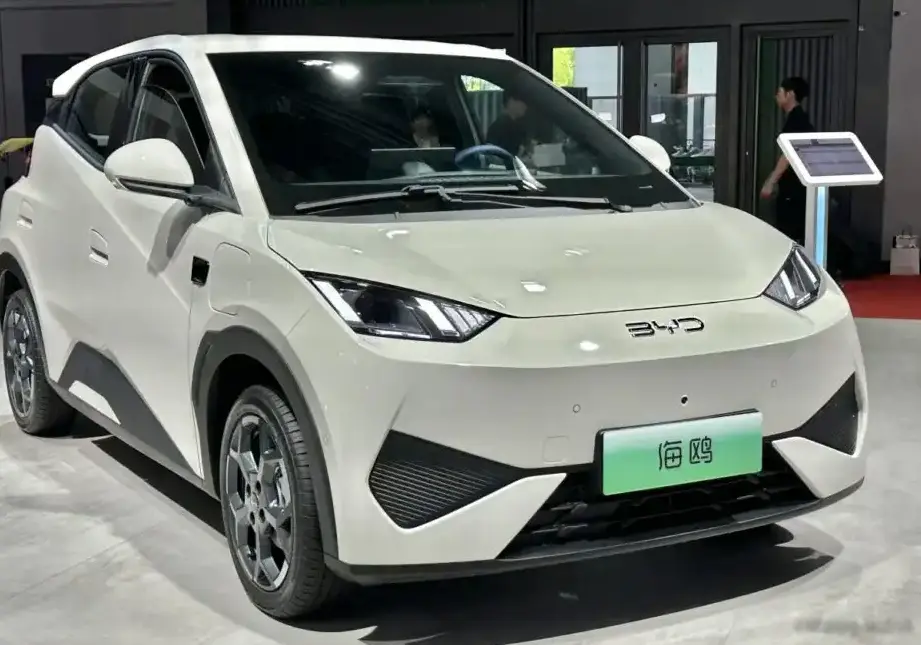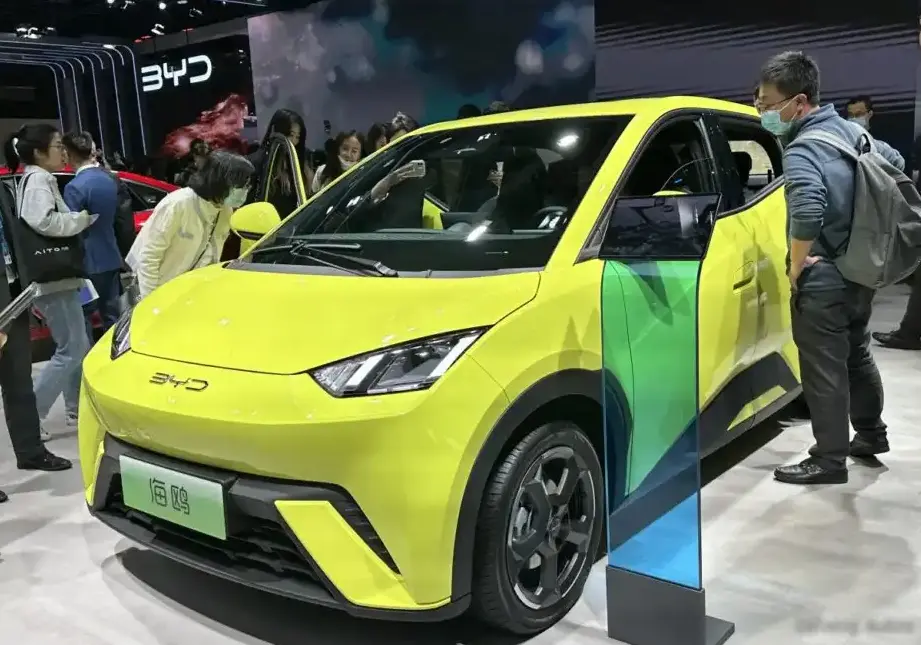
The BYD Seagull 30.08 kWh (75 hp) is a battery electric vehicle (BEV) produced by the Chinese manufacturer BYD from April 2023 to February 2025. Positioned as an entry-level offering within the rapidly expanding BYD lineup, the Seagull aimed to provide affordable electric mobility, particularly within the Chinese domestic market. It represents BYD’s commitment to democratizing electric vehicle technology and expanding its reach to a broader consumer base. The Seagull is built on BYD’s e-Platform 3.0, designed specifically for electric vehicles, and is a five-door hatchback intended for urban commuting and daily use.
Technical Specifications
| Brand | BYD |
| Model | Seagull |
| Type (Engine) | 30.08 kWh (75 Hp) BEV |
| Start of production | April, 2023 |
| End of production | February, 2025 |
| Powertrain Architecture | BEV (Electric Vehicle) |
| Body type | Hatchback |
| Seats | 5 |
| Doors | 5 |
| Fuel Type | Electricity |
| Gross battery capacity | 30.08 kWh |
| Battery technology | Lithium iron phosphate (LiFePO4) |
| Battery location | Below the floor |
| All-electric range (CLTC) | 305 km (189.52 mi) |
| Electric motor power | 75 Hp |
| Electric motor Torque | 135 Nm (99.57 lb.-ft.) |
| Electric motor location | Front axle, Transverse |
| Electric motor type | Synchronous |
| System power | 75 Hp |
| System torque | 135 Nm (99.57 lb.-ft.) |
| Length | 3780 mm (148.82 in.) |
| Width | 1715 mm (67.52 in.) |
| Height | 1540 mm (60.63 in.) |
| Wheelbase | 2500 mm (98.43 in.) |
| Front track | 1500 mm (59.06 in.) |
| Rear (Back) track | 1500 mm (59.06 in.) |
| Minimum turning circle (turning diameter) | 9.9 m (32.48 ft.) |
| Drivetrain Architecture | One electric motor drives the front wheels. |
| Drive wheel | Front wheel drive |
| Number of gears and type of gearbox | 1 gears, automatic transmission |
| Front suspension | Independent type McPherson |
| Rear suspension | Torsion |
| Front brakes | Ventilated discs |
| Rear brakes | Disc |
| Assisting systems | ABS (Anti-lock braking system) |
| Steering type | Steering rack and pinion |
| Power steering | Electric Steering |
| Tires size | 165/65 R15; 175/55 R16 |
| Wheel rims size | 15; 16 |
Powertrain & Engine Architecture
The BYD Seagull 30.08 kWh utilizes a single electric motor driving the front wheels. This motor, producing 75 horsepower and 135 Nm (99.57 lb.-ft.) of torque, is a synchronous motor known for its efficiency and relatively simple construction. The vehicle is powered by a 30.08 kWh Lithium Iron Phosphate (LiFePO4) battery pack, positioned under the floor of the vehicle to optimize space and lower the center of gravity. LiFePO4 chemistry is favored for its inherent safety, thermal stability, and longer cycle life compared to other lithium-ion battery types, although it typically offers slightly lower energy density. The Seagull employs a single-speed automatic transmission, common in most BEVs, providing seamless acceleration without the need for multiple gears. The vehicle’s electrical architecture is integrated with BYD’s e-Platform 3.0, which incorporates battery thermal management, motor control, and charging systems.
Driving Characteristics
The Seagull’s 75 hp output and single-speed transmission result in modest, but adequate, performance for urban driving. Acceleration is geared towards smooth and efficient operation rather than outright speed. The single-speed gearbox provides instant torque delivery, characteristic of electric motors, making it responsive in city traffic. While not comparable to higher-performance EV trims, the Seagull offers sufficient power for merging onto highways and maintaining cruising speeds. The low center of gravity, thanks to the underfloor battery pack, contributes to stable handling. The steering is electrically assisted, providing a light and easy driving experience. Compared to potential future, higher-powered Seagull variants, this base model prioritizes range and affordability over performance.
Equipment & Trim Levels
The BYD Seagull 30.08 kWh, as the entry-level trim, typically came equipped with essential features focused on practicality and convenience. Standard equipment generally included air conditioning, power windows, a basic infotainment system with a touchscreen display (size varying by market), and ABS. Interior upholstery was typically cloth, with a functional and durable design. Higher trim levels, not covered in this specific variant, offered upgrades such as larger infotainment screens, leatherette upholstery, and additional safety features. Optional extras available for the base model could include a rearview camera, parking sensors, and upgraded audio systems. The dashboard layout was designed to be minimalist and user-friendly, prioritizing ease of operation.
Chassis & Braking
The Seagull utilizes a McPherson strut independent suspension system at the front, providing a comfortable ride and responsive handling. The rear suspension employs a torsion beam setup, a cost-effective and space-saving solution suitable for the vehicle’s weight class. Braking duties are handled by ventilated discs at the front and solid discs at the rear, providing adequate stopping power for the vehicle’s performance capabilities. An Anti-lock Braking System (ABS) is standard, enhancing safety during emergency braking situations. The steering system is a rack and pinion type with electric power assistance, offering precise control and ease of maneuverability. Tire sizes typically ranged from 165/65 R15 to 175/55 R16, depending on the trim level and market.
Market Reception & Comparison
The BYD Seagull was generally well-received in the Chinese market as an affordable and practical electric vehicle. Critics praised its spacious interior for its size, efficient powertrain, and competitive pricing. However, some reviewers noted the limited range compared to other EVs and the relatively basic interior appointments. Compared to other entry-level EVs in China, the Seagull offered a compelling value proposition, particularly considering BYD’s reputation for battery technology and reliability. Against potential higher-trim Seagull variants with larger batteries and more powerful motors, the 30.08 kWh model represented a more budget-conscious option, sacrificing some range and performance for affordability.
Legacy
The BYD Seagull 30.08 kWh played a significant role in accelerating the adoption of electric vehicles in China by offering a genuinely affordable option to a wider range of consumers. The LiFePO4 battery technology employed in the Seagull contributed to its safety and longevity, potentially leading to good long-term reliability. As a used vehicle, the Seagull is expected to hold its value reasonably well, particularly as demand for affordable EVs continues to grow. The model served as a stepping stone for BYD, demonstrating its ability to produce high-quality, cost-effective electric vehicles and paving the way for future, more advanced models. The success of the Seagull helped establish BYD as a major player in the global EV market.