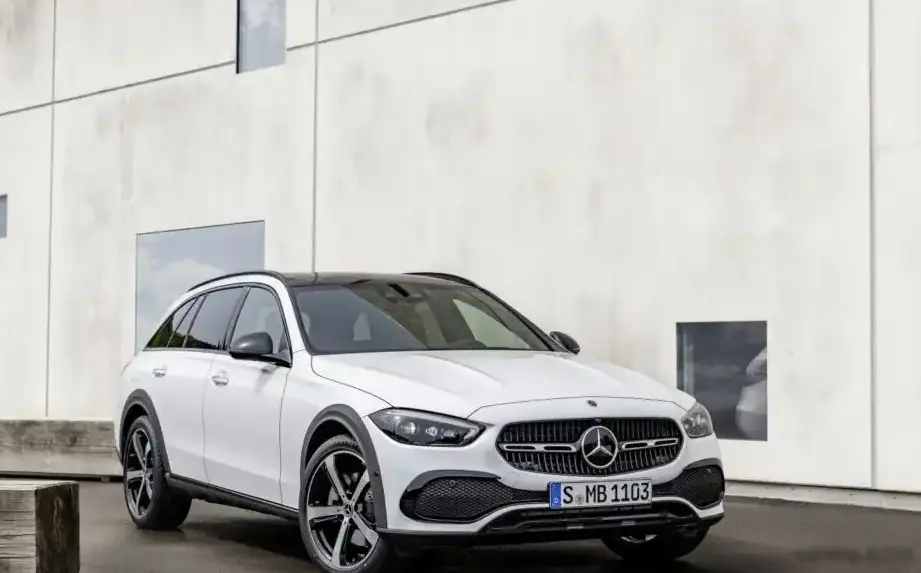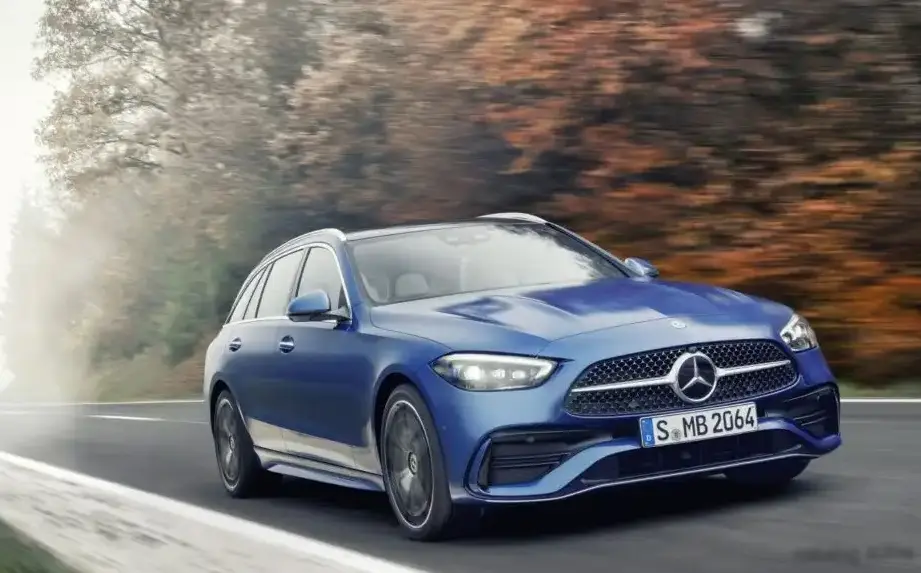
The Mercedes-Benz C-Class T-modell (S206) C 300, equipped with a 258 hp EQ Boost powertrain and 9G-TRONIC transmission, represents a significant iteration in the long-running C-Class lineage. Introduced in 2021, this variant occupies a mid-to-upper position within the S206 range, blending performance with enhanced fuel efficiency through mild-hybrid technology. It’s designed to appeal to buyers seeking a practical, yet refined, luxury wagon experience. The S206 generation marked a substantial leap forward in technology and interior sophistication compared to its W205 predecessor, and the C 300 EQ Boost exemplifies this evolution.
Technical Specifications
| Brand | Mercedes-Benz |
| Model | C-class |
| Generation | C-class T-modell (S206) |
| Type (Engine) | C 300 (258 Hp) EQ Boost 9G-TRONIC |
| Start of production | 2021 |
| Powertrain Architecture | MHEV (Mild Hybrid Electric Vehicle) |
| Body type | Station wagon (estate) |
| Seats | 5 |
| Doors | 5 |
| Combined fuel consumption (WLTP) | 6.7-7.6 l/100 km (35.1 – 30.9 US mpg, 42.2 – 37.2 UK mpg, 14.9 – 13.2 km/l) |
| CO2 emissions (WLTP) | 153-172 g/km |
| Fuel consumption (urban – NEDC) | 9.6-10.1 l/100 km (24.5 – 23.3 US mpg, 29.4 – 28 UK mpg, 10.4 – 9.9 km/l) |
| Fuel consumption (extra urban – NEDC) | 5-5.4 l/100 km (47 – 43.6 US mpg, 56.5 – 52.3 UK mpg, 20 – 18.5 km/l) |
| Fuel consumption (combined – NEDC) | 6.7-7.1 l/100 km (35.1 – 33.1 US mpg, 42.2 – 39.8 UK mpg, 14.9 – 14.1 km/l) |
| CO2 emissions (NEDC) | 153-162 g/km |
| Fuel Type | Petrol (Gasoline) |
| Acceleration 0 – 100 km/h | 6 sec |
| Acceleration 0 – 62 mph | 6 sec |
| Acceleration 0 – 60 mph | 5.7 sec |
| Maximum speed | 250 km/h (155.34 mph) – Electronically limited |
| Emission standard | Euro 6d-ISC-FCM |
| Weight-to-power ratio | 6.4 kg/Hp, 155.4 Hp/tonne |
| Weight-to-torque ratio | 4.2 kg/Nm, 241 Nm/tonne |
| Gross battery capacity | 0.9 kWh |
| Battery voltage | 48 V |
| Battery technology | Lithium-ion (Li-Ion) |
| Electric motor power | 20 Hp |
| Electric motor Torque | 200 Nm (147.51 lb.-ft.) |
| Electric motor location | Between the combustion engine and the transmission |
| Power | 258 Hp @ 5800 rpm |
| Torque | 400 Nm @ 2000-3200 rpm (295.02 lb.-ft. @ 2000-3200 rpm) |
| Engine layout | Front, Longitudinal |
| Engine Model/Code | M 254.920 |
| Engine displacement | 1999 cm3 (121.99 cu. in.) |
| Number of cylinders | 4 |
| Engine configuration | Inline |
| Compression ratio | 10:1 |
| Number of valves per cylinder | 4 |
| Fuel injection system | Direct injection |
| Engine aspiration | Twin-scroll turbo, Intercooler |
| Valvetrain | DOHC |
| Engine oil capacity | 6 l (6.34 US qt | 5.28 UK qt) |
| Coolant capacity | 12 l (12.68 US qt | 10.56 UK qt) |
| Kerb Weight | 1660 kg (3659.67 lbs.) |
| Max. weight | 2340 kg (5158.82 lbs.) |
| Max load | 680 kg (1499.14 lbs.) |
| Trunk (boot) space – minimum | 490 l (17.3 cu. ft.) |
| Trunk (boot) space – maximum | 1510 l (53.33 cu. ft.) |
| Fuel tank capacity | 50 l (13.21 US gal | 11 UK gal) |
| Max. roof load | 100 kg (220.46 lbs.) |
| Permitted trailer load with brakes (12%) | 1800 kg (3968.32 lbs.) |
| Permitted trailer load without brakes | 750 kg (1653.47 lbs.) |
| Permitted towbar download | 75 kg (165.35 lbs.) |
| Length | 4751 mm (187.05 in.) |
| Width | 1820 mm (71.65 in.) |
| Width including mirrors | 2033 mm (80.04 in.) |
| Height | 1454 mm (57.24 in.) |
| Wheelbase | 2865 mm (112.8 in.) |
| Front track | 1582-1601 mm (62.28 – 63.03 in.) |
| Rear track | 1594-1613 mm (62.76 – 63.5 in.) |
| Front overhang | 800 mm (31.5 in.) |
| Rear overhang | 1086 mm (42.76 in.) |
| Minimum turning circle | 10.64 m (34.91 ft.) |
| Front brakes | Ventilated discs |
| Rear brakes | Ventilated discs |
| Number of gears | 9 |
| Gearbox type | Automatic transmission G-TRONIC |
Powertrain & Engine Architecture
At the heart of the C 300 EQ Boost lies the M 254.920 2.0-liter inline-four cylinder engine. This engine utilizes direct fuel injection and a twin-scroll turbocharger, delivering a robust 258 horsepower and 400 Nm (295 lb-ft) of torque. The “EQ Boost” component refers to a 48-volt mild-hybrid system. This system incorporates a 20 hp electric motor integrated into the transmission, providing supplemental power during acceleration and enabling a smoother start/stop function. The 48V system also powers ancillary components, reducing the load on the combustion engine. The 9G-TRONIC nine-speed automatic transmission is standard, offering smooth and efficient gear changes. This transmission is specifically tuned to work in conjunction with the mild-hybrid system, optimizing power delivery and fuel economy.
Driving Characteristics
The C 300 EQ Boost offers a refined and responsive driving experience. The electric motor provides an immediate boost of torque, filling in gaps in the turbocharger’s power delivery and resulting in brisk acceleration – 0 to 60 mph in approximately 5.7 seconds. While not as overtly sporty as some of its competitors, the C 300 provides ample power for everyday driving and highway passing. The 9G-TRONIC transmission contributes to a comfortable ride, with well-spaced gear ratios. Compared to lower-powered C-Class variants, the C 300 offers a noticeable performance advantage. It also provides a more sophisticated driving experience than the diesel options available in Europe, though those prioritize fuel economy.
Equipment & Trim Levels
The C 300 EQ Boost typically comes well-equipped as standard. Features include Mercedes-Benz User Experience (MBUX) infotainment system with a large touchscreen display, premium upholstery (often MB-Tex or leatherette), automatic climate control, and a suite of advanced driver-assistance systems such as adaptive cruise control and lane-keeping assist. Optional extras include a panoramic sunroof, upgraded sound system, ventilated and massaging front seats, and augmented reality navigation. Interior trim options range from aluminum to wood, allowing for a degree of personalization.
Chassis & Braking
The S206 C-Class utilizes a sophisticated suspension setup designed to balance comfort and handling. The front suspension features a four-link independent design, while the rear employs a multi-link setup. Stabilizer bars are standard front and rear. Braking duties are handled by ventilated discs on all four wheels, providing ample stopping power. The steering is electrically assisted, offering precise and responsive control. The C 300 typically features slightly stiffer suspension components compared to base models, enhancing handling without sacrificing ride comfort.
Market Reception & Comparison
The C 300 EQ Boost has been generally well-received by automotive critics. It’s praised for its refined powertrain, comfortable ride, and luxurious interior. Fuel economy is a strong point, thanks to the mild-hybrid system. Compared to other trims in the C-Class lineup, the C 300 offers a compelling balance of performance and efficiency. While the C 200 provides a more affordable entry point, it lacks the C 300’s extra power and refinement. The C 43 AMG offers significantly more performance, but at a higher price point.
Legacy
The M 254 engine family, including the version found in the C 300 EQ Boost, has proven to be relatively reliable. The 9G-TRONIC transmission is also known for its durability. As the S206 C-Class ages, the C 300 EQ Boost is expected to hold its value well, particularly among buyers seeking a well-equipped and efficient luxury wagon. The mild-hybrid technology, while not as groundbreaking as a full hybrid or electric vehicle, represents an important step towards electrification and is likely to become increasingly common in future Mercedes-Benz models.