Technical Specifications
| Brand | Dodge |
| Model | Charger |
| Generation | Charger VII (LD, facelift 2019) |
| Type (Engine) | GT 3.6 V6 (300 Hp) Automatic |
| Start of production | 2019 |
| End of production | December, 2023 |
| Powertrain Architecture | Internal Combustion engine |
| Body type | Sedan |
| Seats | 5 |
| Doors | 4 |
| Fuel consumption (urban) | 12.4 l/100 km (19 US mpg, 22.8 UK mpg, 8.1 km/l) |
| Fuel consumption (extra urban) | 7.8 l/100 km (30.2 US mpg, 36.2 UK mpg, 12.8 km/l) |
| Fuel consumption (combined) | 10.2 l/100 km (23.1 US mpg, 27.7 UK mpg, 9.8 km/l) |
| Fuel Type | Petrol (Gasoline) |
| Weight-to-power ratio | 6.1 kg/Hp, 162.8 Hp/tonne |
| Weight-to-torque ratio | 5.1 kg/Nm, 194.2 Nm/tonne |
| Power | 300 Hp @ 6350 rpm |
| Power per litre | 83.2 Hp/l |
| Torque | 358 Nm @ 4800 rpm (264.05 lb.-ft. @ 4800 rpm) |
| Maximum engine speed | 6400 rpm |
| Engine layout | Front, Longitudinal |
| Engine Model/Code | ERB |
| Engine displacement | 3604 cm3 (219.93 cu. in.) |
| Number of cylinders | 6 |
| Engine configuration | V-engine |
| Cylinder Bore | 96 mm (3.78 in.) |
| Piston Stroke | 83 mm (3.27 in.) |
| Compression ratio | 10.2:1 |
| Number of valves per cylinder | 4 |
| Fuel injection system | Multi-port manifold injection |
| Engine aspiration | Naturally aspirated engine |
| Valvetrain | DOHC |
| Engine oil capacity | 5.6 l (5.92 US qt | 4.93 UK qt) |
| Coolant | 9.5 l (10.04 US qt | 8.36 UK qt) |
| Kerb Weight | 1843 kg (4063.12 lbs.) |
| Trunk (boot) space (minimum) | 467 l (16.49 cu. ft.) |
| Fuel tank capacity | 70 l (18.49 US gal | 15.4 UK gal) |
| Permitted trailer load without brakes | 454 kg (1000.9 lbs.) |
| Length | 5100 mm (200.79 in.) |
| Width | 1905 mm (75 in.) |
| Width including mirrors | 2100 mm (82.68 in.) |
| Height | 1467 mm (57.76 in.) |
| Wheelbase | 3048 mm (120 in.) |
| Front track | 1611 mm (63.43 in.) |
| Rear (Back) track | 1620 mm (63.78 in.) |
| Ride height (ground clearance) | 131 mm (5.16 in.) |
| Drag coefficient (Cd) | 0.335 |
| Minimum turning circle (turning diameter) | 11.5 m (37.73 ft.) |
| Drivetrain Architecture | Rear wheel drive |
| Number of gears and type of gearbox | 8 gears, automatic transmission |
| Front suspension | Wishbone |
| Rear suspension | Independent multi-link suspension |
| Front brakes | Ventilated discs, 345 mm |
| Rear brakes | Ventilated discs, 320 mm |
| Assisting systems | ABS (Anti-lock braking system) |
| Steering type | Steering rack and pinion |
| Power steering | Electric Steering |
| Tires size | 245/45 ZR20 |
| Wheel rims size | 8J x 20 |
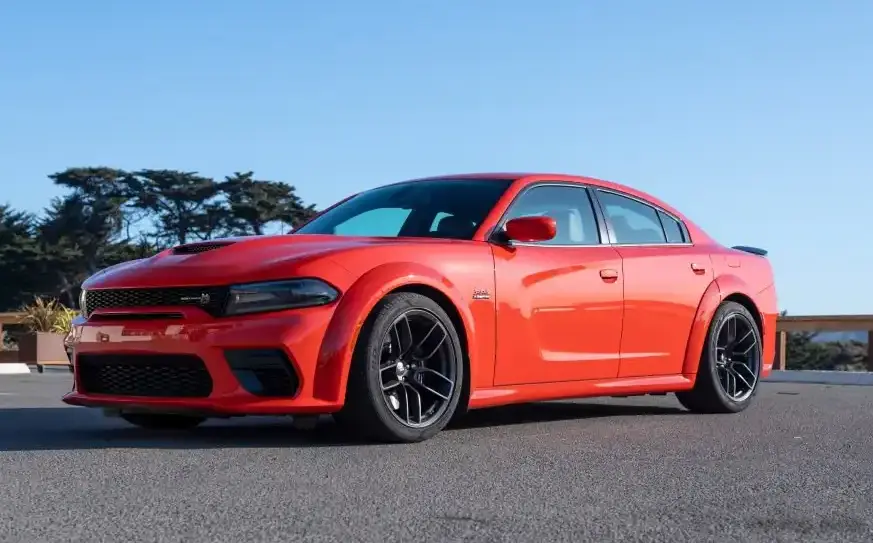
The Dodge Charger GT 3.6 V6 Automatic, produced from 2019 to December 2023, represents a significant iteration of Dodge’s iconic muscle car. This variant, part of the seventh-generation Charger (LD, facelifted in 2019), occupied a middle-ground position within the Charger lineup, offering a balance between performance and affordability. It aimed to provide a more accessible entry point into the Charger experience compared to the higher-performance trims like the Scat Pack or Hellcat, while still delivering the distinctive Charger styling and rear-wheel-drive experience. The 2019 facelift brought updated styling cues and technology to the Charger, solidifying its position as a modern American performance sedan.
Powertrain & Engine Architecture
The heart of the Charger GT is the 3.6-liter Pentastar V6 engine, designated as the ERB code. This engine is a naturally aspirated, 60-degree V6 featuring dual overhead camshafts (DOHC) and four valves per cylinder. It utilizes a multi-port fuel injection system, delivering fuel directly into the intake ports. The engine’s design prioritizes a balance of power and efficiency. The 8-speed automatic transmission, sourced from ZF, is a crucial component of this powertrain. This transmission offers smooth and responsive shifting, contributing to both performance and fuel economy. The transmission’s gear ratios are tuned to provide adequate acceleration while maintaining reasonable engine speeds at highway cruising.
Driving Characteristics
The 300 horsepower and 264 lb-ft of torque delivered by the 3.6L V6, coupled with the 8-speed automatic, provide a respectable driving experience. While not as exhilarating as the higher-performance Charger models, the GT offers sufficient power for everyday driving and occasional spirited acceleration. The automatic transmission is well-programmed, providing smooth shifts and responsive downshifts when needed. Compared to a manual transmission equipped Charger (which wasn’t widely available with this engine), the automatic prioritizes ease of use and convenience. Against the V8-powered trims, the GT offers a more fuel-efficient and comfortable ride, albeit with a noticeable performance deficit.
Equipment & Trim Levels
The Charger GT typically came standard with features like a Uconnect infotainment system with a touchscreen display, keyless entry, push-button start, and a rearview camera. Interior upholstery was generally cloth, with available upgrades to leather. Standard exterior features included alloy wheels, a rear spoiler, and distinctive GT badging. Optional extras could include a premium sound system, navigation, heated and ventilated front seats, and advanced safety features like blind-spot monitoring and rear cross-traffic alert. The GT trim aimed to provide a good balance of features and value, appealing to buyers who wanted a stylish and well-equipped sedan without the higher price tag of the performance-oriented models.
Chassis & Braking
The Charger GT utilizes a robust chassis with a front wishbone suspension and an independent multi-link rear suspension. This suspension setup provides a comfortable ride while maintaining good handling characteristics. The GT typically featured ventilated disc brakes on all four wheels, providing adequate stopping power for its weight class. The front brakes measured 345mm, while the rear brakes were 320mm. Anti-lock braking system (ABS) was standard. The suspension tuning was geared towards a balance between comfort and handling, making it suitable for both daily commuting and occasional spirited driving.
Market Reception & Comparison
The Charger GT 3.6 V6 Automatic was generally well-received by critics as a capable and comfortable all-around sedan. It was praised for its spacious interior, smooth ride, and user-friendly technology. However, some reviewers noted that the V6 engine lacked the raw power and excitement of the V8 options. In terms of fuel economy, the GT offered a significant improvement over the V8 models, achieving around 23.1 US mpg in combined driving. Reliability reports generally indicated good dependability for the powertrain, although routine maintenance was essential. Compared to competitors like the Toyota Avalon or Nissan Maxima, the Charger GT offered a more aggressive styling and a rear-wheel-drive platform, appealing to buyers who prioritized a sporty driving experience.
Legacy
The 3.6L Pentastar V6 and 8-speed automatic combination proved to be a reliable and durable powertrain. On the used car market, Charger GT models from this era represent a good value proposition, offering a blend of style, performance, and features at a relatively affordable price point. While not a collector’s item like the Hellcat or Scat Pack models, the GT remains a popular choice for buyers seeking a comfortable and capable American sedan. Regular maintenance, including oil changes and transmission fluid services, is crucial for ensuring the long-term reliability of this powertrain.