
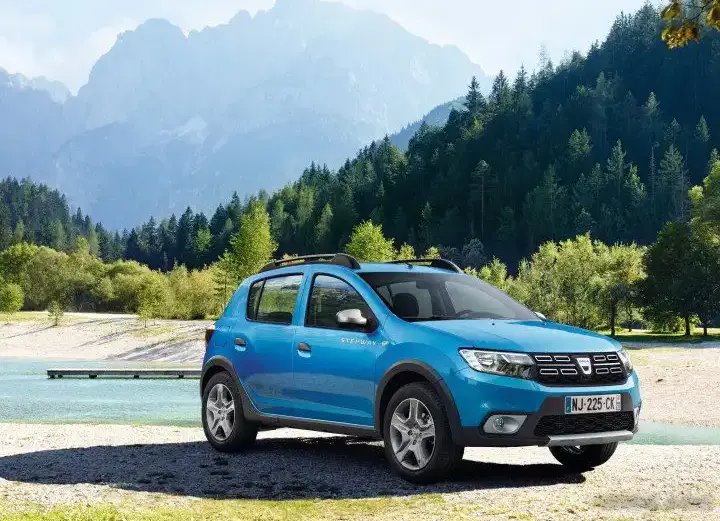
The Dacia Sandero II Stepway (facelift 2016) 1.5 dCi 90 horsepower variant, produced from 2016 to 2020, represents a significant offering within the broader Sandero II range. Positioned as a budget-friendly crossover, the Stepway aimed to provide a more rugged aesthetic and slightly increased ground clearance compared to the standard Sandero hatchback. This particular 1.5 dCi engine, coupled with a five-speed manual transmission, served as a core engine option, appealing to buyers prioritizing fuel efficiency and reasonable running costs. It was a key model for Dacia in European markets, where small, economical diesel vehicles were highly sought after. The facelift in 2016 brought updated styling cues and minor equipment revisions to the Stepway, further enhancing its market appeal.
Technical Specifications
| Brand | Dacia |
| Model | Sandero |
| Generation | Sandero II Stepway (facelift 2016) |
| Type (Engine) | 1.5 dCi (90 Hp) Start&Stop |
| Start of production | 2016 |
| End of production | 2020 |
| Powertrain Architecture | Internal Combustion engine |
| Body type | Crossover |
| Seats | 5 |
| Doors | 5 |
| Fuel consumption (urban) | 3.8 l/100 km (61.9 US mpg, 74.3 UK mpg, 26.3 km/l) |
| Fuel consumption (extra urban) | 3.8 l/100 km (61.9 US mpg, 74.3 UK mpg, 26.3 km/l) |
| Fuel consumption (combined) | 3.8 l/100 km (61.9 US mpg, 74.3 UK mpg, 26.3 km/l) |
| CO2 emissions | 98 g/km |
| Fuel Type | Diesel |
| Acceleration 0 – 100 km/h | 11.7 sec |
| Acceleration 0 – 62 mph | 11.7 sec |
| Acceleration 0 – 60 mph | 11.1 sec |
| Maximum speed | 167 km/h (103.77 mph) |
| Emission standard | Euro 6 b |
| Weight-to-power ratio | 12.1 kg/Hp, 82.6 Hp/tonne |
| Weight-to-torque ratio | 5 kg/Nm, 201.8 Nm/tonne |
| Power | 90 Hp @ 4000 rpm |
| Power per litre | 61.6 Hp/l |
| Torque | 220 Nm @ 1750 rpm (162.26 lb.-ft. @ 1750 rpm) |
| Engine layout | Front, Transverse |
| Engine Model/Code | K9K 626 |
| Engine displacement | 1461 cm3 (89.16 cu. in.) |
| Number of cylinders | 4 |
| Engine configuration | Inline |
| Cylinder Bore | 76 mm (2.99 in.) |
| Piston Stroke | 80.5 mm (3.17 in.) |
| Compression ratio | 15.5:1 |
| Number of valves per cylinder | 2 |
| Fuel injection system | Diesel Commonrail |
| Engine aspiration | Turbocharger, Intercooler |
| Engine oil capacity | 4.5 l (4.76 US qt | 3.96 UK qt) |
| Coolant capacity | 4.5 l (4.76 US qt | 3.96 UK qt) |
| Kerb Weight | 1090 kg (2403.04 lbs.) |
| Max. weight | 1600 kg (3527.4 lbs.) |
| Max load | 510 kg (1124.36 lbs.) |
| Fuel tank capacity | 50 l (13.21 US gal | 11 UK gal) |
| Permitted trailer load with brakes (12%) | 1090 kg (2403.04 lbs.) |
| Permitted trailer load without brakes | 790 kg (1741.65 lbs.) |
| Minimum turning circle | 10.5 m (34.45 ft.) |
| Drivetrain Architecture | Front wheel drive |
| Number of gears | 5 |
| Gearbox type | Manual transmission |
| Front suspension | Independent multi-link suspension |
| Rear suspension | Semi-independent, coil spring |
| Front brakes | Ventilated discs |
| Rear brakes | Drum |
| Assisting systems | ABS (Anti-lock braking system) |
| Steering type | Steering rack and pinion |
| Power steering | Electric Steering |
| Tires size | 205/55 R16 |
| Wheel rims size | 6J x 16 |
Powertrain & Engine Architecture
The heart of this Stepway variant is the Renault-sourced 1.5 dCi (K9K 626) engine. This engine is a four-cylinder, inline diesel, known for its robust design and fuel efficiency. The K9K engine family has been widely used across the Renault-Nissan-Dacia alliance for many years. The 90 horsepower output is achieved through a turbocharger with an intercooler, coupled with a common rail direct fuel injection system. This system allows for precise fuel delivery, optimizing combustion and reducing emissions. The engine features two valves per cylinder and a compression ratio of 15.5:1. The five-speed manual transmission is a standard unit, providing a relatively straightforward driving experience. The Start&Stop system, introduced to improve fuel economy, automatically shuts off the engine when the vehicle is stationary, restarting it when the clutch pedal is depressed.
Driving Characteristics
The 1.5 dCi 90 hp Stepway offers a practical and economical driving experience. Acceleration is not its strong suit, with a 0-60 mph time of around 11.1 seconds. However, the 220 Nm (162 lb-ft) of torque available from 1750 rpm provides adequate pulling power for everyday driving and overtaking maneuvers. The five-speed gearbox is well-matched to the engine’s characteristics, allowing for comfortable cruising at highway speeds. Compared to higher-output versions of the Sandero II, such as those with the 1.5 dCi 110 hp engine, this variant feels less responsive. However, it offers superior fuel economy and lower running costs. The Stepway’s slightly raised suspension provides a more comfortable ride than the standard Sandero, absorbing bumps and imperfections in the road surface more effectively.
Equipment & Trim Levels
The Stepway trim level, even in its base form with the 90 hp engine, offered a reasonable level of equipment. Standard features typically included air conditioning, power steering, electric front windows, a basic audio system with USB connectivity, and ABS brakes. The interior upholstery was typically cloth, with a functional and durable design. Optional extras available for this trim included alloy wheels, rear parking sensors, a more advanced audio system with Bluetooth connectivity, and a navigation system. The Stepway also featured distinctive plastic cladding around the wheel arches and along the sides, giving it a more rugged appearance.
Chassis & Braking
The Sandero II Stepway utilizes a front-wheel-drive layout with an independent multi-link suspension at the front and a semi-independent coil spring suspension at the rear. The front brakes are ventilated discs, providing good stopping power, while the rear brakes are drums. This configuration was typical for vehicles in this price segment. The electric power steering offers a light and easy steering feel, making it well-suited for urban driving. The Stepway’s suspension is tuned for comfort, providing a relatively smooth ride, although it may exhibit some body roll during cornering.
Market Reception & Comparison
The Dacia Sandero II Stepway 1.5 dCi 90 hp was generally well-received by critics and consumers alike. It was praised for its affordability, fuel efficiency, and practicality. However, some reviewers noted its lack of refinement and relatively slow acceleration. Compared to other trims in the Sandero lineup, this variant offered the best fuel economy and lowest purchase price. It was a popular choice for buyers who prioritized running costs over performance. Against competitors like the Skoda Fabia and Volkswagen Polo, the Sandero Stepway offered a more affordable alternative, albeit with a less sophisticated interior and driving experience.
Legacy
The 1.5 dCi K9K engine has proven to be a reliable and durable powertrain, and examples of the Sandero II Stepway with this engine continue to be found on the used car market today. While diesel engines have faced increased scrutiny in recent years due to emissions concerns, the K9K engine remains a relatively clean and efficient option. Regular maintenance, including oil changes and filter replacements, is crucial for ensuring the long-term reliability of this powertrain. The Sandero II Stepway 1.5 dCi 90 hp remains a popular choice for budget-conscious buyers seeking a practical and economical crossover.