
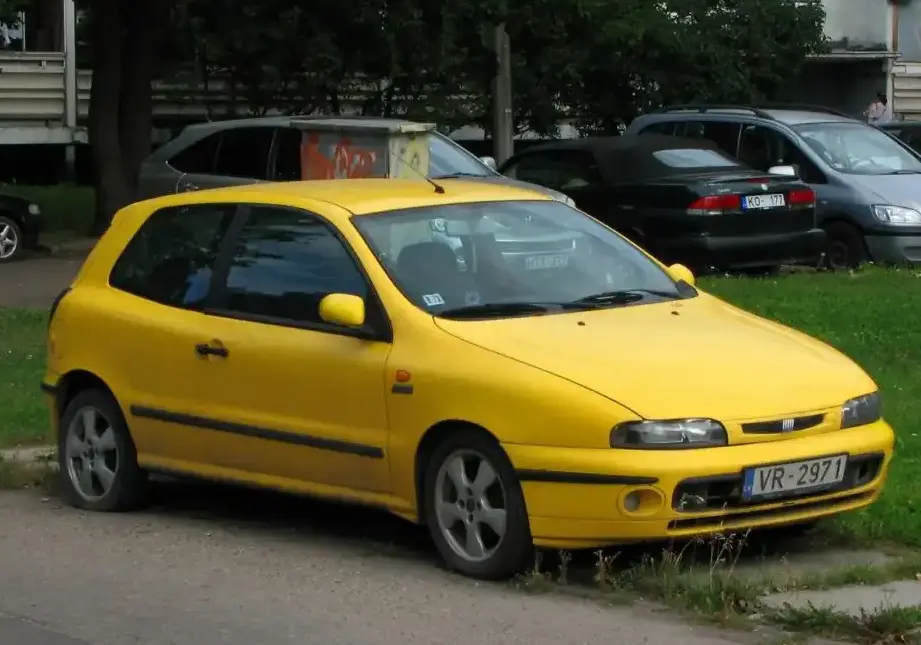
The Fiat Bravo (182) 2.0 HGT 20V, produced between 1998 and 2001, represented the performance-oriented pinnacle of the second-generation Bravo lineup. Positioned as the flagship trim, it offered a significant step up in power and handling compared to the base models. The 182 project, launched in 1996, aimed to modernize Fiat’s offerings and the Bravo, along with the Marea, were key models in this revitalization. The 2.0 HGT 20V specifically targeted drivers seeking a sporty and engaging driving experience in a compact hatchback format, primarily within the European market.
Technical Specifications
| Brand | Fiat |
| Model | Bravo |
| Generation | Bravo (182) |
| Type (Engine) | 2.0 HGT 20V (154 Hp) |
| Start of production | 1998 |
| End of production | 2001 |
| Powertrain Architecture | Internal Combustion engine |
| Body type | Hatchback |
| Seats | 5 |
| Doors | 3 |
| Fuel consumption (urban) | 13.1 l/100 km (18 US mpg, 21.6 UK mpg) |
| Fuel consumption (extra urban) | 7.2 l/100 km (32.7 US mpg, 39.2 UK mpg) |
| Fuel consumption (combined) | 9.4 l/100 km (25 US mpg, 30.1 UK mpg) |
| Fuel Type | Petrol (Gasoline) |
| Acceleration 0 – 100 km/h | 8 sec |
| Acceleration 0 – 62 mph | 8 sec |
| Acceleration 0 – 60 mph | 7.6 sec |
| Maximum speed | 213 km/h (132.35 mph) |
| Weight-to-power ratio | 7.6 kg/Hp, 132.2 Hp/tonne |
| Weight-to-torque ratio | 6.3 kg/Nm, 159.7 Nm/tonne |
| Power | 154 Hp @ 6700 rpm |
| Power per litre | 77.1 Hp/l |
| Torque | 186 Nm @ 3750 rpm (137.19 lb.-ft. @ 3750 rpm) |
| Engine layout | Front, Transverse |
| Engine Model/Code | 182B3000 |
| Engine displacement | 1998 cm3 (121.93 cu. in.) |
| Number of cylinders | 5 |
| Engine configuration | Inline |
| Cylinder Bore | 82 mm (3.23 in.) |
| Piston Stroke | 75.65 mm (2.98 in.) |
| Compression ratio | 10:1 |
| Number of valves per cylinder | 4 |
| Fuel injection system | Multi-port manifold injection |
| Engine aspiration | Naturally aspirated engine |
| Valvetrain | DOHC |
| Engine oil capacity | 5 l (5.28 US qt | 4.4 UK qt) |
| Coolant capacity | 7.2 l (7.61 US qt | 6.34 UK qt) |
| Kerb Weight | 1165 kg (2568.39 lbs.) |
| Max. weight | 1690 kg (3725.81 lbs.) |
| Max load | 525 kg (1157.43 lbs.) |
| Trunk (boot) space – maximum | 280 l (9.89 cu. ft.) |
| Fuel tank capacity | 50 l (13.21 US gal | 11 UK gal) |
| Length | 4025 mm (158.46 in.) |
| Width | 1755 mm (69.09 in.) |
| Height | 1410 mm (55.51 in.) |
| Wheelbase | 2540 mm (100 in.) |
| Front track | 1471 mm (57.91 in.) |
| Rear (Back) track | 1430 mm (56.3 in.) |
| Drivetrain Architecture | The Internal combustion engine (ICE) drives the front wheels of the vehicle. |
| Drive wheel | Front wheel drive |
| Number of gears and type of gearbox | 5 gears, manual transmission |
| Front suspension | Coil spring |
| Rear suspension | Coil spring |
| Front brakes | Disc |
| Rear brakes | Disc |
| Assisting systems | ABS (Anti-lock braking system) |
| Power steering | Hydraulic Steering |
| Tires size | 205/50 R15 |
| Wheel rims size | 15 |
Powertrain & Engine Architecture
The heart of the 2.0 HGT 20V is the 182B3000 engine, a 1998cc inline-five cylinder powerplant. This engine was a significant departure from the smaller, more common Fiat engines of the time. The five-cylinder configuration offered a smoother power delivery and a distinctive exhaust note. It featured a double overhead camshaft (DOHC) valvetrain with four valves per cylinder, contributing to its high-revving nature and improved breathing. Fuel delivery was handled by a multi-port fuel injection system. The engine’s 10:1 compression ratio was a balance between performance and reliability. The 2.0 HGT 20V exclusively came with a five-speed manual transmission, chosen to maximize driver engagement and fully utilize the engine’s power output. This transmission was known for its relatively short throws and precise shift feel.
Driving Characteristics
The 2.0 HGT 20V offered a noticeably more spirited driving experience than the lower-spec Bravo models. The 154 horsepower and 186 Nm (137 lb-ft) of torque provided brisk acceleration, with a 0-60 mph time of around 7.6 seconds and a top speed of 132 mph. The five-cylinder engine delivered a broad powerband, making it responsive in various driving situations. The manual transmission allowed for precise control, and the gear ratios were well-matched to the engine’s characteristics. While not a dedicated sports car, the HGT 20V offered a satisfying level of performance for a compact hatchback. Compared to the 1.6L or 1.4L models, the 2.0 HGT felt significantly more powerful and capable, especially during highway overtaking and spirited driving on winding roads.
Equipment & Trim Levels
The HGT trim level was the most comprehensively equipped in the Bravo range. Standard features included power steering, ABS brakes, electric front windows, central locking, and a height-adjustable steering wheel. The interior typically featured sport seats with unique upholstery, often incorporating a combination of fabric and Alcantara. The dashboard featured a sporty design with aluminum trim accents. Optional extras included air conditioning, a sunroof, alloy wheels, and a premium audio system. The HGT also benefited from subtle exterior styling enhancements, such as a rear spoiler and unique badging.
Chassis & Braking
The Bravo 2.0 HGT 20V featured a MacPherson strut front suspension and a coil spring rear suspension. The suspension was tuned to provide a balance between comfort and handling, offering a relatively compliant ride while maintaining good body control. The braking system consisted of disc brakes on all four wheels, providing ample stopping power. ABS (Anti-lock Braking System) was standard, enhancing safety and stability during hard braking. The chassis was reinforced compared to the base models to handle the increased power and torque.
Market Reception & Comparison
The Fiat Bravo 2.0 HGT 20V was generally well-received by automotive critics. It was praised for its lively performance, engaging handling, and well-equipped interior. However, some reviewers noted that the interior quality, while improved over earlier Fiat models, still lagged behind some of its competitors. Compared to rivals like the Volkswagen Golf GTI and Peugeot 205 GTI, the Bravo HGT offered a competitive level of performance at a more affordable price point. Fuel economy was reasonable for a performance-oriented hatchback, averaging around 25 mpg in combined driving. Reliability was generally good, although the five-cylinder engine could be more complex to maintain than the smaller four-cylinder units.
Legacy
The Fiat Bravo 2.0 HGT 20V remains a popular choice among enthusiasts seeking a classic Italian hatchback with a unique character. The five-cylinder engine is particularly prized for its distinctive sound and smooth power delivery. While parts availability can be a challenge, the engine is generally considered to be robust and reliable if properly maintained. Today, well-maintained examples of the 2.0 HGT 20V are becoming increasingly collectible, representing a significant piece of Fiat’s performance heritage. The model demonstrated Fiat’s ability to produce a genuinely engaging and sporty hatchback, and it continues to be remembered fondly by those who experienced its charms.
