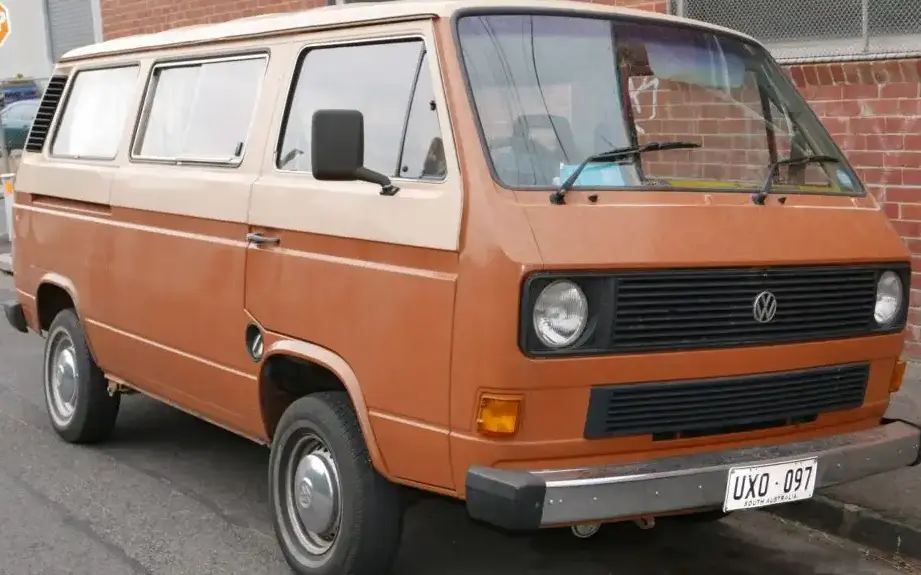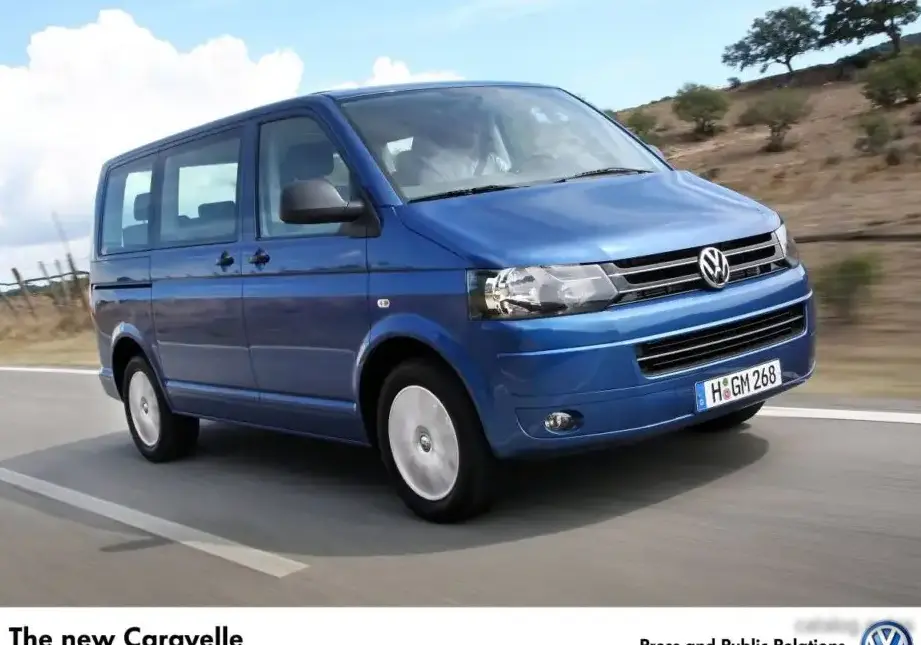
The Volkswagen Caravelle (T5, facelift 2009) 2.0 TDI BMT (84 hp) represents a specific configuration within the broader T5 Caravelle range, produced from 2011 to 2015. Positioned as an entry-level option, this variant aimed to provide a practical and economical people-carrier solution, particularly in European markets where the T5 series was highly popular. The “BMT” designation signifies “BlueMotion Technology,” indicating Volkswagen’s efforts to improve fuel efficiency. This model occupied the lower end of the T5 powertrain spectrum, offering a more affordable alternative to the more powerful TDI engines and the option of a manual transmission.
Technical Specifications
| Brand | Volkswagen |
| Model | Caravelle |
| Generation | Caravelle (T5, facelift 2009) |
| Type (Engine) | 2.0 TDI BMT (84 Hp) |
| Start of production | 2011 year |
| End of production | 2015 year |
| Powertrain Architecture | Internal Combustion engine |
| Body type | Van |
| Seats | 4-9 |
| Doors | 4-5 |
| Fuel consumption (economy) – urban (NEDC) | 8.4 l/100 km (28 US mpg, 33.6 UK mpg, 11.9 km/l) |
| Fuel consumption (economy) – extra urban (NEDC) | 5.9 l/100 km (39.9 US mpg, 47.9 UK mpg, 16.9 km/l) |
| Fuel consumption (economy) – combined (NEDC) | 6.8 l/100 km (34.6 US mpg, 41.5 UK mpg, 14.7 km/l) |
| CO2 emissions (NEDC) | 179 g/km |
| Fuel Type | Diesel |
| Acceleration 0 – 100 km/h | 22.2 sec |
| Acceleration 0 – 62 mph | 22.2 sec |
| Acceleration 0 – 60 mph | 21.1 sec |
| Maximum speed | 146 km/h (90.72 mph) |
| Emission standard | Euro 5 |
| Weight-to-power ratio | 22.7 kg/Hp, 44 Hp/tonne |
| Weight-to-torque ratio | 8.7 kg/Nm, 115.4 Nm/tonne |
| Power | 84 Hp @ 3500 rpm |
| Power per litre | 42.7 Hp/l |
| Torque | 220 Nm @ 1250-2500 rpm (162.26 lb.-ft. @ 1250-2500 rpm) |
| Engine layout | Front, Transverse |
| Engine Model/Code | EA189 / CAAA |
| Engine displacement | 1968 cm3 (120.09 cu. in.) |
| Number of cylinders | 4 |
| Engine configuration | Inline |
| Cylinder Bore | 81 mm (3.19 in.) |
| Piston Stroke | 95.5 mm (3.76 in.) |
| Compression ratio | 16.5:1 |
| Number of valves per cylinder | 4 |
| Fuel injection system | Diesel Commonrail |
| Engine aspiration | Turbocharger, Intercooler |
| Valvetrain | DOHC |
| Engine oil capacity | 7 l (7.4 US qt | 6.16 UK qt) |
| Coolant | 11 l (11.62 US qt | 9.68 UK qt) |
| Kerb Weight | 1907 kg (4204.22 lbs.) |
| Max. weight | 3000 kg (6613.87 lbs.) |
| Max load | 1093 kg (2409.65 lbs.) |
| Trunk (boot) space – maximum | 5800 l (204.83 cu. ft.) |
| Fuel tank capacity | 80 l (21.13 US gal | 17.6 UK gal) |
| Max. roof load | 100 kg (220.46 lbs.) |
| Permitted trailer load with brakes (12%) | 2200 kg (4850.17 lbs.) |
| Permitted trailer load without brakes | 750 kg (1653.47 lbs.) |
| Permitted towbar download | 100 kg (220.46 lbs.) |
| Length | 4892 mm (192.6 in.) |
| Width | 1904 mm (74.96 in.) |
| Width including mirrors | 2283 mm (89.88 in.) |
| Height | 1970-1990 mm (77.56 – 78.35 in.) |
| Wheelbase | 3000 mm (118.11 in.) |
| Front overhang | 896 mm (35.28 in.) |
| Rear overhang | 996 mm (39.21 in.) |
| Ride height (ground clearance) | 186-201 mm (7.32 – 7.91 in.) |
| Minimum turning circle (turning diameter) | 11.9 m (39.04 ft.) |
| Approach angle | 21° |
| Departure angle | 17° |
| Ramp-over (brakeover) angle | 14° |
| Wading depth | 300 mm (11.81 in.) |
| Drivetrain Architecture | The Internal combustion engine (ICE) drives the front wheels of the vehicle. |
| Drive wheel | Front wheel drive |
| Number of gears and type of gearbox | 5 gears, manual transmission |
| Front suspension | Independent, type McPherson with coil spring and anti-roll bar |
| Rear suspension | Independent coil spring, Transverse stabilizer, Trailing arm |
| Front brakes | Ventilated discs, 308×29.5 mm |
| Rear brakes | Ventilated discs, 294×22 mm |
| Assisting systems | ABS (Anti-lock braking system) |
| Steering type | Steering rack and pinion |
| Power steering | Hydraulic Steering |
| Tires size | 215/65 R16 |
| Wheel rims size | 6.5J x 16 |
Powertrain & Engine Architecture
The Caravelle 2.0 TDI BMT (84 hp) utilizes the EA189 engine family, specifically the CAAA engine code. This 1.968-liter inline-four cylinder diesel engine employs a turbocharger with an intercooler to boost power output. The engine features a common rail direct injection system, delivering fuel directly into the combustion chamber at high pressure for improved efficiency and reduced emissions. The valvetrain is a dual overhead camshaft (DOHC) design with four valves per cylinder, optimizing gas flow. The “BlueMotion Technology” features included modifications to the engine management system, aerodynamic enhancements, and low rolling resistance tires to minimize fuel consumption. The engine paired with a 5-speed manual transmission, chosen for its cost-effectiveness and simplicity.
Driving Characteristics
The 84 hp output and manual transmission combination resulted in a driving experience focused on practicality rather than performance. Acceleration was modest, with a 0-60 mph time around 21.1 seconds. The engine delivered its peak torque of 220 Nm (162 lb-ft) between 1250 and 2500 rpm, providing adequate pulling power for everyday driving and carrying a full load of passengers. The gear ratios were optimized for fuel economy, meaning the engine needed to be revved relatively high during overtaking maneuvers. Compared to higher-output TDI versions (like the 140 hp or 170 hp variants), this model felt noticeably slower and less refined, but it offered a more economical and affordable option.
Equipment & Trim Levels
The 2.0 TDI BMT Caravelle typically came with a base level of equipment, focusing on functionality. Standard features included power windows, central locking, a basic audio system, and air conditioning. Interior upholstery was typically cloth, and the dashboard featured a straightforward design. Optional extras included alloy wheels, parking sensors, upgraded audio systems, and a navigation system. The Caravelle offered flexible seating configurations, accommodating between four and nine passengers depending on the chosen layout.
Chassis & Braking
The Caravelle’s chassis featured an independent McPherson strut suspension at the front and an independent coil spring suspension with a transverse stabilizer at the rear. This setup provided a reasonable balance between ride comfort and handling. The braking system consisted of ventilated discs on all four wheels, offering adequate stopping power for the vehicle’s weight. Anti-lock Braking System (ABS) was standard, enhancing safety during emergency braking situations.
Market Reception & Comparison
The 2.0 TDI BMT Caravelle was generally well-received as a practical and economical people-carrier. Critics praised its fuel efficiency and spacious interior, but noted its lack of outright performance. Compared to the more powerful TDI variants, this model offered a lower purchase price and reduced running costs, making it an attractive option for budget-conscious buyers. However, the lower power output meant it was less suitable for frequent long-distance journeys or carrying heavy loads on steep inclines.
Legacy
The EA189 engine family, including the CAAA code, has a mixed reputation for long-term reliability. While generally robust, some engines were affected by issues related to the diesel particulate filter (DPF) and injector failures. The 2.0 TDI BMT Caravelle remains a relatively common sight on the used car market, often appealing to buyers seeking an affordable and practical people-carrier. Maintenance costs are generally reasonable, but potential buyers should be aware of the potential for DPF-related issues and ensure the vehicle has been properly serviced.