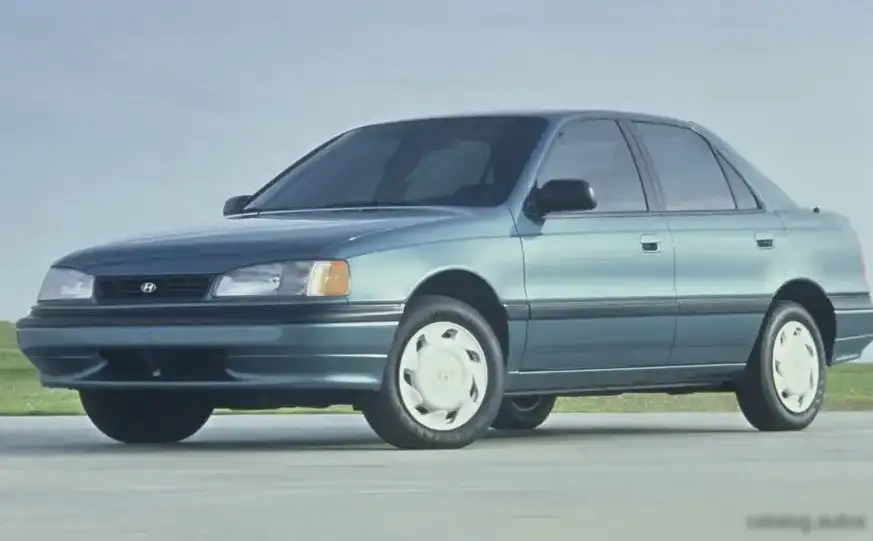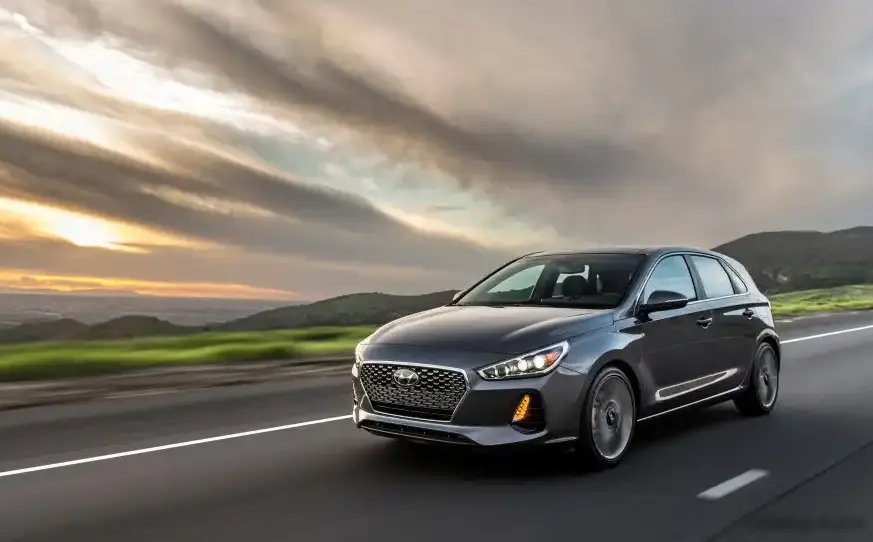
The Hyundai Elantra GT N Line 1.6 (204 Hp) Automatic, produced between 2017 and 2020, represents a performance-oriented variant within the PD (2017-2020) generation of the Elantra GT. Positioned as a step above the standard Elantra GT, the N Line aimed to deliver a more engaging driving experience with a turbocharged engine and sporty styling cues. This model was primarily marketed in Europe and other international markets, offering a compact hatchback alternative with a focus on accessible performance. It slotted between the base Elantra GT models and the fully-fledged Elantra N, offering a balance of practicality and driving enjoyment.
Technical Specifications
| Brand | Hyundai |
| Model | Elantra |
| Generation | Elantra GT (PD) |
| Type | N Line 1.6 (204 Hp) Automatic |
| Start of production | 2017 |
| End of production | 2020 |
| Powertrain Architecture | Internal Combustion Engine |
| Body type | Hatchback |
| Seats | 5 |
| Doors | 5 |
| Fuel consumption (urban) | 9 l/100 km (26.1 US mpg) |
| Fuel consumption (extra urban) | 7.4 l/100 km (31.8 US mpg) |
| Fuel consumption (combined) | 8.4 l/100 km (28 US mpg) |
| Fuel Type | Petrol (Gasoline) |
| Weight-to-power ratio | 6.8 kg/Hp |
| Weight-to-torque ratio | 5.3 kg/Nm |
| Power | 204 Hp @ 6000 rpm |
| Power per litre | 128.2 Hp/l |
| Torque | 264 Nm @ 1500-4500 rpm (194.72 lb.-ft.) |
| Engine layout | Front, Transverse |
| Engine Model/Code | Gamma II / G4FJ |
| Engine displacement | 1591 cm3 (97.09 cu. in.) |
| Number of cylinders | 4 |
| Engine configuration | Inline |
| Cylinder Bore | 77 mm (3.03 in.) |
| Piston Stroke | 85.4 mm (3.36 in.) |
| Compression ratio | 9.5:1 |
| Number of valves per cylinder | 4 |
| Fuel injection system | Direct injection |
| Engine aspiration | Turbocharger, Intercooler |
| Valvetrain | DOHC |
| Engine oil capacity | 4.5 l (4.76 US qt | 3.96 UK qt) |
| Coolant capacity | 6.1 l (6.45 US qt | 5.37 UK qt) |
| Kerb Weight | 1391 kg (3066.63 lbs.) |
| Trunk (boot) space (minimum) | 705 l (24.9 cu. ft.) |
| Fuel tank capacity | 53 l (14 US gal | 11.66 UK gal) |
| Length | 4341 mm (170.91 in.) |
| Width | 1796 mm (70.71 in.) |
| Height | 1466 mm (57.72 in.) |
| Wheelbase | 2649 mm (104.29 in.) |
| Front track | 1552 mm (61.1 in.) |
| Rear track | 1562 mm (61.5 in.) |
| Ride height (ground clearance) | 150 mm (5.91 in.) |
| Drivetrain Architecture | Front-wheel drive, Internal Combustion Engine |
| Drive wheel | Front wheel drive |
| Number of gears and type of gearbox | 7 gears, automatic transmission (DCT) |
| Front brakes | Ventilated discs |
| Rear brakes | Disc |
| Assisting systems | ABS (Anti-lock braking system) |
| Steering type | Steering rack and pinion |
| Power steering | Electric Steering |
| Tires size | 225/40 R18 |
| Wheel rims size | 7.5J x 18 |
Powertrain & Engine Architecture
The heart of the Elantra GT N Line 1.6 Automatic is the Hyundai Gamma II engine, specifically the G4FJ code. This 1.6-liter, turbocharged, direct-injection inline-four engine produces 204 horsepower at 6000 rpm and 264 Nm (194.72 lb.-ft.) of torque between 1500 and 4500 rpm. The direct injection system optimizes fuel delivery for improved efficiency and performance. The engine utilizes a twin-scroll turbocharger with an intercooler to minimize turbo lag and maximize boost. The engine features a Dual Continuously Variable Valve Timing (D-CVVT) system, enhancing both power and fuel economy. Paired with this engine is a 7-speed dual-clutch transmission (DCT). This DCT provides quick and smooth gear changes, contributing to the N Line’s sporty character. The DCT is tuned for both efficiency and responsiveness, offering both automatic and manual shifting modes.
Driving Characteristics
The 204 hp and 264 Nm of torque, combined with the 7-speed DCT, provide brisk acceleration. While not as overtly powerful as the full-fledged Elantra N, the N Line offers a noticeable performance upgrade over the standard Elantra GT. The DCT’s quick shifts contribute to a more engaging driving experience. Compared to manual transmission versions, the automatic offers convenience, particularly in urban driving. However, some driving enthusiasts might find the automatic slightly less engaging than the manual. The gear ratios are optimized for a balance of acceleration and fuel efficiency. The N Line’s suspension is also tuned for a sportier feel, offering improved handling and reduced body roll compared to the standard GT.
Equipment & Trim Levels
The Elantra GT N Line 1.6 Automatic typically came equipped with a range of features designed to enhance both comfort and style. Standard equipment often included alloy wheels, a sport-tuned suspension, unique N Line styling cues (including a different front grille, rear diffuser, and side skirts), and a sport steering wheel. Inside, the N Line featured sport seats with enhanced bolstering, providing better support during spirited driving. Infotainment systems varied depending on the market and year, but generally included a touchscreen display with Apple CarPlay and Android Auto compatibility. Optional extras could include a sunroof, leather upholstery, and advanced driver-assistance systems like blind-spot monitoring and lane-keeping assist.
Chassis & Braking
The Elantra GT N Line utilizes a MacPherson strut front suspension and a multi-link rear suspension. The suspension components are specifically tuned for the N Line to provide a firmer ride and improved handling. Braking duties are handled by ventilated discs at the front and solid discs at the rear. The braking system is equipped with ABS (Anti-lock Braking System) and Electronic Stability Control (ESC) for enhanced safety. The steering system is an electric power-assisted rack and pinion system, providing precise and responsive steering feel.
Market Reception & Comparison
The Elantra GT N Line was generally well-received by automotive critics as an accessible entry point into the world of performance hatchbacks. Reviewers praised its sporty handling, responsive engine, and attractive styling. Fuel economy was considered reasonable for a performance-oriented vehicle, with combined figures around 8.4 l/100 km (28 US mpg). Compared to the standard Elantra GT, the N Line offered a significant performance upgrade. Compared to other hot hatches in the same segment, such as the Volkswagen Golf GTI, the Elantra GT N Line offered a competitive level of performance and features at a potentially lower price point. However, some critics noted that the interior materials weren’t quite as premium as those found in some of its European rivals.
Legacy
The Hyundai Elantra GT N Line 1.6 Automatic has proven to be a relatively reliable vehicle in the used car market. The Gamma II engine, while turbocharged, is generally considered robust and durable when properly maintained. The DCT transmission, while more complex than a traditional automatic, has also demonstrated good reliability. Common maintenance items include regular oil changes, air filter replacements, and spark plug replacements. Today, the Elantra GT N Line represents a compelling option for buyers seeking an affordable and sporty hatchback with a good balance of performance, practicality, and reliability. Its position as a precursor to the more focused Elantra N has also contributed to its growing popularity among enthusiasts.