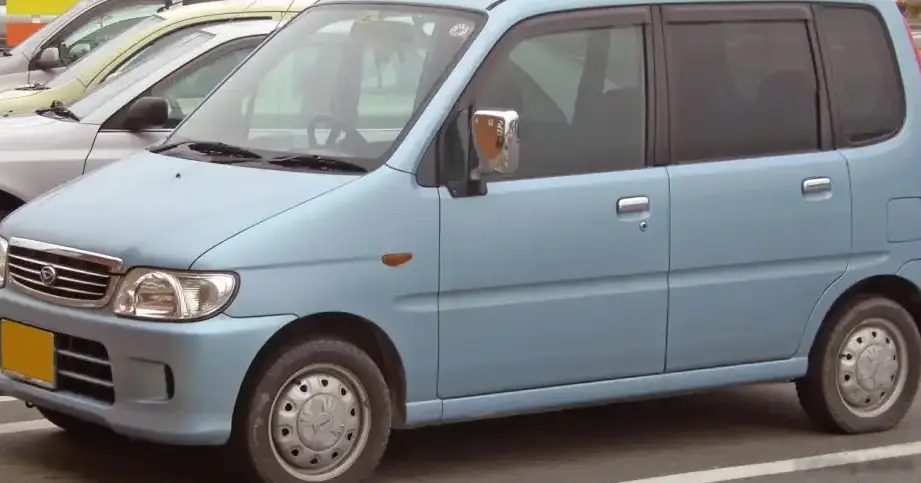
The Daihatsu Move Latte (L55) 0.7 i 16V RS, produced between 2003 and 2009, represents a unique offering within the second generation of the Move kei car family. Positioned as a stylish and practical micro-minivan, the Latte distinguished itself with its retro-inspired design and focus on urban maneuverability. This particular variant, equipped with the 659cc engine producing 64 horsepower and a four-speed automatic transmission, served as an entry-level option, appealing to buyers prioritizing ease of use and fuel efficiency over outright performance. The L55 generation Move, and by extension the Latte, was primarily marketed in Japan, catering to the specific needs and regulations of the kei car class.
Technical Specifications
| Brand | Daihatsu |
| Model | Move |
| Generation | Move Latte (L55) |
| Type (Engine) | 0.7 i 16V RS (64 Hp) |
| Start of production | 2003 |
| End of production | 2009 |
| Powertrain Architecture | Internal Combustion engine |
| Body type | Minivan |
| Seats | 5 |
| Doors | 5 |
| Fuel Type | Petrol (Gasoline) |
| Weight-to-power ratio | 13.6 kg/Hp, 73.6 Hp/tonne |
| Weight-to-torque ratio | 7.9 kg/Nm, 126.4 Nm/tonne |
| Power | 64 Hp @ 6000 rpm |
| Power per litre | 97.1 Hp/l |
| Torque | 110 Nm @ 3200 rpm, 81.13 lb.-ft. @ 3200 rpm |
| Engine layout | Front, Transverse |
| Engine displacement | 659 cm3, 40.21 cu. in. |
| Number of cylinders | 4 |
| Engine configuration | Inline |
| Cylinder Bore | 61 mm, 2.4 in. |
| Piston Stroke | 56.4 mm, 2.22 in. |
| Compression ratio | 8.2:1 |
| Number of valves per cylinder | 4 |
| Fuel injection system | Multi-port manifold injection |
| Kerb Weight | 870 kg, 1918.02 lbs. |
| Max. weight | 1090 kg, 2403.04 lbs. |
| Max load | 220 kg, 485.02 lbs. |
| Fuel tank capacity | 36 l, 9.51 US gal | 7.92 UK gal |
| Length | 3395 mm, 133.66 in. |
| Width | 1475 mm, 58.07 in. |
| Height | 1610 mm, 63.39 in. |
| Wheelbase | 2390 mm, 94.09 in. |
| Front track | 1300 mm, 51.18 in. |
| Rear (Back) track | 1290 mm, 50.79 in. |
| Drivetrain Architecture | The Internal combustion engine (ICE) drives the front wheels of the vehicle. |
| Drive wheel | Front wheel drive |
| Number of gears and type of gearbox | 4 gears, automatic transmission |
| Front suspension | Spring Strut |
| Rear suspension | Coil spring |
| Front brakes | Disc |
| Rear brakes | Drum |
| Assisting systems | ABS (Anti-lock braking system) |
| Steering type | Steering rack and pinion |
| Tires size | 165/55 R15 |
Powertrain & Engine Architecture
The heart of the Move Latte 0.7 i RS is the Daihatsu EF-SE engine, a 659cc inline-four cylinder petrol engine. This engine, typical of kei car designs, prioritizes efficiency and compactness. It features a single overhead camshaft (SOHC) operating four valves per cylinder. The EF-SE utilizes a multi-point fuel injection system, contributing to improved fuel atomization and combustion efficiency. While not a high-performance engine, the EF-SE was known for its reliability and relatively smooth operation. The four-speed automatic transmission, a common choice for this segment, was designed for smooth shifts and ease of driving in urban environments. It’s a conventional hydraulic automatic, lacking the more advanced electronic controls found in larger vehicles. The transmission’s gear ratios were optimized for low-speed torque and fuel economy, rather than rapid acceleration.
Driving Characteristics
The 0.7L engine and automatic transmission combination resulted in a driving experience geared towards practicality rather than excitement. Acceleration was modest, with the Latte taking a considerable amount of time to reach highway speeds. The automatic transmission, while smooth, lacked the responsiveness of a manual gearbox. Gear changes were noticeable, and the engine could feel strained when climbing hills or carrying a full load. However, within the confines of city driving, the Latte proved to be nimble and easy to maneuver. The light steering and compact dimensions made parking and navigating tight spaces a breeze. The suspension, tuned for comfort, absorbed bumps reasonably well, providing a relatively smooth ride.
Equipment & Trim Levels
The Move Latte 0.7 i RS, as an entry-level trim, typically included basic amenities. Standard features generally consisted of air conditioning, power steering, and a basic audio system. Interior upholstery was typically cloth, with a simple dashboard layout. Optional extras, depending on the year and specific package, could include power windows, central locking, and upgraded audio systems. The “RS” designation indicated a slightly sportier aesthetic, often including unique wheel covers and interior trim details. The Latte’s interior was designed to maximize space within its small footprint, offering reasonable headroom and legroom for passengers.
Chassis & Braking
The Move Latte utilized a front-engine, front-wheel-drive layout. The front suspension employed a MacPherson strut setup, while the rear suspension featured a coil spring arrangement. This configuration provided a balance between ride comfort and handling. The braking system consisted of disc brakes on the front wheels and drum brakes on the rear. Anti-lock Braking System (ABS) was included as a standard safety feature. The relatively lightweight nature of the vehicle helped to compensate for the less powerful braking system. The steering system employed a rack and pinion setup, providing precise and responsive steering feel.
Market Reception & Comparison
The Daihatsu Move Latte, and specifically the 0.7 i RS variant, was well-received in the Japanese market as an affordable and practical kei car. Critics praised its stylish design and ease of driving. However, the 64 horsepower engine and automatic transmission were often criticized for their lack of performance. Compared to other Move variants, such as those with manual transmissions or slightly larger engines, the 0.7 i RS offered the lowest level of performance but the highest level of convenience. Fuel economy was a strong point, making it an attractive option for commuters. Reliability was generally good, typical of Daihatsu’s reputation for building durable vehicles.
Legacy
The Daihatsu Move Latte (L55) 0.7 i RS, while not a performance icon, holds a significant place in the history of kei cars. Its blend of style, practicality, and affordability made it a popular choice for Japanese drivers. Today, these vehicles are relatively common on the used car market, often prized for their low running costs and ease of maintenance. The EF-SE engine is known for its durability, and with proper maintenance, can provide many years of reliable service. While not typically sought after by enthusiasts, the Latte represents a charming and functional example of Japanese automotive engineering, perfectly suited to the demands of urban life.