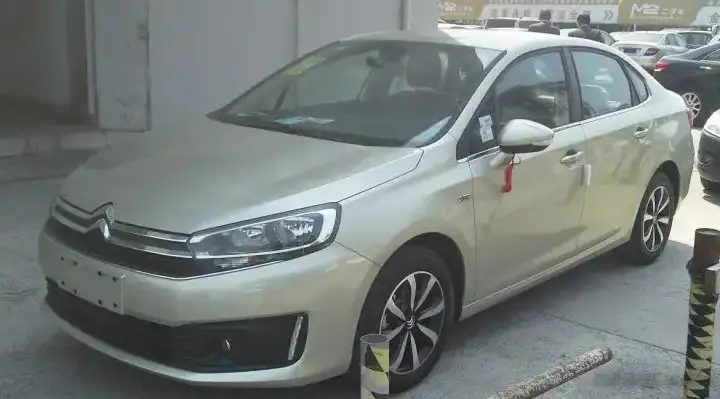
The Citroen C4 C-Triomphe, launched in 2007 as part of the first generation (Mk1) C4 range, represented Citroen’s entry into the competitive compact sedan market. Positioned as a more conventional offering compared to the hatchback version, the C-Triomphe aimed to broaden the C4’s appeal. Production of this specific phase I model, featuring the 2.0i 16V engine producing 140 horsepower, ran from 2008 to 2011. This variant occupied a mid-range position within the C4 lineup, offering a balance between performance and affordability, slotting above the base 1.4L engine options and below the diesel variants.
Technical Specifications
| Brand | Citroen |
| Model | C4 |
| Generation | C4 C-Triomphe (Phase I, 2007) |
| Type (Engine) | 2.0i 16V (140 Hp) |
| Start of production | 2008 |
| End of production | 2011 |
| Powertrain Architecture | Internal Combustion engine |
| Body type | Sedan |
| Seats | 5 |
| Doors | 4 |
| Fuel consumption (urban) | 11.1 l/100 km (21.2 US mpg) |
| Fuel consumption (extra urban) | 6 l/100 km (39.2 US mpg) |
| Fuel consumption (combined) | 7.9 l/100 km (29.8 US mpg) |
| CO2 emissions | 188 g/km |
| Fuel Type | Petrol (Gasoline) |
| Acceleration 0 – 100 km/h | 9.7 sec |
| Acceleration 0 – 62 mph | 9.7 sec |
| Acceleration 0 – 60 mph | 9.2 sec |
| Maximum speed | 203 km/h (126.14 mph) |
| Emission standard | Euro 4 |
| Weight-to-power ratio | 9.8 kg/Hp |
| Weight-to-torque ratio | 6.9 kg/Nm |
| Power | 140 Hp @ 6000 rpm |
| Torque | 200 Nm @ 4000 rpm (147.51 lb.-ft. @ 4000 rpm) |
| Engine layout | Front, Transverse |
| Engine Model/Code | EW10A |
| Engine displacement | 1997 cm3 (121.86 cu. in.) |
| Number of cylinders | 4 |
| Engine configuration | Inline |
| Cylinder Bore | 85 mm (3.35 in.) |
| Piston Stroke | 88 mm (3.46 in.) |
| Compression ratio | 10.8:1 |
| Number of valves per cylinder | 4 |
| Fuel injection system | Multi-port manifold injection |
| Engine aspiration | Naturally aspirated |
| Kerb Weight | 1370 kg (3020.33 lbs.) |
| Max. weight | 1800 kg (3968.32 lbs.) |
| Max load | 430 kg (947.99 lbs.) |
| Trunk (boot) space – minimum | 513 l (18.12 cu. ft.) |
| Fuel tank capacity | 60 l (15.85 US gal | 13.2 UK gal) |
| Length | 4785 mm (188.39 in.) |
| Width | 1773 mm (69.8 in.) |
| Height | 1500 mm (59.06 in.) |
| Wheelbase | 2708 mm (106.61 in.) |
| Front track | 1500 mm (59.06 in.) |
| Rear track | 1495 mm (58.86 in.) |
| Drag coefficient (Cd) | 0.308 |
| Minimum turning circle | 11.3 m (37.07 ft.) |
| Drivetrain Architecture | Front wheel drive |
| Number of gears | 5 |
| Gearbox type | Manual transmission |
| Front suspension | Independent, McPherson with coil spring and anti-roll bar |
| Rear suspension | Semi-independent, coil spring |
| Front brakes | Ventilated discs |
| Rear brakes | Disc |
| Assisting systems | ABS (Anti-lock braking system) |
| Steering type | Steering rack and pinion |
| Power steering | Hydraulic |
| Tires size | 215/55 R16 |
| Wheel rims size | 16 |
Powertrain & Engine Architecture
The heart of the C4 C-Triomphe 2.0i 16V is the EW10A engine, a naturally aspirated, inline-four cylinder gasoline engine. This engine, a product of PSA Peugeot Citroen’s engineering, was widely used across various models within the group. The ‘16V’ designation indicates the engine features four valves per cylinder, enhancing breathing and contributing to its power output. Fuel delivery is managed by a multi-port fuel injection system, providing precise fuel metering for optimal combustion. The engine’s 10.8:1 compression ratio strikes a balance between efficiency and performance. The engine is transversely mounted, driving the front wheels. The five-speed manual transmission was the standard offering for this variant, providing a relatively direct connection between the engine and the wheels. Gear ratios were tuned for a blend of acceleration and highway cruising, though not as aggressively as those found in sportier trims.
Driving Characteristics
The 140 horsepower and 200 Nm (147.51 lb-ft) of torque delivered by the 2.0i engine provided the C4 C-Triomphe with adequate, though not exhilarating, performance. Acceleration from 0-60 mph took approximately 9.2 seconds, and it reached a top speed of 126.14 mph. Compared to the more economical 1.4L engines, the 2.0i offered noticeably more responsive acceleration and effortless highway cruising. However, it lacked the punch of the higher-performance models or the low-end torque of the diesel options. The five-speed manual transmission allowed for reasonable driver control, but the gear ratios weren’t particularly sporty. The overall driving experience was comfortable and refined, typical of Citroen’s emphasis on ride quality.
Equipment & Trim Levels
The C4 C-Triomphe 2.0i 16V typically came equipped with a reasonable level of standard features. These included air conditioning, power windows, central locking, and an audio system. Interior upholstery was generally cloth, with options for upgraded materials available. Dashboard design was functional and modern for its time, with a focus on ergonomics. Optional extras included alloy wheels, a sunroof, and more advanced audio systems. Safety features such as ABS and front airbags were standard.
Chassis & Braking
The C4 C-Triomphe utilized an independent McPherson strut suspension setup at the front, providing good handling and ride comfort. The rear suspension employed a semi-independent coil spring arrangement. Braking duties were handled by ventilated discs at the front and solid discs at the rear, providing adequate stopping power for the vehicle’s weight and performance. ABS (Anti-lock Braking System) was standard, enhancing safety during emergency braking situations. The steering was rack and pinion with hydraulic assistance, offering a reasonably precise and responsive feel.
Market Reception & Comparison
The C4 C-Triomphe 2.0i 16V was generally well-received by automotive critics as a competent and comfortable family sedan. It offered a good balance of performance, fuel economy (around 29.8 US mpg combined), and practicality. However, it wasn’t considered a standout performer in its class. Compared to the 1.4L models, the 2.0i offered a significant performance upgrade, but at the cost of slightly higher fuel consumption. The diesel variants provided even better fuel economy and low-end torque, but were typically more expensive to purchase. Reliability was generally good, though routine maintenance was essential to ensure longevity.
Legacy
The Citroen C4 C-Triomphe 2.0i 16V, while not a particularly rare or collectible model, remains a reasonably popular choice in the used car market. The EW10A engine is known for its durability and relatively straightforward maintenance. However, potential buyers should be aware of potential issues such as oil leaks and timing belt replacement intervals. Overall, this variant represents a solid and dependable option for those seeking an affordable and comfortable compact sedan.