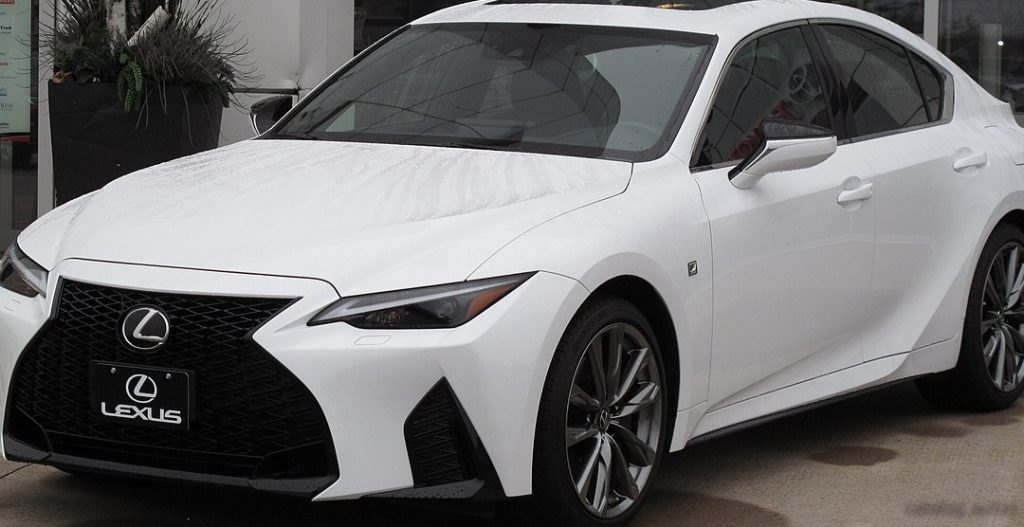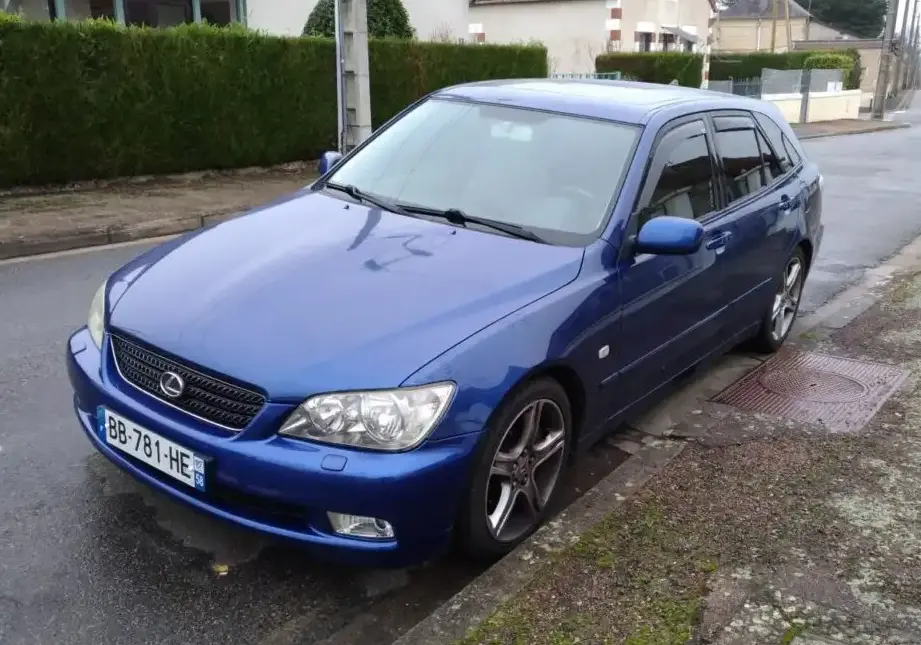
The Lexus IS 300h, specifically the XE30 generation produced from July 2015 to October 2016, represents Lexus’s entry into the hybrid sports sedan market in North America and globally. Positioned as a fuel-efficient and technologically advanced alternative to traditional gasoline-powered IS models, the 300h combined a 2.5-liter four-cylinder engine with an electric motor, delivering a total system output of 220 horsepower. This variant was a key component of the third-generation IS (XE30) lineup, built on the Lexus New Global Architecture (GNLA) platform, and aimed at buyers seeking a premium experience with reduced environmental impact. The AWD configuration was standard, enhancing all-weather capability and contributing to the model’s appeal in regions with inclement weather.
Technical Specifications
| Brand | Lexus |
| Model | IS |
| Generation | IS III (XE30) |
| Type (Engine) | 300h (220 Hp) Hybrid AWD e-CVT |
| Start of production | July, 2015 |
| End of production | October, 2016 |
| Powertrain Architecture | FHEV (Full Hybrid Electric Vehicle) |
| Body type | Sedan |
| Seats | 5 |
| Doors | 4 |
| Fuel consumption (combined) | 4.9 l/100 km (48 US mpg, 57.6 UK mpg, 20.4 km/l) |
| Fuel Type | Petrol (Gasoline) |
| Maximum speed | 200 km/h (124.27 mph) |
| Weight-to-power ratio | 8 kg/Hp, 125 Hp/tonne |
| Weight-to-torque ratio | 8 kg/Nm, 125.6 Nm/tonne |
| Battery voltage | 230.4 V |
| Battery technology | Nickel-metal hydride (NiMH) |
| Battery location | Under the trunk |
| Electric motor power | 143 Hp |
| Electric motor Torque | 300 Nm (221.27 lb.-ft.) |
| Electric motor model/code | 1KM |
| Electric motor location | Integrated into the transmission |
| Electric motor type | Synchronous |
| System power | 220 Hp |
| Internal combustion engine power | 178 Hp @ 6000 rpm |
| Power per litre | 71.4 Hp/l |
| Torque | 221 Nm (163 lb.-ft.) @ 4200-4800 rpm |
| Engine layout | Front, Longitudinal |
| Engine Model/Code | 2AR-FSE |
| Engine displacement | 2493 cm3 (152.13 cu. in.) |
| Number of cylinders | 4 |
| Engine configuration | Inline |
| Cylinder Bore | 90 mm (3.54 in.) |
| Piston Stroke | 98 mm (3.86 in.) |
| Compression ratio | 13:1 |
| Number of valves per cylinder | 4 |
| Fuel injection system | Direct injection and Multi-port manifold injection |
| Engine aspiration | Naturally aspirated engine |
| Valvetrain | DOHC, Dual VVT-i |
| Engine oil capacity | 4.5 l (4.76 US qt | 3.96 UK qt) |
| Coolant | 8.2 l (8.66 US qt | 7.21 UK qt) |
| Kerb Weight | 1760-1790 kg (3880.14 – 3946.27 lbs.) |
| Max. weight | 2035-2065 kg (4486.41 – 4552.55 lbs.) |
| Max load | 275 kg (606.27 lbs.) |
| Trunk (boot) space – minimum | 450 l (15.89 cu. ft.) |
| Fuel tank capacity | 66 l (17.44 US gal | 14.52 UK gal) |
| Length | 4665 mm (183.66 in.) |
| Width | 1810 mm (71.26 in.) |
| Width including mirrors | 2027 mm (79.8 in.) |
| Height | 1430 mm (56.3 in.) |
| Wheelbase | 2800 mm (110.24 in.) |
| Front track | 1535 mm (60.43 in.) |
| Rear (Back) track | 1540-1550 mm (60.63 – 61.02 in.) |
| Front overhang | 830 mm (32.68 in.) |
| Rear overhang | 1035 mm (40.75 in.) |
| Ride height (ground clearance) | 135 mm (5.31 in.) |
| Minimum turning circle (turning diameter) | 10.8 m (35.43 ft.) |
| Drivetrain Architecture | The Internal combustion engine (ICE) and the electric motor permanently drive the four wheels of the car with the ability to work in full electric or mixed mode. |
| Drive wheel | All wheel drive (4×4) |
| Number of gears and type of gearbox | automatic transmission e-CVT |
| Front suspension | Coil spring, Double wishbone, Transverse stabilizer |
| Rear suspension | Independent multi-link spring suspension with stabilizer |
| Front brakes | Ventilated discs |
| Rear brakes | Disc |
| Assisting systems | ABS (Anti-lock braking system) |
| Steering type | Steering rack and pinion |
| Power steering | Electric Steering |
| Tires size | Front wheel tires: 205/55 R16; 225/45 R17; 225/40 R18Rear wheel tires: 205/55 R16; 225/45 R17; 255/35 R18 |
| Wheel rims size | Front wheel rims: 7J x 16; 7.5J x 17; 8J x 18Rear wheel rims: 7J x 16; 7.5J x 17; 8.5J x 18 |
INTRODUCTION
The Lexus IS 300h, launched in 2015, was a significant addition to the IS family, offering a hybrid powertrain option for the first time in this model line. Built on the XE30 platform, it aimed to attract environmentally conscious buyers without sacrificing the luxury and performance expected from a Lexus. The 300h distinguished itself with its standard all-wheel drive (AWD) system and the innovative e-CVT transmission, a hallmark of Lexus’s hybrid technology. It occupied a middle ground within the IS lineup, positioned above the IS 200t (turbocharged four-cylinder) and below the more performance-oriented IS 350.
Powertrain & Engine Architecture
At the heart of the IS 300h lies the 2AR-FSE 2.5-liter inline-four cylinder engine. This engine utilizes a combination of direct injection and multi-port fuel injection to optimize combustion efficiency and power delivery. The engine produces 178 horsepower at 6000 rpm and 221 Nm (163 lb-ft) of torque between 4200-4800 rpm. It features a dual VVT-i (Variable Valve Timing-intelligence) system, enhancing both performance and fuel economy. The engine is paired with a permanent magnet synchronous electric motor (model 1KM) producing 143 horsepower and 300 Nm (221 lb-ft) of torque. The total system output is 220 horsepower. The e-CVT (electronically controlled Continuously Variable Transmission) is a key component of the hybrid system, seamlessly blending power from the engine and electric motor. Unlike traditional CVTs, the e-CVT doesn’t rely on belts or chains; instead, it uses a planetary gearset to provide a smooth, stepless gear ratio. The nickel-metal hydride (NiMH) battery pack is located under the trunk floor, providing energy storage for the electric motor.
Driving Characteristics
The IS 300h’s driving experience is characterized by its smoothness and quiet operation. The e-CVT contributes to a seamless acceleration feel, although it lacks the immediate responsiveness of a traditional automatic transmission. The combined output of the engine and electric motor provides adequate acceleration for everyday driving, but it doesn’t offer the same level of performance as the IS 350. The AWD system provides enhanced traction, particularly in slippery conditions. The IS 300h prioritizes fuel efficiency over outright performance, and the hybrid system allows for short periods of electric-only driving at low speeds. Compared to the IS 200t, the 300h offers a more refined and quieter driving experience, while the IS 350 delivers more powerful acceleration and a sportier feel.
Equipment & Trim Levels
The IS 300h typically came well-equipped with standard features including Lexus Safety System+, which included Pre-Collision System with Pedestrian Detection, Lane Departure Alert with Intelligent Steering Assist, and Dynamic Radar Cruise Control. Interior features included leather upholstery, power-adjustable front seats, a 7-inch infotainment display, and a rearview camera. Available options included a Mark Levinson premium sound system, a larger 10.3-inch infotainment display with navigation, blind spot monitoring, and rear cross-traffic alert. Trim levels were relatively streamlined, with most IS 300h models offering a similar level of standard equipment. Interior color schemes typically included black, gray, and ivory leather options.
Chassis & Braking
The IS 300h utilizes a double-wishbone front suspension and an independent multi-link rear suspension, providing a comfortable ride and responsive handling. Stabilizer bars are fitted to both the front and rear axles to reduce body roll during cornering. The braking system consists of ventilated discs at the front and solid discs at the rear, with ABS (Anti-lock Braking System) as standard. The hybrid system incorporates regenerative braking, which helps to recharge the battery and improve fuel efficiency. The steering is an electric power-assisted rack and pinion system, offering precise and responsive steering feel.
Market Reception & Comparison
The IS 300h was generally well-received by critics for its fuel efficiency, smooth ride, and luxurious interior. However, some reviewers noted that the e-CVT could feel less engaging than a traditional automatic transmission. Compared to the IS 200t, the 300h offered superior fuel economy and a quieter driving experience, but at a slightly higher price point. The IS 350, while more expensive, provided significantly more performance. The IS 300h’s fuel economy of 4.9 l/100 km (48 US mpg) was a major selling point, making it a competitive option in the luxury hybrid sedan segment.
Legacy
The IS 300h’s powertrain has proven to be relatively reliable, with few widespread issues reported. The hybrid system components, including the battery pack and electric motor, have demonstrated good longevity. On the used car market, the IS 300h remains a popular choice for buyers seeking a fuel-efficient and reliable luxury sedan. Its combination of Lexus refinement, hybrid technology, and standard AWD continues to make it an attractive option, even as newer hybrid and electric vehicles enter the market. The IS 300h helped establish Lexus as a leader in hybrid technology and paved the way for the introduction of more hybrid models in the Lexus lineup.