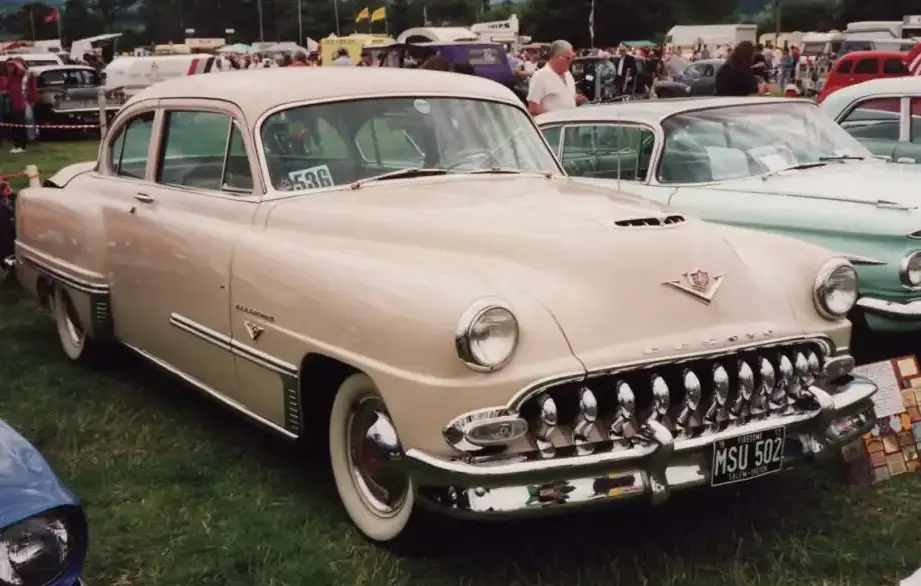
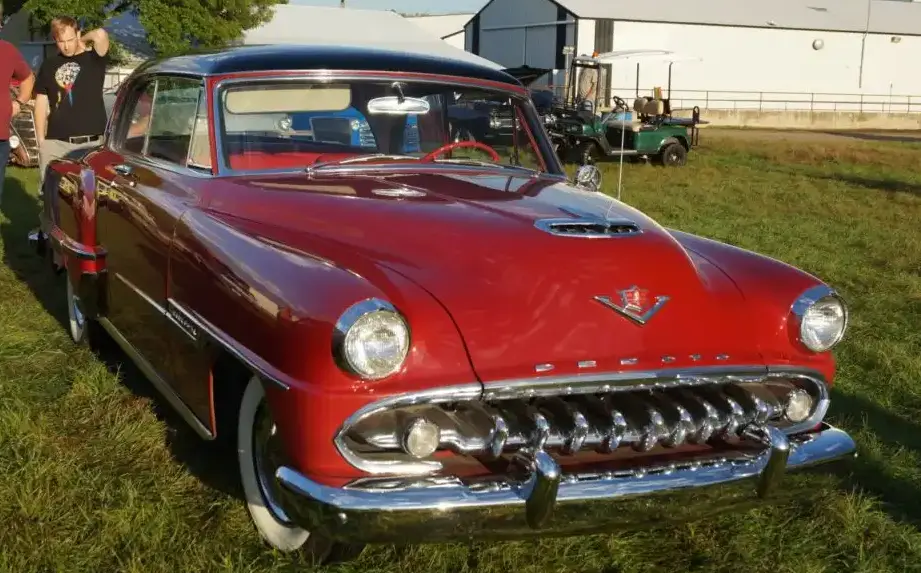
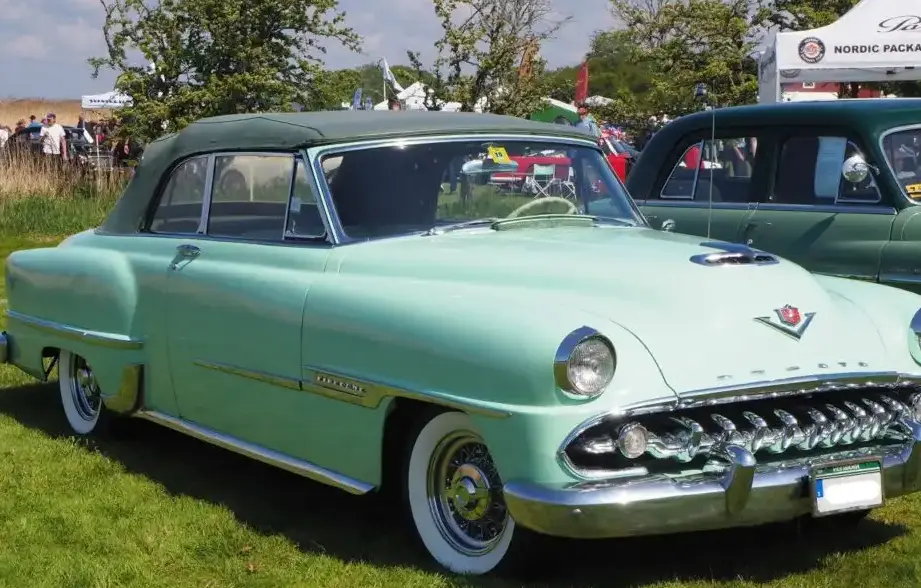
The DeSoto Firedome III Four-Door Sedan, specifically the facelifted 1958 model, represented a pinnacle of American automotive styling and engineering during the late 1950s. Produced from 1957 to 1958, it was positioned as DeSoto’s full-size offering, slotting above the Firesweep in the company’s lineup. The 1958 facelift brought significant cosmetic changes, including revised grille work, tailfins, and trim, reflecting the era’s obsession with bold design. This variant, equipped with the 5.9-liter V8 engine and TorqueFlite automatic transmission, aimed to provide a balance of power, comfort, and luxury for the American family.
Technical Specifications
| Brand | DeSoto |
| Model | Firedome |
| Generation | Firedome III Four-Door Sedan (facelift 1958) |
| Type (Engine) | 5.9 V8 (295 Hp) TorqueFlite |
| Start of production | 1957 |
| End of production | 1958 |
| Powertrain Architecture | Internal Combustion engine |
| Body type | Sedan |
| Seats | 6 |
| Doors | 4 |
| Fuel Type | Petrol (Gasoline) |
| Power | 295 Hp @ 4600 rpm |
| Power per litre | 49.9 Hp/l |
| Torque | 529 Nm @ 2400 rpm / 390.17 lb.-ft. @ 2400 rpm |
| Engine displacement | 5916 cm3 / 361.02 cu. in. |
| Number of cylinders | 8 |
| Engine configuration | V-engine |
| Cylinder Bore | 104.65 mm / 4.12 in. |
| Piston Stroke | 85.85 mm / 3.38 in. |
| Compression ratio | 10:1 |
| Number of valves per cylinder | 2 |
| Fuel injection system | Carburettor |
| Engine aspiration | Naturally aspirated engine |
| Valvetrain | OHV |
| Engine oil capacity | 3.8 l / 4.02 US qt | 3.34 UK qt |
| Coolant | 16.1 l / 17.01 US qt | 14.17 UK qt |
| Fuel tank capacity | 87 l / 22.98 US gal | 19.14 UK gal |
| Length | 5552 mm / 218.58 in. |
| Width | 1989 mm / 78.31 in. |
| Height | 1450 mm / 57.09 in. |
| Wheelbase | 3200 mm / 125.98 in. |
| Front track | 1549 mm / 60.98 in. |
| Rear track | 1516 mm / 59.69 in. |
| Front overhang | 892 mm / 35.12 in. |
| Rear overhang | 1461 mm / 57.52 in. |
| Ride height (ground clearance) | 140 mm / 5.51 in. |
| Minimum turning circle | 15.1 m / 49.54 ft. |
| Approach angle | 16.3° |
| Departure angle | 11.6° |
| Ramp-over angle | 10° |
| Drivetrain Architecture | Rear wheel drive |
| Number of gears and type of gearbox | 3 gears, automatic transmission TorqueFlite |
| Front suspension | Independent coil spring |
| Rear suspension | Leaf spring |
| Front brakes | Drum, 305 mm |
| Rear brakes | Drum, 305 mm |
| Steering type | Worm-reduction unit |
Powertrain & Engine Architecture
The heart of the 1958 DeSoto Firedome was the 5.9-liter (361 cubic inch) V8 engine. This engine, designated within Chrysler’s engine family as the “RB” series, featured a cast iron block and aluminum cylinder heads. It utilized a conventional overhead valve (OHV) configuration with two valves per cylinder. Fuel delivery was managed by a Carter carburetor, a common setup for the time. The 10:1 compression ratio contributed to the engine’s respectable 295 horsepower output at 4,600 rpm and 529 Nm (390 lb-ft) of torque at 2,400 rpm. The TorqueFlite automatic transmission, a three-speed unit, was the sole transmission option for the Firedome. This transmission was known for its smoothness and durability, and it was a key selling point for buyers seeking a comfortable driving experience.
Driving Characteristics
The combination of the 5.9-liter V8 and the TorqueFlite automatic provided a smooth and relatively powerful driving experience for the era. While not a performance-oriented car, the Firedome offered ample acceleration for highway cruising and passing maneuvers. The TorqueFlite transmission’s gear ratios were optimized for relaxed driving, prioritizing comfort over outright speed. Compared to the manual transmission options available on other DeSoto models, the automatic version sacrificed some responsiveness but gained significantly in ease of use. The large size and weight of the Firedome (approximately 1,860 kg or 4,100 lbs) meant that handling was not particularly nimble, but the independent front suspension helped to provide a reasonably comfortable ride.
Equipment & Trim Levels
The 1958 Firedome was well-equipped for its time, offering a range of standard features designed to appeal to family buyers. Standard equipment included power steering, power brakes, a heater, and a deluxe interior with cloth and vinyl upholstery. The dashboard featured a prominent instrument cluster with gauges for speed, fuel, temperature, and oil pressure. Optional extras included air conditioning, a radio, power windows, and a continental kit (spare tire mounted on the rear bumper). The Firedome’s interior was designed with comfort and spaciousness in mind, offering ample legroom and headroom for both front and rear passengers.
Chassis & Braking
The Firedome III rode on a traditional body-on-frame chassis. The front suspension utilized independent coil springs, while the rear suspension employed leaf springs. This setup provided a comfortable ride, but it wasn’t particularly sophisticated by modern standards. Braking was accomplished via drum brakes on all four wheels, measuring 305mm in diameter. While adequate for the time, the drum brakes lacked the stopping power and fade resistance of disc brakes. Steering was handled by a worm-reduction unit, which provided a relatively heavy but precise steering feel.
Market Reception & Comparison
The 1958 DeSoto Firedome faced stiff competition from other full-size American cars, including offerings from Chevrolet, Ford, and Plymouth. Critics generally praised the Firedome’s styling, comfortable ride, and powerful V8 engine. However, some reviewers noted the car’s large size and relatively uninspired handling. Compared to the more performance-focused DeSoto Adventurer, the Firedome was positioned as a more practical and family-oriented option. Fuel economy, while not a primary concern for buyers in the 1950s, was typical for a full-size American car of the era, averaging around 15-18 miles per gallon.
Legacy
The DeSoto Firedome III, and the DeSoto brand as a whole, ultimately proved to be short-lived. Production ceased in 1961 due to declining sales and increasing competition. However, the 1958 Firedome remains a popular choice among classic car enthusiasts. The 5.9-liter V8 engine is known for its durability and relatively simple maintenance requirements. While parts availability can be a challenge, a dedicated network of suppliers and enthusiasts keeps these cars on the road. Today, well-maintained examples of the 1958 DeSoto Firedome are highly sought after by collectors, representing a significant piece of American automotive history.