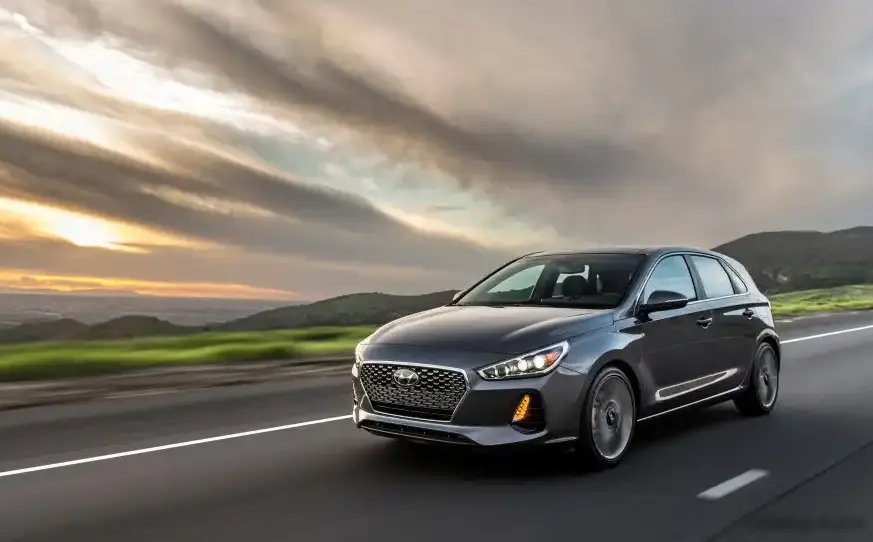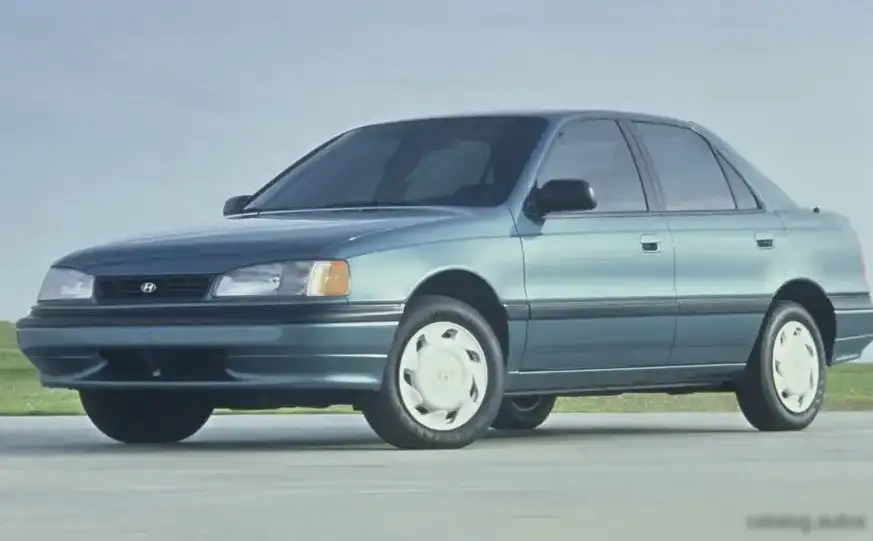
The Hyundai Elantra III Hatchback 2.0 (139 hp) Automatic, produced between 2000 and 2006, represented a significant step forward for Hyundai in the compact hatchback segment. Part of the third generation Elantra (XD series), this variant aimed to provide a comfortable and practical option for families and commuters seeking a blend of affordability and reasonable performance. Positioned as a mid-range offering within the Elantra III lineup, it slotted between the base 1.6L engine options and the more performance-oriented trims. The Elantra III, in general, was a crucial model for Hyundai as it sought to establish a stronger foothold in the North American and European markets, moving beyond its reputation as a budget brand.
Technical Specifications
| Brand | Hyundai |
| Model | Elantra |
| Generation | Elantra III Hatchback |
| Type (Engine) | 2.0 (139 Hp) Automatic |
| Start of production | 2000 |
| End of production | 2006 |
| Powertrain Architecture | Internal Combustion engine |
| Body type | Hatchback |
| Seats | 5 |
| Doors | 5 |
| Fuel consumption (urban) | 13.7 l/100 km (17.2 US mpg) |
| Fuel consumption (extra urban) | 9.6 l/100 km (24.5 US mpg) |
| Fuel Type | Petrol (Gasoline) |
| Acceleration 0 – 100 km/h | 11.2 sec |
| Acceleration 0 – 62 mph | 11.2 sec |
| Acceleration 0 – 60 mph | 10.6 sec |
| Maximum speed | 188 km/h (116.82 mph) |
| Weight-to-power ratio | 9.3 kg/Hp |
| Weight-to-torque ratio | 7.1 kg/Nm |
| Power | 139 Hp @ 6000 rpm |
| Torque | 182 Nm @ 4900 rpm (134.24 lb.-ft. @ 4900 rpm) |
| Engine layout | Front, Transverse |
| Engine Model/Code | G4GC |
| Engine displacement | 1975 cm3 (120.52 cu. in.) |
| Number of cylinders | 4 |
| Engine configuration | Inline |
| Cylinder Bore | 82 mm (3.23 in.) |
| Piston Stroke | 93.5 mm (3.68 in.) |
| Compression ratio | 10.3:1 |
| Number of valves per cylinder | 4 |
| Fuel injection system | Multi-port manifold injection |
| Engine aspiration | Naturally aspirated engine |
| Valvetrain | DOHC |
| Engine oil capacity | 3.85 l (4.07 US qt | 3.39 UK qt) |
| Coolant capacity | 6 l (6.34 US qt | 5.28 UK qt) |
| Kerb Weight | 1293 kg (2850.58 lbs.) |
| Max. weight | 1800 kg (3968.32 lbs.) |
| Max load | 507 kg (1117.74 lbs.) |
| Trunk (boot) space – minimum | 415 l (14.66 cu. ft.) |
| Trunk (boot) space – maximum | 1222 l (43.15 cu. ft.) |
| Fuel tank capacity | 55 l (14.53 US gal | 12.1 UK gal) |
| Length | 4495 mm (176.97 in.) |
| Width | 1720 mm (67.72 in.) |
| Height | 1425 mm (56.1 in.) |
| Wheelbase | 2610 mm (102.76 in.) |
| Front track | 1485 mm (58.46 in.) |
| Rear track | 1475 mm (58.07 in.) |
| Drivetrain Architecture | Front wheel drive |
| Number of gears | 4 |
| Gearbox type | Automatic transmission |
| Front suspension | Wishbone |
| Rear suspension | Spring Strut |
| Front brakes | Ventilated discs |
| Rear brakes | Disc |
| Assisting systems | ABS (Anti-lock braking system) |
| Steering type | Steering rack and pinion |
| Power steering | Hydraulic Steering |
| Tires size | 195/60 R15 |
| Wheel rims size | 6.5J x 15 |
Powertrain & Engine Architecture
The heart of the Elantra III 2.0 Automatic is the Hyundai G4GC engine, a 1.975-liter (120.52 cubic inches) inline-four cylinder gasoline engine. This engine utilizes a multi-port fuel injection system, delivering fuel directly into the intake ports, and a double overhead camshaft (DOHC) valvetrain for improved breathing and efficiency. The G4GC engine produces 139 horsepower at 6000 rpm and 182 Nm (134.24 lb-ft) of torque at 4900 rpm. The engine’s 10.3:1 compression ratio was a standard figure for naturally aspirated engines of the time, balancing performance and fuel economy. Paired with the engine is a four-speed automatic transmission. While not the most advanced transmission available at the time, it provided smooth and convenient shifting for everyday driving. The transmission was tuned for comfort and fuel efficiency rather than outright performance.
Driving Characteristics
The 2.0L automatic Elantra offered a comfortable and predictable driving experience. Acceleration from 0-60 mph took around 10.6 seconds, which was adequate for merging onto highways and navigating city streets, but not particularly sporty. The four-speed automatic transmission, while smooth, did result in noticeable gear changes and a lack of the responsiveness found in manual transmission or more modern automatic gearboxes. The gear ratios were optimized for fuel economy and relaxed cruising, meaning the engine could feel somewhat strained during hard acceleration. Compared to the manual transmission versions of the 2.0L Elantra, the automatic suffered a slight performance penalty. The automatic also differed significantly from any potential turbocharged or diesel variants available in other markets, offering a more accessible and less complex driving experience.
Equipment & Trim Levels
The 2.0L Automatic Elantra typically came equipped with a reasonable level of standard features. These included power windows and locks, air conditioning, and an AM/FM radio with a cassette player. Higher trim levels offered options such as alloy wheels, a sunroof, and upgraded interior upholstery. Interior materials were generally durable and practical, though not luxurious. The dashboard layout was functional and straightforward, prioritizing ease of use over aesthetic flair. Safety features included dual front airbags and ABS (Anti-lock Braking System) as standard equipment.
Chassis & Braking
The Elantra III Hatchback utilized a front-wheel-drive layout with a MacPherson strut front suspension and a spring strut rear suspension. This suspension setup provided a comfortable ride quality, absorbing bumps and imperfections in the road effectively. The front brakes were ventilated discs, offering good stopping power, while the rear brakes were solid discs. The hydraulic power steering provided light and easy steering, making it maneuverable in urban environments. The car’s weight of approximately 1293 kg (2850.58 lbs) contributed to its stable handling characteristics.
Market Reception & Comparison
The Hyundai Elantra III 2.0 Automatic was generally well-received by automotive critics as a practical and affordable option in the compact hatchback segment. It was praised for its comfortable ride, spacious interior, and generous standard features. However, some critics noted that its performance was not particularly exciting and that the automatic transmission could feel sluggish at times. Compared to competitors like the Honda Civic, Toyota Corolla, and Ford Focus, the Elantra offered a compelling value proposition, often undercutting them in price while providing a similar level of equipment. Fuel economy was respectable, but not class-leading, averaging around 24.5 US mpg in extra-urban driving.
Legacy
The Hyundai Elantra III 2.0 Automatic has proven to be a relatively reliable vehicle, with many examples still on the road today. The G4GC engine is known for its durability, and the four-speed automatic transmission, while not sophisticated, is generally robust. Common maintenance issues include routine wear and tear items such as brakes, tires, and suspension components. In the used car market, these Elantras are often sought after as affordable and dependable transportation. While they may not offer the performance or features of more modern vehicles, they represent a solid and practical choice for budget-conscious buyers. The Elantra III, and this 2.0L Automatic variant in particular, played a key role in establishing Hyundai as a credible competitor in the global automotive market.