
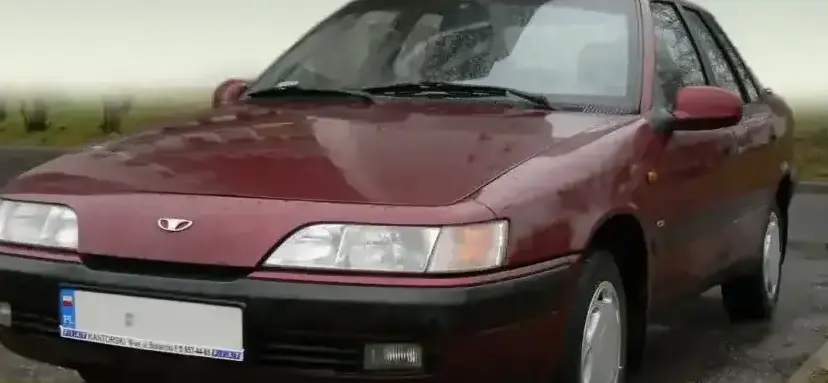
The Daewoo Espero, specifically the 1.8 i variant producing 95 horsepower, was a mid-size sedan manufactured by the South Korean automaker Daewoo from 1995 to 1999. Positioned as a comfortable and relatively affordable family car, the Espero represented Daewoo’s ambition to establish itself in the global automotive market. This model, designated KLEJ, was a key part of Daewoo’s lineup during a period of rapid expansion and design innovation. It was based on the J-platform, shared with other Daewoo and later Chevrolet models, and aimed to offer a blend of practicality, space, and modern features. The 1.8L engine with an automatic transmission was a popular choice, offering a balance between fuel economy and ease of driving, though it wasn’t the performance-oriented option in the Espero range.
Technical Specifications
| Brand | Daewoo |
| Model | Espero |
| Generation | Espero (KLEJ) |
| Type (Engine) | 1.8 i (95 Hp) |
| Start of production | 1995 |
| End of production | 1999 |
| Powertrain Architecture | Internal Combustion engine |
| Body type | Sedan |
| Seats | 4 |
| Doors | 4 |
| Fuel consumption (urban) | 11.8 l/100 km (19.9 US mpg, 23.9 UK mpg, 8.5 km/l) |
| Fuel consumption (extra urban) | 5.7 l/100 km (41.3 US mpg, 49.6 UK mpg, 17.5 km/l) |
| Fuel consumption (combined) | 7 l/100 km (33.6 US mpg, 40.4 UK mpg, 14.3 km/l) |
| Fuel Type | Petrol (Gasoline) |
| Acceleration 0 – 100 km/h | 11 sec |
| Acceleration 0 – 62 mph | 11 sec |
| Acceleration 0 – 60 mph | 10.5 sec |
| Maximum speed | 180 km/h (111.85 mph) |
| Weight-to-power ratio | 11.4 kg/Hp, 87.6 Hp/tonne |
| Weight-to-torque ratio | 7.5 kg/Nm, 133.6 Nm/tonne |
| Power | 95 Hp @ 5400 rpm |
| Power per litre | 52.9 Hp/l |
| Torque | 145 Nm @ 2800 rpm (106.95 lb.-ft. @ 2800 rpm) |
| Engine layout | Front, Transverse |
| Engine Model/Code | C18LE |
| Engine displacement | 1796 cm3 (109.6 cu. in.) |
| Number of cylinders | 4 |
| Engine configuration | Inline |
| Cylinder Bore | 84.8 mm (3.34 in.) |
| Piston Stroke | 79.5 mm (3.13 in.) |
| Compression ratio | 8.8:1 |
| Number of valves per cylinder | 2 |
| Fuel injection system | Multi-port manifold injection |
| Engine aspiration | Naturally aspirated engine |
| Valvetrain | OHC |
| Engine oil capacity | 4.25 l (4.49 US qt | 3.74 UK qt) |
| Coolant | 8 l (8.45 US qt | 7.04 UK qt) |
| Kerb Weight | 1085 kg (2392.02 lbs.) |
| Max. weight | 1630 kg (3593.53 lbs.) |
| Max load | 545 kg (1201.52 lbs.) |
| Trunk (boot) space – minimum | 560 l (19.78 cu. ft.) |
| Fuel tank capacity | 50 l (13.21 US gal | 11 UK gal) |
| Length | 4615 mm (181.69 in.) |
| Width | 1718 mm (67.64 in.) |
| Height | 1388 mm (54.65 in.) |
| Wheelbase | 2620 mm (103.15 in.) |
| Front track | 1426 mm (56.14 in.) |
| Rear (Back) track | 1423 mm (56.02 in.) |
| Drivetrain Architecture | The Internal combustion engine (ICE) drives the front wheels of the vehicle. |
| Drive wheel | Front wheel drive |
| Number of gears and type of gearbox | 5 gears, manual transmission |
| Front suspension | Spring Strut |
| Rear suspension | Coil spring |
| Front brakes | Ventilated discs |
| Rear brakes | Drum |
| Assisting systems | ABS (Anti-lock braking system) |
| Steering type | Steering rack and pinion |
| Power steering | Hydraulic Steering |
| Tires size | 185/65 R14 |
| Wheel rims size | 14 |
Powertrain & Engine Architecture
The heart of the Espero 1.8 i was the C18LE engine, an inline four-cylinder gasoline engine displacing 1796 cc (109.6 cubic inches). This engine featured a single overhead camshaft (OHC) valvetrain with two valves per cylinder. Fuel delivery was handled by a multi-port fuel injection system, a relatively modern feature for its time, contributing to improved fuel efficiency and smoother operation compared to carbureted engines. The compression ratio was set at 8.8:1. The engine produced 95 horsepower at 5400 rpm and 145 Nm (106.95 lb-ft) of torque at 2800 rpm. The automatic transmission offered with this variant was typically a four-speed unit, designed for comfortable cruising rather than sporty performance. It was a conventional hydraulic automatic, lacking the electronic controls found in later transmissions.
Driving Characteristics
The Espero 1.8 i with the automatic transmission offered a comfortable, if not particularly exciting, driving experience. Acceleration from 0 to 60 mph took around 10.5 to 11 seconds, and top speed was approximately 112 mph. The automatic transmission, while providing convenience, did detract from the engine’s available power, resulting in somewhat sluggish acceleration. Gear ratios were tuned for fuel economy and smooth shifts, prioritizing comfort over responsiveness. Compared to the manual transmission version of the 1.8L, the automatic felt noticeably slower. Higher-performance Espero models, equipped with larger engines (like the 2.0L), offered significantly more spirited driving dynamics.
Equipment & Trim Levels
The 1.8 i automatic trim level generally represented a mid-range offering within the Espero lineup. Standard features typically included power steering, central locking, electric front windows, and an AM/FM radio. Interior upholstery was usually cloth, with a relatively simple dashboard layout. Optional extras could include air conditioning, power mirrors, and a sunroof. The level of equipment varied slightly depending on the specific market and year of production. The focus was on providing a well-equipped, comfortable vehicle at a competitive price point.
Chassis & Braking
The Espero utilized a front-engine, front-wheel-drive layout. Suspension consisted of a MacPherson strut setup at the front and a coil spring arrangement at the rear. Braking was accomplished with ventilated discs on the front wheels and drum brakes on the rear. Anti-lock braking system (ABS) was often included as standard equipment, enhancing safety. The suspension was tuned for a comfortable ride, prioritizing smoothness over sporty handling. Stabilizer bars were present, but relatively modest in size, reflecting the car’s intended role as a family sedan.
Market Reception & Comparison
The Daewoo Espero 1.8 i automatic received mixed reviews. Critics generally praised its spacious interior, comfortable ride, and competitive price. However, the engine was often described as underpowered, particularly when paired with the automatic transmission. Fuel economy was considered reasonable for its class. Compared to other mid-size sedans available at the time, such as the Honda Accord or Toyota Camry, the Espero offered a lower price point but lacked the same level of refinement and performance. The 1.9 TDI diesel version of the Espero, while less common, offered superior fuel economy and torque, appealing to drivers prioritizing efficiency over outright speed.
Legacy
The Daewoo Espero, while not a groundbreaking vehicle, played a significant role in establishing Daewoo as a contender in the global automotive market. The 1.8L engine, while not known for exceptional reliability, proved to be generally durable with proper maintenance. Today, the Espero is a relatively rare sight on the roads, but it has gained a following among enthusiasts who appreciate its affordability and unique styling. Used examples are typically inexpensive to purchase, but finding parts can be challenging due to Daewoo’s eventual acquisition by General Motors and the subsequent discontinuation of the brand. The Espero remains a reminder of Daewoo’s ambitious, though ultimately short-lived, foray into the mainstream automotive world.
