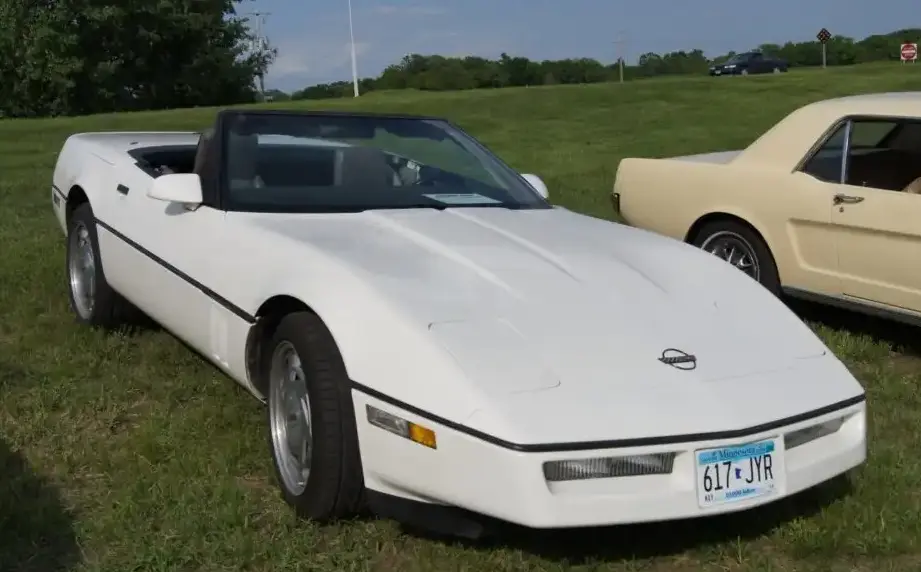
The Chevrolet Corvette C3, specifically the facelifted version produced from 1980 to 1982 with the 5.7-liter (350 cubic inch) L82 V8 engine producing 230 horsepower, represents a transitional period for the iconic American sports car. Following the oil crises of the 1970s, the C3 underwent several changes aimed at improving efficiency and meeting increasingly stringent emissions regulations. This particular variant, while not the highest-performance option available during the C3’s run, offered a compelling balance of power, comfort, and relative affordability, making it a popular choice for enthusiasts. It sat in the mid-range of the C3 lineup, positioned above the base 250 cubic inch V8 but below the more potent L98 option.
Technical Specifications
| Brand | Chevrolet |
| Model | Corvette |
| Generation | Corvette Coupe (C3, facelift 1978) |
| Type (Engine) | 5.7 V8 (230 Hp) |
| Start of production | 1980 |
| End of production | 1982 |
| Powertrain Architecture | Internal Combustion engine |
| Body type | Coupe |
| Seats | 2 |
| Doors | 3 |
| Fuel Type | Petrol (Gasoline) |
| Weight-to-power ratio | 6.9 kg/Hp, 144.1 Hp/tonne |
| Weight-to-torque ratio | 4.3 kg/Nm, 233.7 Nm/tonne |
| Power | 230 Hp @ 5200 rpm |
| Power per litre | 40.1 Hp/l |
| Torque | 373 Nm @ 3600 rpm |
| Torque (lb-ft) | 275.11 lb.-ft. @ 3600 rpm |
| Engine layout | Front, Longitudinal |
| Engine Model/Code | L82 |
| Engine displacement | 5735 cm3 |
| Engine displacement (cu. in.) | 349.97 cu. in. |
| Number of cylinders | 8 |
| Engine configuration | V-engine |
| Cylinder Bore | 101.6 mm (4 in.) |
| Piston Stroke | 88.39 mm (3.48 in.) |
| Compression ratio | 9:1 |
| Number of valves per cylinder | 2 |
| Fuel injection system | Carburettor |
| Engine aspiration | Naturally aspirated engine |
| Valvetrain | OHV |
| Engine oil capacity | 4.7 l (4.97 US qt | 4.14 UK qt) |
| Coolant capacity | 20 l (21.13 US qt | 17.6 UK qt) |
| Kerb Weight | 1596 kg (3518.58 lbs.) |
| Fuel tank capacity | 90 l (23.78 US gal | 19.8 UK gal) |
| Length | 4704 mm (185.2 in.) |
| Width | 1753 mm (69.02 in.) |
| Height | 1219 mm (47.99 in.) |
| Wheelbase | 2489 mm (97.99 in.) |
| Front track | 1491 mm (58.7 in.) |
| Rear track | 1511 mm (59.49 in.) |
| Ride height (ground clearance) | 109 mm (4.29 in.) |
| Minimum turning circle | 11.8 m (38.71 ft.) |
| Drivetrain Architecture | Rear wheel drive |
| Number of gears | 4 |
| Type of gearbox | Manual transmission |
| Front suspension | Double wishbone |
| Rear suspension | Leaf spring |
| Front brakes | Ventilated discs, 298.45×31.75 mm |
| Rear brakes | Ventilated discs, 298.45×31.75 mm |
| Steering type | Cone worm with recirculation balls |
| Power steering | Hydraulic Steering |
| Front tires | 225/70 R15 |
| Rear tires | 225/70 R15 |
| Front wheel rims | 8J x 15 |
| Rear wheel rims | 8J x 15 |
Powertrain & Engine Architecture
The heart of this Corvette variant is the Chevrolet 350 cubic inch (5.7-liter) small-block V8, designated the L82. This engine featured a two-barrel carburetor, a relatively conservative camshaft profile, and 9:1 compression ratio. While the L82 was a detuned version of the higher-output L98 available in the same years, it still provided a respectable 230 horsepower and 373 lb-ft of torque. The engine utilized a traditional overhead valve (OHV) valvetrain with two valves per cylinder. The L82 was known for its durability and relatively simple maintenance requirements. The standard transmission for this model year was a four-speed manual, but a three-speed automatic transmission was also offered, and was a popular choice for buyers prioritizing comfort and ease of driving. The automatic transmission, a Turbo-Hydramatic 350, was known for its smooth shifting but did impact acceleration compared to the manual.
Driving Characteristics
The 1980-1982 Corvette with the L82 and automatic transmission offered a comfortable and capable grand touring experience. Acceleration was adequate, with a 0-60 mph time in the neighborhood of 7.5-8.5 seconds, depending on testing conditions and vehicle weight. The automatic transmission’s gear ratios were optimized for cruising, providing relaxed highway performance. However, the automatic did detract from the engine’s potential, and the manual transmission versions felt noticeably more responsive. Handling was typical of the C3 Corvette – competent but not exceptionally sporty. The leaf spring rear suspension, while cost-effective, could exhibit some axle hop under hard acceleration. The power steering provided light effort, making the car easy to maneuver at low speeds.
Equipment & Trim Levels
The 1980-1982 Corvette came standard with a good level of equipment, including air conditioning, power windows, power locks, and a tilt/telescopic steering column. Upholstery was typically cloth or vinyl, with leather available as an option. The dashboard featured a prominent gauge cluster with speedometer, tachometer, fuel gauge, and temperature gauge. Optional extras included a glass T-top roof, upgraded sound systems, and various cosmetic enhancements. The interior design was largely carried over from previous C3 models, with a focus on driver comfort and convenience.
Chassis & Braking
The C3 Corvette utilized a body-on-frame construction, with a steel chassis. The front suspension consisted of independent double wishbones with coil springs, while the rear suspension employed a leaf spring setup. This combination provided a reasonable ride quality, but the leaf springs limited handling precision. Braking duties were handled by ventilated disc brakes on all four wheels. While effective, the braking system lacked the sophistication of more modern setups. The steering system was a cone worm and recirculating ball design, providing adequate feel and responsiveness.
Market Reception & Comparison
The 1980-1982 Corvette with the L82 and automatic transmission was generally well-received by automotive critics. It was praised for its comfortable ride, attractive styling, and relatively affordable price. However, some critics noted that the automatic transmission dulled the engine’s performance and that the handling was not as sharp as some contemporary sports cars. Compared to the manual transmission version, the automatic offered less driver engagement but greater ease of use. Compared to the higher-output L98 engine, the L82 provided a more economical option with slightly better fuel economy. Fuel economy was rated at around 15-18 mpg in city driving and 20-24 mpg on the highway.
Legacy
The L82 350 V8, particularly when paired with the automatic transmission, proved to be a reliable and durable powertrain. These Corvettes are relatively easy to maintain and parts are readily available. Today, they represent an affordable entry point into Corvette ownership. While not the most sought-after C3 variant, the 1980-1982 L82 automatic Corvette remains a popular choice for enthusiasts who appreciate its classic styling, comfortable ride, and relatively simple mechanicals. The value of these cars has been steadily increasing in recent years, reflecting the growing demand for classic American muscle cars.