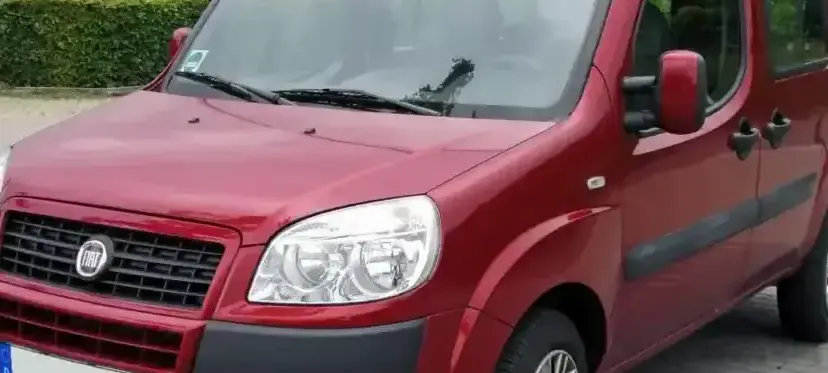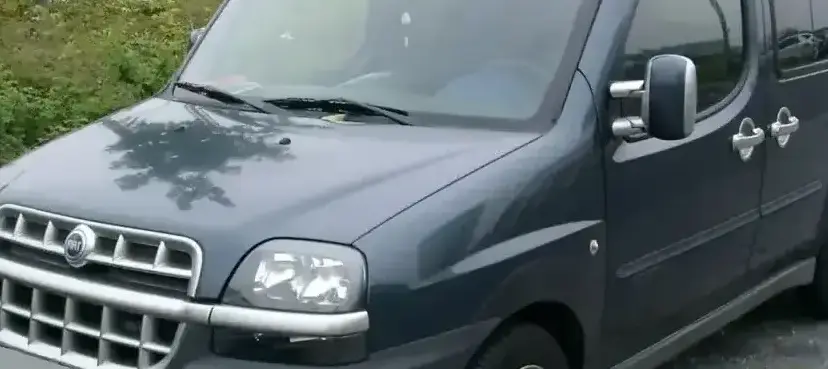
The Fiat Doblo I, specifically the 1.9 D variant producing 63 horsepower, was a popular choice in the European light commercial vehicle and multi-purpose vehicle (MPV) segment from 2001 to 2003. Built on the Project 223 platform, the Doblo aimed to provide a practical and affordable transportation solution for families and small businesses. This particular engine and trim level represented an entry-point into the Doblo range, prioritizing fuel efficiency and low running costs over outright performance. It was a key model in Fiat’s strategy to offer a versatile vehicle capable of both cargo and passenger duties.
Technical Specifications
| Brand | Fiat |
| Model | Doblo |
| Generation | Doblo I (223) |
| Type (Engine) | 1.9 D (63 Hp) |
| Start of production | 2001 |
| End of production | 2003 |
| Powertrain Architecture | Internal Combustion engine |
| Body type | Minivan |
| Seats | 5 |
| Doors | 5 |
| Fuel consumption (urban) | 9.2 l/100 km (25.6 US mpg) |
| Fuel consumption (extra urban) | 6 l/100 km (39.2 US mpg) |
| Fuel consumption (combined) | 7.2 l/100 km (32.7 US mpg) |
| Fuel Type | Diesel |
| Acceleration 0 – 100 km/h | 20.9 sec |
| Acceleration 0 – 62 mph | 20.9 sec |
| Acceleration 0 – 60 mph | 19.9 sec |
| Maximum speed | 141 km/h (87.61 mph) |
| Emission standard | Euro 4 |
| Weight-to-power ratio | 21.7 kg/Hp |
| Weight-to-torque ratio | 11.6 kg/Nm |
| Power | 63 Hp @ 4500 rpm |
| Power per litre | 33 Hp/l |
| Torque | 118 Nm @ 2500 rpm (87.03 lb.-ft. @ 2500 rpm) |
| Engine layout | Front, Transverse |
| Engine Model/Code | 223A6000 |
| Engine displacement | 1910 cm3 (116.56 cu. in.) |
| Number of cylinders | 4 |
| Engine configuration | Inline |
| Cylinder Bore | 82 mm (3.23 in.) |
| Piston Stroke | 90.4 mm (3.56 in.) |
| Compression ratio | 20.3:1 |
| Number of valves per cylinder | 2 |
| Fuel injection system | Precombustion chamber injection |
| Engine aspiration | Naturally aspirated |
| Engine oil capacity | 4.3 l (4.54 US qt | 3.78 UK qt) |
| Coolant capacity | 6.2 l (6.55 US qt | 5.46 UK qt) |
| Kerb Weight | 1365 kg (3009.31 lbs.) |
| Max. weight | 1930 kg (4254.92 lbs.) |
| Max load | 565 kg (1245.61 lbs.) |
| Trunk (boot) space – minimum | 750 l (26.49 cu. ft.) |
| Trunk (boot) space – maximum | 3000 l (105.94 cu. ft.) |
| Fuel tank capacity | 60 l (15.85 US gal | 13.2 UK gal) |
| Length | 4159 mm (163.74 in.) |
| Width | 1714 mm (67.48 in.) |
| Height | 1810 mm (71.26 in.) |
| Wheelbase | 2566 mm (101.02 in.) |
| Front overhang | 758 mm (29.84 in.) |
| Rear overhang | 835 mm (32.87 in.) |
| Drivetrain Architecture | Front wheel drive |
| Number of gears | 5 |
| Gearbox type | Manual transmission |
| Front suspension | Independent, McPherson with coil spring and anti-roll bar |
| Rear suspension | Leaf spring |
| Front brakes | Disc |
| Rear brakes | Drum |
| Assisting systems | ABS (Anti-lock braking system) |
| Tires size | 185/65 R15 |
INTRODUCTION
The Fiat Doblo I 1.9 D, launched in 2001, was a crucial part of Fiat’s strategy to revitalize its light commercial vehicle and MPV offerings. Positioned as an affordable and practical option, it targeted buyers who needed a versatile vehicle for both work and family use. The Doblo I, built on the shared Project 223 platform with the Citroën Berlingo and Peugeot Partner, offered a spacious interior and a focus on functionality. The 1.9 D engine, while not known for its performance, provided reasonable fuel economy and a reputation for durability, making it a popular choice for those prioritizing cost-effectiveness.
Powertrain & Engine Architecture
The heart of the Doblo 1.9 D is the 223A6000 engine, a 1910cc inline-four cylinder diesel. This engine utilizes a precombustion chamber injection system, a common design for diesel engines of that era. This system involves injecting fuel into a precombustion chamber, where it partially ignites before entering the main combustion chamber, promoting more complete combustion. The engine produces 63 horsepower at 4500 rpm and 118 Nm (87 lb-ft) of torque at 2500 rpm. The engine features a relatively low compression ratio of 20.3:1, typical for indirect injection diesel engines. The engine is transversely mounted at the front of the vehicle. The Doblo 1.9 D was exclusively offered with a five-speed manual transmission, chosen for its simplicity and efficiency. The transmission’s gear ratios were geared towards maximizing fuel economy rather than providing sporty acceleration.
Driving Characteristics
The driving experience in the Doblo 1.9 D is best described as utilitarian. With only 63 horsepower, acceleration is slow, taking approximately 20.9 seconds to reach 62 mph (100 km/h). The engine’s torque, however, provides adequate pulling power for everyday driving and light commercial duties. The five-speed manual transmission allows drivers to keep the engine in its optimal power band, but frequent downshifting is often required, especially when carrying a load or tackling hills. Compared to higher-powered Doblo variants, such as those with the 1.6-liter gasoline engine, the 1.9 D feels significantly slower. However, it offers superior fuel economy and a more robust engine capable of handling heavier loads. The suspension, tuned for comfort and practicality, provides a reasonably smooth ride, even when the vehicle is fully loaded.
Equipment & Trim Levels
The Doblo 1.9 D was typically offered in a basic trim level, focusing on essential features. Standard equipment generally included power steering, central locking, and a basic audio system. Interior upholstery was typically a durable cloth material. Optional extras included air conditioning, electric windows, and upgraded audio systems. The dashboard layout was functional and straightforward, prioritizing ease of use over aesthetic appeal. Safety features were relatively basic for the time, typically including driver and passenger airbags and ABS brakes. The Doblo’s interior was designed with practicality in mind, offering numerous storage compartments and a flexible seating arrangement.
Chassis & Braking
The Doblo 1.9 D utilizes a front-wheel-drive layout with an independent McPherson strut suspension at the front and a leaf spring suspension at the rear. The leaf spring rear suspension was a cost-effective solution, well-suited for carrying loads. The front brakes are discs, while the rear brakes are drums. ABS (Anti-lock Braking System) was standard, providing improved braking performance and stability. The tires are typically 185/65 R15, offering a balance between comfort and grip. The chassis is designed to prioritize load-carrying capacity and durability over sporty handling.
Market Reception & Comparison
The Fiat Doblo 1.9 D was generally well-received in the market as a practical and affordable MPV/light commercial vehicle. Critics praised its spacious interior, versatility, and fuel efficiency. However, the engine’s lack of power was often cited as a drawback. Compared to the gasoline-powered Doblo variants, the 1.9 D offered significantly better fuel economy but lacked the same level of performance. Against competitors like the Citroën Berlingo and Peugeot Partner (with which it shared a platform), the Doblo 1.9 D was similarly positioned, offering a comparable blend of practicality and affordability. Its reliability was generally considered good, although the precombustion chamber diesel engine required regular maintenance to ensure optimal performance.
Legacy
The Fiat Doblo I 1.9 D has proven to be a relatively durable and reliable vehicle, with many examples still on the road today. The 1.9-liter diesel engine, while not particularly refined, is known for its robustness and longevity. In the used car market, the Doblo 1.9 D remains an affordable option for those seeking a practical and economical vehicle. However, potential buyers should be aware of the age-related issues common to vehicles of this era, such as corrosion and wear and tear on suspension components. The Doblo I, and particularly the 1.9 D variant, laid the foundation for the continued success of the Doblo line, establishing it as a popular choice for both commercial and private buyers.