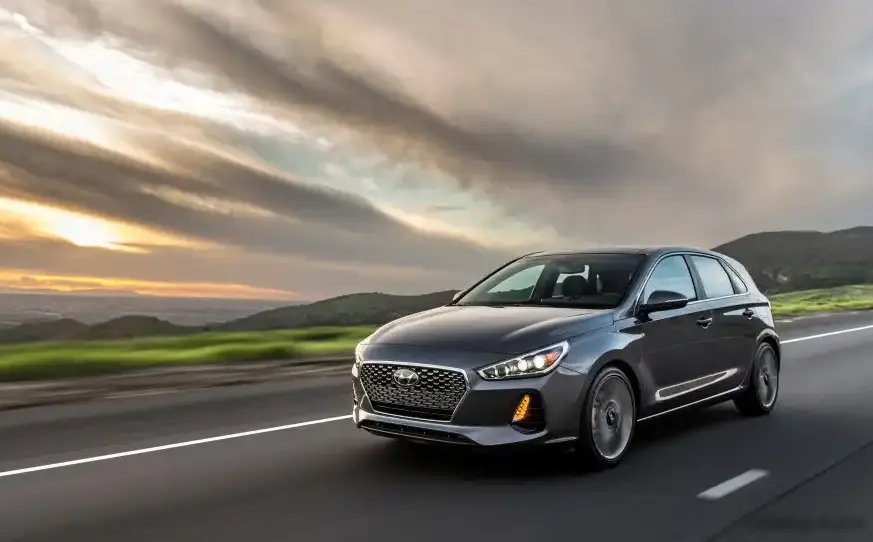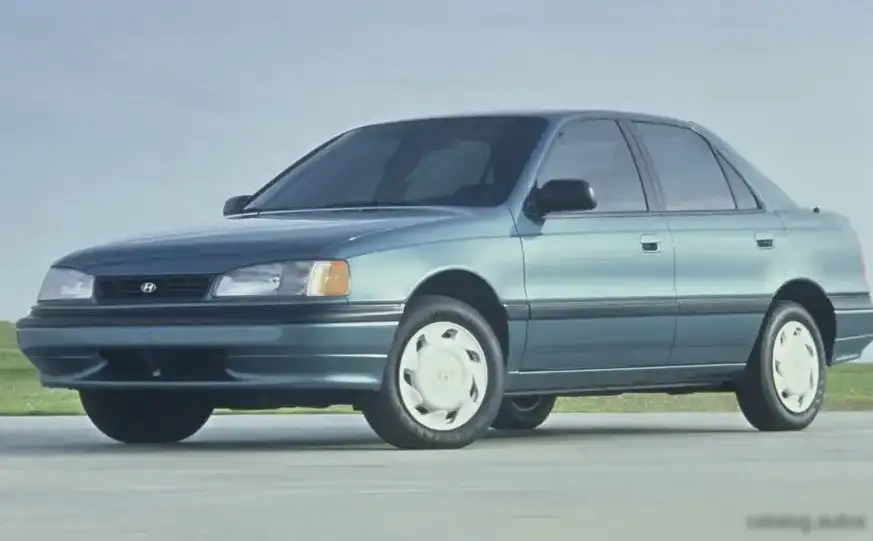
The Hyundai Elantra V 1.8 (148 hp) Automatic, produced between 2010 and 2013, represented a significant step forward for Hyundai in the competitive compact sedan segment. Part of the fifth generation Elantra (internally designated as the Elantra V), this variant occupied a middle-ground position in the lineup, offering a balance between affordability, fuel efficiency, and acceptable performance. It was primarily marketed towards buyers seeking a comfortable and reliable daily driver with the convenience of an automatic transmission. The Elantra V series, built on the Hyundai FB platform, aimed to elevate the brand’s image with improved styling, interior quality, and a more refined driving experience compared to its predecessors.
Technical Specifications
| Brand | Hyundai |
| Model | Elantra |
| Generation | Elantra V |
| Type (Engine) | 1.8 (148 Hp) Automatic |
| Start of production | 2010 |
| End of production | 2013 |
| Powertrain Architecture | Internal Combustion engine |
| Body type | Sedan |
| Seats | 5 |
| Doors | 4 |
| Fuel consumption (urban) | 8.1 l/100 km (29 US mpg) |
| Fuel consumption (extra urban) | 5.9 l/100 km (39.9 US mpg) |
| Fuel consumption (combined) | 7.1 l/100 km (33.1 US mpg) |
| Fuel Type | Petrol (Gasoline) |
| Emission standard | ULEV |
| Weight-to-power ratio | 8.3 kg/Hp |
| Weight-to-torque ratio | 6.9 kg/Nm |
| Power | 148 Hp @ 6500 rpm |
| Power per litre | 82.4 Hp/l |
| Torque | 178 Nm @ 4700 rpm (131.29 lb.-ft. @ 4700 rpm) |
| Engine layout | Front, Transverse |
| Engine Model/Code | Nu / G4NB |
| Engine displacement | 1797 cm3 (109.66 cu. in.) |
| Number of cylinders | 4 |
| Engine configuration | Inline |
| Cylinder Bore | 81 mm (3.19 in.) |
| Piston Stroke | 87.12 mm (3.43 in.) |
| Compression ratio | 10.3:1 |
| Number of valves per cylinder | 4 |
| Fuel injection system | Multi-port manifold injection |
| Engine aspiration | Naturally aspirated engine |
| Valvetrain | DOHC |
| Engine oil capacity | 4 l (4.23 US qt | 3.52 UK qt) |
| Coolant capacity | 5.9 l (6.23 US qt | 5.19 UK qt) |
| Kerb Weight | 1225-1305 kg (2700.66 – 2877.03 lbs.) |
| Trunk (boot) space | 419 l (14.8 cu. ft.) |
| Fuel tank capacity | 48 l (12.68 US gal | 10.56 UK gal) |
| Length | 4529 mm (178.31 in.) |
| Width | 1775 mm (69.88 in.) |
| Height | 1435 mm (56.5 in.) |
| Wheelbase | 2700 mm (106.3 in.) |
| Front track | 1549-1562 mm (60.98 – 61.5 in.) |
| Rear track | 1562-1575 mm (61.5 – 62.01 in.) |
| Drag coefficient (Cd) | 0.28 |
| Drivetrain Architecture | ICE, Front Wheel Drive |
| Drive wheel | Front wheel drive |
| Number of gears | 6 |
| Gearbox type | automatic transmission |
| Front suspension | Independent type McPherson, Transverse stabilizer |
| Rear suspension | Torsion |
| Front brakes | Disc |
| Rear brakes | Disc |
| Assisting systems | ABS (Anti-lock braking system) |
| Steering type | Steering rack and pinion |
| Power steering | Electric Steering |
| Tires size | 195/65 R15; 205/55 R16; 215/45 R17 |
| Wheel rims size | 6J x 15; 6.5J x 16; 7J x 17 |
Powertrain & Engine Architecture
The heart of the Elantra V 1.8 Automatic is the Hyundai Nu engine, specifically the G4NB variant. This 1.8-liter inline-four cylinder engine utilizes a dual overhead camshaft (DOHC) valvetrain with four valves per cylinder, contributing to its respectable power output. The engine employs multi-point fuel injection, a common technology at the time, delivering fuel directly into the intake ports. The Nu engine was designed to be relatively lightweight and compact, aiding in the Elantra’s overall efficiency. Paired with this engine is a six-speed automatic transmission. This transmission, while offering smooth shifts, wasn’t known for being particularly sporty or quick to respond. It was tuned for comfort and fuel economy rather than performance. The transmission’s gear ratios were optimized for everyday driving conditions, prioritizing smooth acceleration and highway cruising.
Driving Characteristics
The 148 hp and 131 lb-ft of torque produced by the 1.8L engine, when coupled with the six-speed automatic, resulted in adequate, but not exhilarating, performance. Acceleration from 0 to 60 mph typically took around 10-11 seconds. The automatic transmission, while convenient, did contribute to a slight loss of responsiveness compared to the available manual transmission. The gear ratios were spaced to provide reasonable acceleration in city driving, but passing maneuvers on the highway required careful planning. Compared to the more powerful Elantra models equipped with larger engines, such as the 2.0L, the 1.8L Automatic felt noticeably less energetic. However, it offered a more relaxed and fuel-efficient driving experience, making it well-suited for commuting and everyday use.
Equipment & Trim Levels
The Elantra V 1.8 Automatic was typically offered in base and mid-level trim configurations. Standard features generally included air conditioning, power windows and locks, a basic audio system with CD player and auxiliary input, and standard safety equipment like ABS and airbags. Higher trim levels added features such as alloy wheels, a more advanced audio system with USB connectivity, cruise control, and keyless entry. Interior upholstery was typically cloth, with options for upgraded materials on higher trims. The dashboard layout was functional and straightforward, prioritizing ease of use over stylistic flair.
Chassis & Braking
The Elantra V utilized a McPherson strut front suspension and a torsion beam rear suspension. This setup provided a comfortable ride quality, absorbing bumps and imperfections in the road reasonably well. Stabilizer bars were included to reduce body roll during cornering, but the handling was generally geared towards comfort rather than sporty dynamics. The braking system consisted of disc brakes on all four wheels, providing adequate stopping power for everyday driving. ABS (Anti-lock Braking System) was standard, enhancing safety during emergency braking situations.
Market Reception & Comparison
The Elantra V 1.8 Automatic was generally well-received by critics as a practical and affordable compact sedan. It was praised for its comfortable ride, spacious interior, and good fuel economy. However, some reviewers noted that the engine lacked the punch of its competitors and that the automatic transmission could feel sluggish at times. Compared to other trims in the Elantra lineup, the 1.8L Automatic offered the best fuel economy but the lowest performance. The 2.0L models provided more power, while the diesel options (available in some markets) offered even better fuel efficiency. Against competitors like the Toyota Corolla, Honda Civic, and Mazda3, the Elantra V 1.8 Automatic offered a competitive value proposition, often undercutting its rivals in price while providing a similar level of features and reliability.
Legacy
The Hyundai Elantra V 1.8 Automatic has proven to be a relatively reliable vehicle in the used car market. The Nu engine, while not without its minor issues, is generally considered durable and long-lasting. Common maintenance items include regular oil changes, timing belt replacement (depending on mileage), and occasional sensor replacements. The six-speed automatic transmission is also generally reliable, but proper fluid maintenance is crucial to prevent issues. Today, these Elantras represent an affordable and practical option for buyers seeking a dependable used car. Their relatively low cost of ownership and good fuel economy continue to make them an attractive choice for budget-conscious consumers.