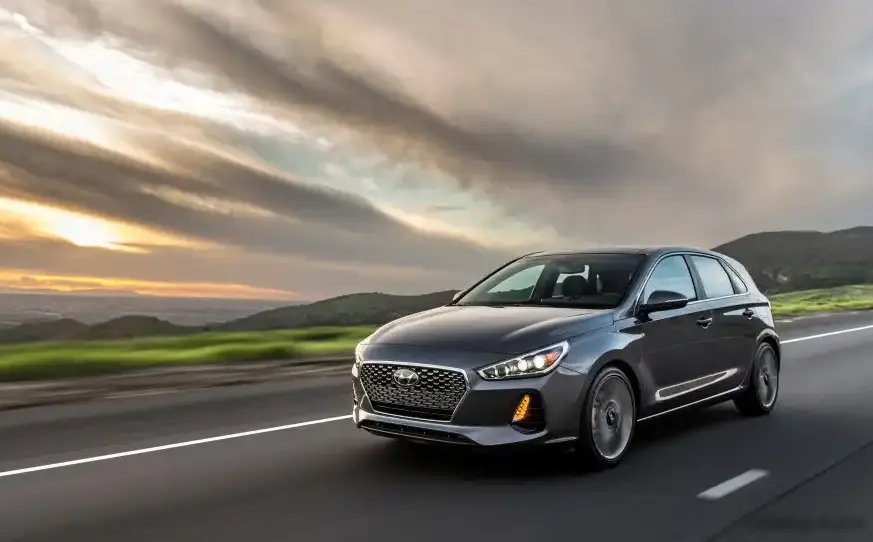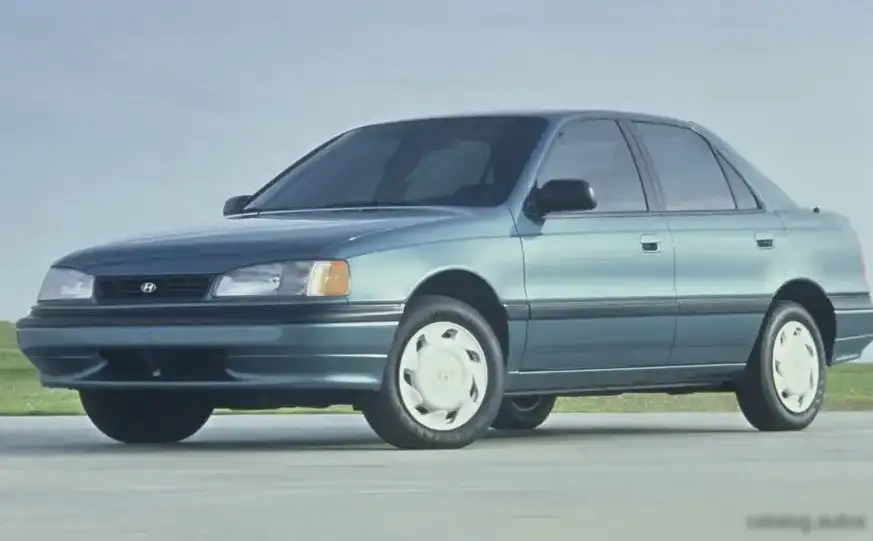
The Hyundai Elantra V Coupe 1.8 (148 hp) Automatic, produced from February 2012 to November 2013, represented a sporty, two-door variant within the second generation (often referred to as the MD/VN) of the Elantra lineup. Positioned as a more style-focused alternative to the traditional Elantra sedan, the V Coupe aimed to attract a younger demographic. This particular configuration, pairing the 1.8-liter Nu engine with a six-speed automatic transmission, served as the entry-level powertrain option for the V Coupe, offering a balance of affordability and reasonable performance. It was part of Hyundai’s broader effort to elevate its brand image through more expressive designs and improved vehicle dynamics.
Technical Specifications
| Brand | Hyundai |
| Model | Elantra |
| Generation | Elantra V Coupe |
| Type (Engine) | 1.8 (148 Hp) Automatic |
| Start of production | February, 2012 |
| End of production | November, 2013 |
| Powertrain Architecture | Internal Combustion engine |
| Body type | Coupe |
| Seats | 5 |
| Doors | 2 |
| Fuel consumption (urban) | 8.4 l/100 km (28 US mpg) |
| Fuel consumption (extra urban) | 6 l/100 km (39.2 US mpg) |
| Fuel consumption (combined) | 7.4 l/100 km (31.8 US mpg) |
| Fuel Type | Petrol (Gasoline) |
| Emission standard | ULEV |
| Weight-to-power ratio | 8.4 kg/Hp |
| Weight-to-torque ratio | 7 kg/Nm |
| Power | 148 Hp @ 6500 rpm |
| Power per litre | 82.4 Hp/l |
| Torque | 178 Nm @ 4700 rpm (131.29 lb.-ft. @ 4700 rpm) |
| Maximum engine speed | 6800 rpm |
| Engine layout | Front, Transverse |
| Engine Model/Code | Nu / G4NB |
| Engine displacement | 1797 cm3 (109.66 cu. in.) |
| Number of cylinders | 4 |
| Engine configuration | Inline |
| Cylinder Bore | 81 mm (3.19 in.) |
| Piston Stroke | 87.12 mm (3.43 in.) |
| Compression ratio | 10.3:1 |
| Number of valves per cylinder | 4 |
| Fuel injection system | Multi-port manifold injection |
| Engine aspiration | Naturally aspirated engine |
| Valvetrain | DOHC |
| Engine oil capacity | 4 l (4.23 US qt | 3.52 UK qt) |
| Coolant | 5.9 l (6.23 US qt | 5.19 UK qt) |
| Kerb Weight | 1238 kg (2729.32 lbs.) |
| Trunk (boot) space (minimum) | 419 l (14.8 cu. ft.) |
| Fuel tank capacity | 50 l (13.21 US gal | 11 UK gal) |
| Length | 4539 mm (178.7 in.) |
| Width | 1775 mm (69.88 in.) |
| Height | 1435 mm (56.5 in.) |
| Wheelbase | 2700 mm (106.3 in.) |
| Front track | 1549-1562 mm (60.98 – 61.5 in.) |
| Rear (Back) track | 1552-1565 mm (61.1 – 61.61 in.) |
| Drag coefficient (Cd) | 0.28 |
| Drivetrain Architecture | The Internal combustion engine (ICE) drives the front wheels of the vehicle. |
| Drive wheel | Front wheel drive |
| Number of gears and type of gearbox | 6 gears, automatic transmission |
| Front suspension | Independent type McPherson, Transverse stabilizer |
| Rear suspension | Torsion |
| Front brakes | Ventilated discs |
| Rear brakes | Disc |
| Assisting systems | ABS (Anti-lock braking system) |
| Steering type | Steering rack and pinion |
| Power steering | Electric Steering |
| Tires size | 205/55 R16; 215/45 R17 |
| Wheel rims size | 6.5J x 16; 7J x 17 |
INTRODUCTION
The Elantra V Coupe, launched in 2012, was a deliberate attempt by Hyundai to broaden the appeal of the Elantra nameplate. While the sedan focused on practicality and value, the V Coupe aimed for a more youthful and dynamic image. The 1.8-liter engine paired with the six-speed automatic transmission was the base configuration, designed to provide a comfortable and economical driving experience. It sat below the more powerful 2.0-liter engine option in the V Coupe lineup, targeting buyers who prioritized fuel efficiency and affordability over outright performance. The V Coupe was sold primarily in North America and select international markets.
Powertrain & Engine Architecture
The heart of the Elantra V Coupe 1.8 Automatic is the Hyundai Nu engine, specifically the G4NB code. This 1.8-liter inline-four engine utilizes a dual overhead camshaft (DOHC) valvetrain with four valves per cylinder. It features multi-point fuel injection, delivering fuel directly into the intake ports. The engine’s design emphasized lightweight construction and reduced internal friction to improve fuel economy. The six-speed automatic transmission, a common unit within the Hyundai-Kia group at the time, was chosen for its smooth shifting characteristics and efficiency. It’s a conventional torque-converter automatic, offering a balance between responsiveness and comfort. While not a particularly advanced transmission, it was reliable and well-suited to the engine’s power output.
Driving Characteristics
The 148-horsepower, 1.8-liter engine and six-speed automatic combination in the Elantra V Coupe delivered adequate, but not exhilarating, performance. Acceleration from 0 to 60 mph was typically in the 9-10 second range. The automatic transmission was tuned for fuel efficiency, resulting in relatively conservative gear ratios. This meant that while the car was comfortable for everyday driving and highway cruising, it lacked the punch of the 2.0-liter variant. The automatic transmission offered a “Sport” mode, which held gears longer and downshifted more readily, providing a slightly more engaging driving experience. However, even in Sport mode, the V Coupe 1.8 Automatic wasn’t a particularly sporty vehicle. The steering was light and precise, but lacked significant feedback.
Equipment & Trim Levels
The base Elantra V Coupe 1.8 Automatic typically came standard with features such as air conditioning, power windows and locks, a basic audio system with USB and auxiliary inputs, and standard safety equipment like ABS, airbags, and stability control. Higher trim levels, such as the Limited, added features like leather upholstery, a sunroof, upgraded audio system, alloy wheels, and a rearview camera. Interior upholstery was typically cloth on the base model, with optional leather available on higher trims. The dashboard layout was modern for its time, with a straightforward design and easy-to-use controls.
Chassis & Braking
The Elantra V Coupe utilized a McPherson strut front suspension and a torsion beam rear suspension. This setup provided a comfortable ride quality, but wasn’t particularly sporty. The front suspension featured a transverse stabilizer bar to reduce body roll. Braking duties were handled by ventilated discs up front and solid discs in the rear. ABS was standard, providing enhanced braking performance in emergency situations. The V Coupe’s chassis was tuned for comfort and stability, rather than aggressive handling.
Market Reception & Comparison
Critics generally praised the Elantra V Coupe for its stylish design and value proposition. However, the 1.8-liter engine and automatic transmission combination received mixed reviews. Some reviewers found it adequate for everyday driving, while others criticized its lack of power and responsiveness. Compared to the 2.0-liter V Coupe, the 1.8-liter version offered better fuel economy but significantly less performance. In terms of reliability, the Nu engine proved to be generally dependable, although some owners reported minor issues with the fuel injectors and ignition coils. The V Coupe 1.8 Automatic competed with other compact coupes like the Honda Civic Coupe, Toyota Corolla Coupe, and Nissan Sentra Coupe.
Legacy
The Hyundai Elantra V Coupe, particularly the 1.8-liter Automatic variant, has become a relatively affordable and reliable used car option. The Nu engine is known for its durability, and the six-speed automatic transmission has proven to be generally trouble-free. While not a performance standout, the V Coupe 1.8 Automatic offers a comfortable and economical driving experience. Its stylish design and relatively low maintenance costs have contributed to its continued popularity in the used car market. Today, these vehicles can be found for relatively low prices, making them an attractive option for budget-conscious buyers seeking a stylish and dependable coupe.