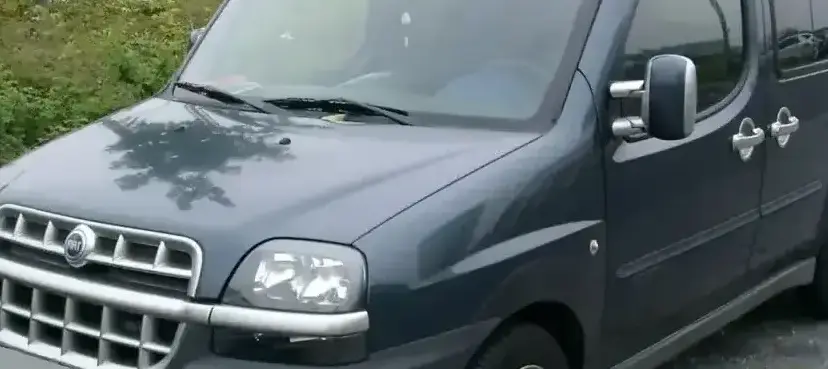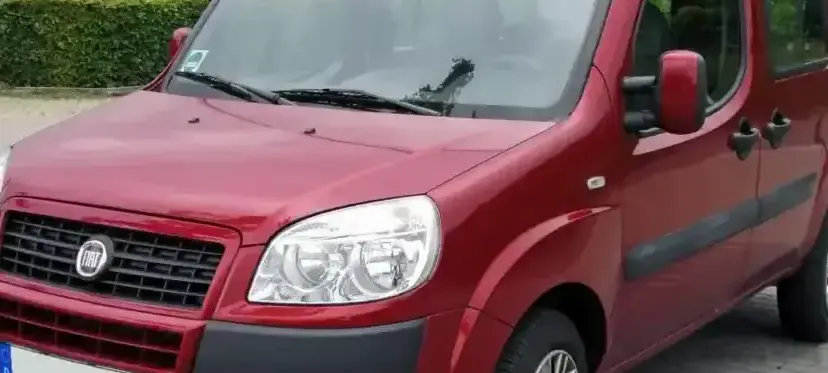
The Fiat Doblo I, specifically the 1.4 8V (77 horsepower) variant produced from 2005 to 2010, represented an entry-level offering within the refreshed first generation (223 series) of this popular European multi-purpose vehicle (MPV). Introduced as part of a facelift in October 2005, this version aimed to provide affordable and practical transportation for families and commercial users. The Doblo I, co-developed with Peugeot and Citroën, was Fiat’s attempt to capture a significant share of the growing compact van/MPV market in Europe, offering a blend of car-like handling with the spaciousness of a small van. This particular engine and transmission combination was positioned as the most economical choice in the Doblo lineup, prioritizing fuel efficiency over outright performance.
Technical Specifications
| Brand | Fiat |
| Model | Doblo |
| Generation | Doblo I (223, facelift 2005) |
| Type (Engine) | 1.4 8V (77 Hp) |
| Start of production | October, 2005 |
| End of production | 2010 |
| Powertrain Architecture | Internal Combustion engine |
| Body type | Minivan |
| Seats | 5 |
| Doors | 5 |
| Fuel consumption (urban) | 9.2 l/100 km (25.6 US mpg) |
| Fuel consumption (extra urban) | 6.3 l/100 km (37.3 US mpg) |
| Fuel consumption (combined) | 7.4 l/100 km (31.8 US mpg) |
| CO2 emissions | 174 g/km |
| Fuel Type | Petrol (Gasoline) |
| Maximum speed | 148 km/h (91.96 mph) |
| Emission standard | Euro 4 |
| Weight-to-power ratio | 16 kg/Hp |
| Weight-to-torque ratio | 10.7 kg/Nm |
| Power | 77 Hp @ 6000 rpm |
| Power per litre | 56.3 Hp/l |
| Torque | 115 Nm @ 3000 rpm (84.82 lb.-ft. @ 3000 rpm) |
| Engine layout | Front, Transverse |
| Engine Model/Code | 350A1000 |
| Engine displacement | 1368 cm3 (83.48 cu. in.) |
| Number of cylinders | 4 |
| Engine configuration | Inline |
| Cylinder Bore | 72 mm (2.83 in.) |
| Piston Stroke | 84 mm (3.31 in.) |
| Compression ratio | 11.1:1 |
| Number of valves per cylinder | 2 |
| Fuel injection system | Multi-port manifold injection |
| Engine aspiration | Naturally aspirated |
| Valvetrain | SOHC |
| Engine oil capacity | 2.6 l (2.75 US qt | 2.29 UK qt) |
| Coolant capacity | 7 l (7.4 US qt | 6.16 UK qt) |
| Kerb Weight | 1230 kg (2711.69 lbs.) |
| Max. weight | 1830 kg (4034.46 lbs.) |
| Max load | 600 kg (1322.77 lbs.) |
| Trunk (boot) space (min) | 750 l (26.49 cu. ft.) |
| Trunk (boot) space (max) | 3000 l (105.94 cu. ft.) |
| Fuel tank capacity | 60 l (15.85 US gal | 13.2 UK gal) |
| Max. roof load | 100 kg (220.46 lbs.) |
| Permitted trailer load (braked) | 1000 kg (2204.62 lbs.) |
| Permitted trailer load (unbraked) | 500 kg (1102.31 lbs.) |
| Length | 4253 mm (167.44 in.) |
| Width | 1722 mm (67.8 in.) |
| Height | 1818 mm (71.57 in.) |
| Wheelbase | 2583 mm (101.69 in.) |
| Front track | 1514 mm (59.61 in.) |
| Rear track | 1505 mm (59.25 in.) |
| Front overhang | 833 mm (32.8 in.) |
| Rear overhang | 837 mm (32.95 in.) |
| Turning circle | 10.5 m (34.45 ft.) |
| Drivetrain | Front wheel drive |
| Number of gears | 5 |
| Gearbox type | Manual transmission |
| Front suspension | Independent, McPherson with coil spring and anti-roll bar |
| Rear suspension | Rigid axle, Transverse stabilizer, Leaf spring |
| Front brakes | Ventilated discs, 284 mm |
| Rear brakes | Drum, 228 mm |
| Assisting systems | ABS |
| Steering type | Steering rack and pinion |
| Power steering | Hydraulic |
| Tires size | 185/65 R15 |
| Wheel rims size | 5.5J x 15 |
Powertrain & Engine Architecture
The 1.4 8V engine, designated with the code 350A1000, is a naturally aspirated, inline-four cylinder petrol engine. It features a single overhead camshaft (SOHC) operating two valves per cylinder. The engine utilizes a multi-port fuel injection system, delivering fuel directly into the intake ports. This configuration was chosen for its simplicity and cost-effectiveness. The 77 horsepower output is achieved at 6000 rpm, while peak torque of 115 Nm (84.82 lb-ft) arrives at 3000 rpm. The engine’s 11.1:1 compression ratio contributes to its relatively efficient operation. The Doblo 1.4 8V was typically paired with a five-speed manual transmission, although an automated manual transmission (Dualogic) was also offered as an option. The Dualogic, while offering some convenience, was often criticized for its slow and jerky shifts compared to a traditional automatic.
Driving Characteristics
The 1.4 8V engine in the Doblo I provides adequate, but not exhilarating, performance. Acceleration is modest, and overtaking requires careful planning. The five-speed manual transmission helps to keep the engine in its optimal power band, but the engine can feel strained when fully loaded or climbing hills. Compared to the more powerful 1.9-liter diesel or 1.6-liter petrol variants, the 1.4 feels noticeably slower. The focus is on practicality and fuel economy rather than sporty driving dynamics. The steering is light and easy, making it maneuverable in urban environments, but lacks feedback at higher speeds. The suspension, while comfortable on smooth roads, can become unsettled on rough surfaces.
Equipment & Trim Levels
The 1.4 8V Doblo typically came with a basic level of equipment, reflecting its position as the entry-level model. Standard features generally included power steering, central locking, and an adjustable steering column. Air conditioning, electric windows, and a radio/CD player were often optional extras. Interior upholstery was typically cloth, and the dashboard featured a functional, if somewhat basic, design. Higher trim levels added features like alloy wheels, fog lights, and upgraded interior trim.
Chassis & Braking
The Doblo I utilizes a front-wheel-drive layout with an independent McPherson strut suspension at the front and a rigid axle suspension with a transverse stabilizer and leaf springs at the rear. The front brakes are ventilated discs, providing adequate stopping power, while the rear brakes are drums. ABS (Anti-lock Braking System) was standard, enhancing safety. The suspension setup prioritizes ride comfort and load-carrying capacity over sporty handling. The relatively simple rear suspension design contributes to the vehicle’s affordability but can result in a less refined ride compared to more sophisticated independent rear suspension systems.
Market Reception & Comparison
The Fiat Doblo 1.4 8V was generally well-received as a practical and affordable MPV. Critics praised its spacious interior, versatility, and fuel efficiency. However, the engine’s lack of power was a common criticism, particularly when the vehicle was fully loaded. Compared to the 1.9 TDI diesel variant, the 1.4 8V offered significantly lower fuel consumption but considerably less torque and performance. The 1.6-liter petrol engine provided a compromise between the two, offering more power than the 1.4 but less economy than the diesel. The Doblo’s main competitors included the Renault Kangoo, Citroën Berlingo, and Peugeot Partner, all of which offered similar levels of practicality and affordability.
Legacy
The 1.4 8V engine in the Fiat Doblo I is generally considered to be a reliable unit, although it is not without its potential issues. Common problems include oil leaks and occasional sensor failures. The engine’s simplicity makes it relatively easy and inexpensive to maintain. In the used car market, the Doblo 1.4 8V remains a popular choice for budget-conscious buyers seeking a practical and versatile vehicle. Its affordability and low running costs make it an attractive option for families, small businesses, and individuals who prioritize functionality over performance. While not a performance icon, the Doblo 1.4 8V served as a dependable and economical workhorse for many owners.