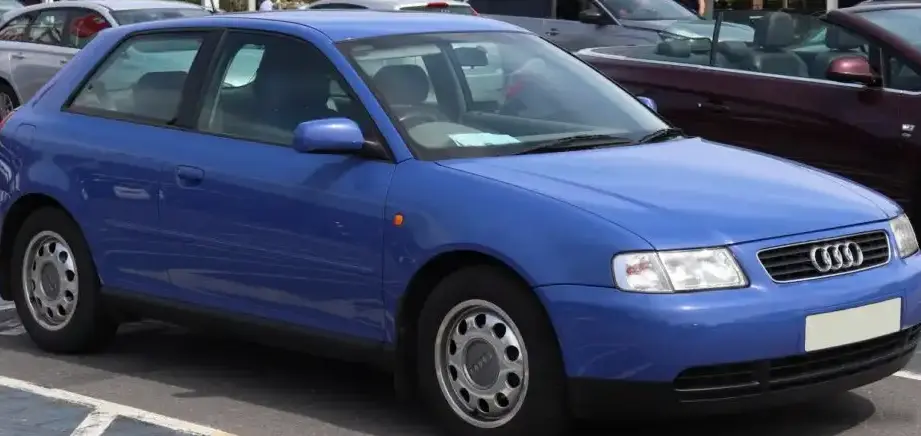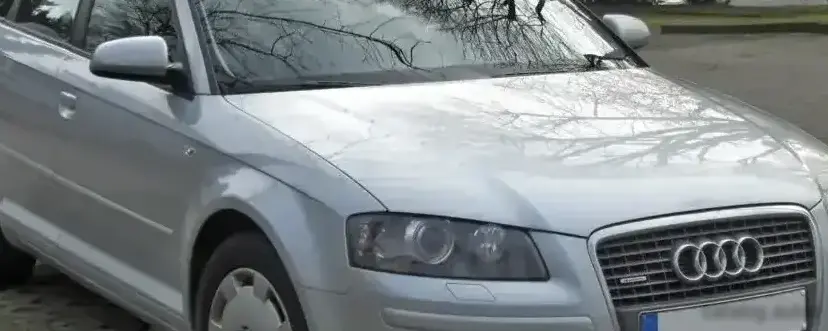
The Audi A3 Sportback (8PA) 2.0 TDI 16V, equipped with the S-Tronic dual-clutch transmission, was a significant offering in Audi’s compact hatchback lineup from 2004 to 2008. Positioned as a mid-range option within the 8PA generation, it bridged the gap between the entry-level 1.6-liter petrol and the more potent 2.0 TDI variants with higher horsepower outputs. This model aimed to provide a balance of fuel efficiency, performance, and modern convenience, appealing to buyers seeking a refined and practical hatchback. It was a key component of Audi’s strategy to expand its presence in the premium compact segment, particularly in Europe where the Sportback body style was highly favored.
Technical Specifications
| Brand | Audi |
| Model | A3 |
| Generation | A3 Sportback (8PA) |
| Type (Engine) | 2.0 TDI 16V (140 Hp) S-Tronic |
| Start of production | 2004 |
| End of production | 2008 |
| Powertrain Architecture | Internal Combustion engine |
| Body type | Hatchback |
| Seats | 5 |
| Doors | 5 |
| Fuel consumption (urban) | 7.5 l/100 km (31.4 US mpg) |
| Fuel consumption (extra urban) | 4.8 l/100 km (49 US mpg) |
| Fuel consumption (combined) | 5.7 l/100 km (41.3 US mpg) |
| Fuel Type | Diesel |
| Acceleration 0 – 100 km/h | 9.2 sec |
| Acceleration 0 – 62 mph | 9.2 sec |
| Acceleration 0 – 60 mph | 8.7 sec |
| Maximum speed | 207 km/h (128.62 mph) |
| Emission standard | Euro 4 |
| Weight-to-power ratio | 10 kg/Hp |
| Weight-to-torque ratio | 4.4 kg/Nm |
| Power | 140 Hp @ 4000 rpm |
| Torque | 320 Nm @ 1750-2500 rpm (236.02 lb.-ft.) |
| Engine layout | Front, Transverse |
| Engine Model/Code | EA188 / BKD |
| Engine displacement | 1968 cm3 (120.09 cu. in.) |
| Number of cylinders | 4 |
| Engine configuration | Inline |
| Cylinder Bore | 81 mm (3.19 in.) |
| Piston Stroke | 95.5 mm (3.76 in.) |
| Compression ratio | 18:1 |
| Number of valves per cylinder | 4 |
| Fuel injection system | Pump-nozzle (Unit Injector) |
| Engine aspiration | Turbocharger, Intercooler |
| Valvetrain | DOHC |
| Engine oil capacity | 3.8 l (4.02 US qt | 3.34 UK qt) |
| Kerb Weight | 1400 kg (3086.47 lbs.) |
| Max. weight | 1960 kg (4321.06 lbs.) |
| Max load | 560 kg (1234.59 lbs.) |
| Trunk (boot) space – minimum | 370 l (13.07 cu. ft.) |
| Trunk (boot) space – maximum | 1120 l (39.55 cu. ft.) |
| Fuel tank capacity | 55 l (14.53 US gal | 12.1 UK gal) |
| Length | 4286 mm (168.74 in.) |
| Width | 1765 mm (69.49 in.) |
| Height | 1423 mm (56.02 in.) |
| Wheelbase | 2578 mm (101.5 in.) |
| Front track | 1534 mm (60.39 in.) |
| Rear (Back) track | 1507 mm (59.33 in.) |
| Drag coefficient (Cd) | 0.33 |
| Minimum turning circle | 10.7 m (35.1 ft.) |
| Drivetrain Architecture | Front wheel drive |
| Number of gears | 6 |
| Gearbox type | Automatic transmission S-Tronic |
| Front suspension | Independent type McPherson, Transverse stabilizer |
| Rear suspension | Independent multi-link suspension, Transverse stabilizer |
| Front brakes | Ventilated discs |
| Rear brakes | Disc |
| Assisting systems | ABS (Anti-lock braking system) |
| Steering type | Steering rack and pinion |
| Power steering | Hydraulic Steering |
| Tires size | 205/55 R16 |
| Wheel rims size | 6.5J x 16 |
Powertrain & Engine Architecture
The heart of the A3 2.0 TDI Sportback was the EA188 engine family, specifically the BKD code. This 1968cc, four-cylinder diesel engine utilized a common-rail direct injection system with pump-nozzle technology, delivering a robust 140 horsepower at 4000 rpm and a substantial 320 Nm (236 lb-ft) of torque between 1750 and 2500 rpm. The engine featured a 18:1 compression ratio and a single turbocharger with an intercooler to enhance performance and efficiency. The S-Tronic six-speed dual-clutch transmission (DCT) was a key feature, offering quick and smooth gear changes compared to a traditional automatic. This transmission contributed significantly to the car’s responsiveness and fuel economy. The engine’s layout was front-transverse, a common configuration for front-wheel-drive vehicles.
Driving Characteristics
The 2.0 TDI 140 hp S-Tronic variant offered a compelling driving experience. While not as overtly sporty as the higher-output TDI models or petrol-powered A3s, it provided ample power for everyday driving and comfortable highway cruising. The S-Tronic transmission allowed for both automatic operation and manual gear selection via steering wheel-mounted paddles or the gear lever. The gear ratios were tuned for a balance of acceleration and fuel efficiency. Compared to the six-speed manual version, the S-Tronic offered quicker acceleration due to the faster shift times. However, some drivers preferred the more direct feel of the manual gearbox. The torque delivery was strong from low engine speeds, making it easy to navigate city traffic and overtake slower vehicles.
Equipment & Trim Levels
The A3 2.0 TDI 16V S-Tronic typically came with a respectable level of standard equipment. This included air conditioning, power windows, central locking, an integrated audio system, and alloy wheels. Higher trim levels, such as Sport or SE, added features like sport seats, leather steering wheel, automatic climate control, and parking sensors. Optional extras included a sunroof, navigation system, and upgraded audio systems. Interior upholstery was typically cloth, with leather options available as an upgrade. The dashboard layout was typical of early 2000s Audis, characterized by a clean and functional design.
Chassis & Braking
The A3 Sportback 8PA utilized an independent suspension setup, with McPherson struts at the front and a multi-link system at the rear. This configuration provided a good balance of ride comfort and handling. Stabilizer bars were fitted to both axles to reduce body roll during cornering. The braking system consisted of ventilated discs at the front and solid discs at the rear. Anti-lock braking system (ABS) was standard. The chassis was designed to provide a stable and predictable driving experience, with a focus on safety and comfort.
Market Reception & Comparison
The Audi A3 2.0 TDI 16V S-Tronic was generally well-received by automotive critics. It was praised for its fuel efficiency, comfortable ride, and the responsiveness of the S-Tronic transmission. Compared to the 1.9 TDI models, the 2.0 TDI offered more power and refinement. However, it was slightly more expensive to purchase and maintain. Against competitors like the Volkswagen Golf, BMW 1 Series, and Mercedes-Benz A-Class, the A3 offered a premium interior and a more sophisticated driving experience. Fuel economy was competitive within its class, and the car proved to be a reliable and practical choice for many buyers.
Legacy
The EA188 2.0 TDI engine, including the BKD variant, has proven to be a durable and reliable powertrain when properly maintained. While early versions of this engine were known for potential issues with the fuel injectors and diesel particulate filter (DPF), these problems were often addressed through software updates and improved maintenance practices. Today, well-maintained examples of the A3 2.0 TDI Sportback are still relatively common on the used car market. They represent a good value for buyers seeking a fuel-efficient, comfortable, and refined compact hatchback. The S-Tronic transmission, while generally reliable, may require more attention to maintenance than a traditional automatic, particularly regarding fluid changes.