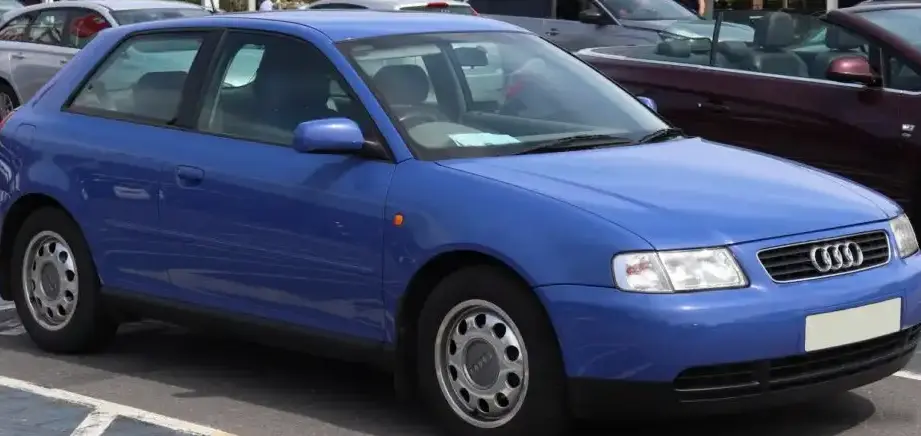
The Audi A3 Sportback (8PA) 2.0 TDI 170 hp S-Tronic represents a significant iteration within the second generation of Audi’s popular compact hatchback. Produced from 2006 to 2008, this variant occupied a mid-range position in the 8PA A3 lineup, offering a blend of performance and fuel efficiency aimed at buyers seeking a more dynamic driving experience than the base models, but without the outright cost of the higher-performance trims like the 3.2 quattro. It was primarily marketed in Europe, where diesel engines held a substantial market share, and offered a sophisticated package in the premium compact segment.
Technical Specifications
| Brand | Audi |
| Model | A3 |
| Generation | A3 Sportback (8PA) |
| Type (Engine) | 2.0 TDI (170 Hp) S-Tronic |
| Start of production | 2006 |
| End of production | 2008 |
| Powertrain Architecture | Internal Combustion engine |
| Body type | Hatchback |
| Seats | 5 |
| Doors | 5 |
| Fuel consumption (urban) | 7.6 l/100 km (30.9 US mpg, 37.2 UK mpg, 13.2 km/l) |
| Fuel consumption (extra urban) | 4.9 l/100 km (48 US mpg, 57.6 UK mpg, 20.4 km/l) |
| Fuel consumption (combined) | 5.9 l/100 km (39.9 US mpg, 47.9 UK mpg, 16.9 km/l) |
| Fuel Type | Diesel |
| Acceleration 0 – 100 km/h | 7.9 sec |
| Acceleration 0 – 62 mph | 7.9 sec |
| Acceleration 0 – 60 mph | 7.5 sec |
| Maximum speed | 222 km/h (137.94 mph) |
| Emission standard | Euro 4 |
| Weight-to-power ratio | 8.3 kg/Hp, 120.6 Hp/tonne |
| Weight-to-torque ratio | 4 kg/Nm, 248.2 Nm/tonne |
| Power | 170 Hp @ 4200 rpm |
| Power per litre | 86.4 Hp/l |
| Torque | 350 Nm @ 1750-2500 rpm (258.15 lb.-ft. @ 1750-2500 rpm) |
| Engine layout | Front, Transverse |
| Engine Model/Code | BMN |
| Engine displacement | 1968 cm3 (120.09 cu. in.) |
| Number of cylinders | 4 |
| Engine configuration | Inline |
| Cylinder Bore | 81 mm (3.19 in.) |
| Piston Stroke | 95.5 mm (3.76 in.) |
| Compression ratio | 18:1 |
| Number of valves per cylinder | 4 |
| Fuel injection system | Pump-nozzle (Unit Injector) |
| Engine aspiration | Turbocharger, Intercooler |
| Valvetrain | DOHC |
| Engine oil capacity | 3.8 l (4.02 US qt | 3.34 UK qt) |
| Kerb Weight | 1410 kg (3108.52 lbs.) |
| Max. weight | 1970 kg (4343.11 lbs.) |
| Max load | 560 kg (1234.59 lbs.) |
| Trunk (boot) space – minimum | 370 l (13.07 cu. ft.) |
| Trunk (boot) space – maximum | 1120 l (39.55 cu. ft.) |
| Fuel tank capacity | 55 l (14.53 US gal | 12.1 UK gal) |
| Length | 4286 mm (168.74 in.) |
| Width | 1765 mm (69.49 in.) |
| Height | 1423 mm (56.02 in.) |
| Wheelbase | 2578 mm (101.5 in.) |
| Front track | 1534 mm (60.39 in.) |
| Rear (Back) track | 1507 mm (59.33 in.) |
| Drag coefficient (Cd) | 0.33 |
| Minimum turning circle | 10.7 m (35.1 ft.) |
| Drivetrain Architecture | Front wheel drive |
| Number of gears and type of gearbox | 6 gears, automatic transmission S-Tronic |
| Front suspension | Independent type McPherson, Transverse stabilizer |
| Rear suspension | Independent multi-link suspension, Transverse stabilizer |
| Front brakes | Ventilated discs |
| Rear brakes | Disc |
| Assisting systems | ABS (Anti-lock braking system) |
| Steering type | Steering rack and pinion |
| Power steering | Hydraulic Steering |
| Tires size | 205/55 R16 |
| Wheel rims size | 6.5J x 16 |
Powertrain & Engine Architecture
At the heart of the A3 2.0 TDI 170 hp S-Tronic lies the BMN engine code, a 1968cc inline-four cylinder diesel engine. This engine utilized a common rail direct injection system with pump-nozzle technology, delivering fuel directly into the combustion chamber at extremely high pressure. This, combined with a variable geometry turbocharger and intercooler, allowed for a broad torque curve and responsive power delivery. The engine featured a double overhead camshaft (DOHC) valvetrain with four valves per cylinder, optimizing gas flow for increased efficiency and power. The S-Tronic transmission, a six-speed dual-clutch gearbox, was a key component of this variant. It offered quicker, smoother shifts compared to a traditional automatic transmission, enhancing both performance and driving enjoyment. The transmission’s programming was tuned to complement the engine’s characteristics, providing both efficient cruising and responsive acceleration.
Driving Characteristics
The 2.0 TDI 170 hp S-Tronic offered a noticeable step up in performance compared to the lower-powered A3 diesel variants. Acceleration from 0-60 mph took approximately 7.5 seconds, and the car felt capable and responsive in everyday driving situations. The S-Tronic transmission contributed to a more engaging driving experience, with quick and precise gear changes. While not as sporty as the petrol-powered A3 models, the 2.0 TDI provided ample torque for overtaking and maintaining highway speeds. The gear ratios were optimized for a balance between fuel economy and performance, with a relatively tall sixth gear for efficient cruising. Compared to the manual transmission versions of the same engine, the S-Tronic offered convenience and ease of use, particularly in urban traffic.
Equipment & Trim Levels
The A3 Sportback 2.0 TDI 170 hp S-Tronic typically came equipped with a generous level of standard features. These included air conditioning, alloy wheels, a multi-function steering wheel, and an upgraded audio system. Interior upholstery was typically cloth, although leather options were available. Higher trim levels offered additional features such as automatic climate control, parking sensors, and a sunroof. Optional extras included navigation systems, upgraded sound systems, and various cosmetic enhancements. The overall interior design was typical of Audi at the time – functional, well-built, and with a focus on ergonomics.
Chassis & Braking
The A3 Sportback 8PA featured a fully independent suspension system, with McPherson struts at the front and a multi-link setup at the rear. This provided a comfortable ride quality while maintaining good handling characteristics. Stabilizer bars were fitted to both axles to reduce body roll during cornering. The braking system consisted of ventilated discs at the front and solid discs at the rear, providing adequate stopping power for the vehicle’s weight and performance. Anti-lock braking system (ABS) was standard, enhancing safety and control in emergency braking situations.
Market Reception & Comparison
The Audi A3 Sportback 2.0 TDI 170 hp S-Tronic was generally well-received by automotive critics. It was praised for its blend of performance, fuel efficiency, and refinement. Compared to other trims in the A3 lineup, the 2.0 TDI offered a compelling alternative to the petrol engines, particularly for drivers who frequently covered long distances. The S-Tronic transmission was also a popular feature, adding to the car’s appeal. Fuel economy was a strong point, with combined figures averaging around 40 mpg. Reliability was generally good, although some owners reported issues with the diesel particulate filter (DPF) and the dual-clutch transmission.
Legacy
The Audi A3 Sportback 2.0 TDI 170 hp S-Tronic remains a popular choice in the used car market today. The BMN engine is known for its durability, although regular maintenance is essential to prevent issues with the DPF and fuel injection system. The S-Tronic transmission requires periodic servicing to ensure smooth operation. Overall, this variant represents a well-rounded and capable compact hatchback that continues to offer a good balance of performance, efficiency, and practicality. Its combination of a torquey diesel engine and a sophisticated dual-clutch transmission has ensured its enduring appeal among enthusiasts and everyday drivers alike.