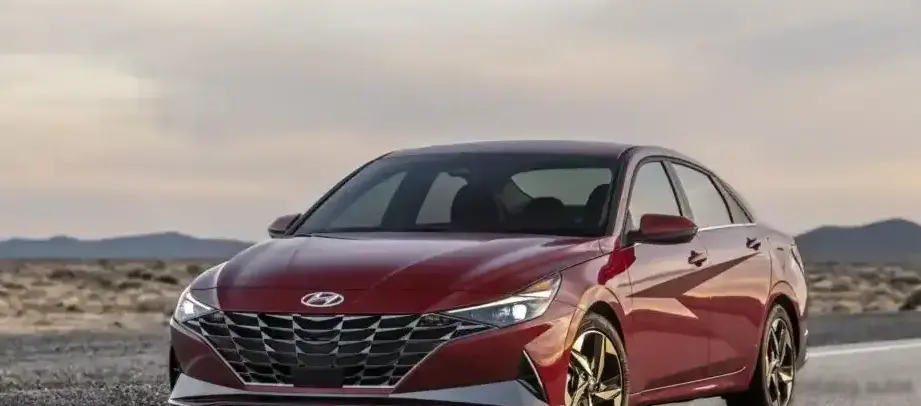
The Hyundai Elantra VII (CN7), produced from 2020 to 2023, represented a significant step forward for Hyundai’s compact sedan. Within the CN7 generation, the 1.6 Turbo GDI variant, equipped with a 7-speed Dual Clutch Transmission (DCT), occupied a mid-range position in the lineup, offering a balance of performance and fuel efficiency. This model aimed to attract buyers seeking a more engaging driving experience than the base engine offered, without the higher price tag of the N Line performance trim. It was primarily marketed in markets where compact sedans were popular, including North America, South Korea, and parts of Europe.
Technical Specifications
| Brand | Hyundai |
| Model | Elantra |
| Generation | Elantra VII (CN7) |
| Type (Engine) | 1.6 Turbo GDI (201 Hp) DCT |
| Start of production | 2020 |
| End of production | 2023 |
| Powertrain Architecture | Internal Combustion engine |
| Body type | Sedan |
| Seats | 5 |
| Doors | 4 |
| Fuel consumption (urban) | 8.4 l/100 km (28 US mpg) |
| Fuel consumption (extra urban) | 6.5 l/100 km (36.2 US mpg) |
| Fuel consumption (combined) | 7.6 l/100 km (30.9 US mpg) |
| Fuel Type | Petrol (Gasoline) |
| Emission standard | LEV3-ULEV70 |
| Weight-to-power ratio | 6.8 kg/Hp |
| Weight-to-torque ratio | 5.2 kg/Nm |
| Power | 201 Hp @ 6000 rpm |
| Power per litre | 125.8 Hp/l |
| Torque | 264 Nm @ 1500-4500 rpm (194.72 lb.-ft.) |
| Engine layout | Front, Transverse |
| Engine Model/Code | G4FP |
| Engine displacement | 1598 cm3 (97.52 cu. in.) |
| Number of cylinders | 4 |
| Engine configuration | Inline |
| Cylinder Bore | 75.6 mm (2.98 in.) |
| Piston Stroke | 89 mm (3.5 in.) |
| Compression ratio | 10:1 |
| Number of valves per cylinder | 4 |
| Fuel injection system | Direct injection |
| Engine aspiration | Turbocharger, Intercooler |
| Valvetrain | DOHC, CVVD |
| Engine oil capacity | 4.8 l (5.07 US qt | 4.22 UK qt) |
| Coolant capacity | 6.8 l (7.19 US qt | 5.98 UK qt) |
| Kerb Weight | 1370 kg (3020.33 lbs.) |
| Max. weight | 1810 kg (3990.37 lbs.) |
| Max load | 440 kg (970.03 lbs.) |
| Trunk (boot) space (minimum) | 402 l (14.2 cu. ft.) |
| Fuel tank capacity | 47 l (12.42 US gal | 10.34 UK gal) |
| Length | 4676 mm (184.09 in.) |
| Width | 1826 mm (71.89 in.) |
| Height | 1420 mm (55.91 in.) |
| Wheelbase | 2720 mm (107.09 in.) |
| Front track | 1567 mm (61.69 in.) |
| Rear track | 1580 mm (62.2 in.) |
| Front overhang | 894 mm (35.2 in.) |
| Rear overhang | 1059 mm (41.69 in.) |
| Ride height (ground clearance) | 140 mm (5.51 in.) |
| Drag coefficient (Cd) | 0.31 |
| Drivetrain Architecture | Front wheel drive |
| Number of gears | 7 |
| Gearbox type | Automatic transmission DCT |
| Front suspension | Independent, McPherson with coil spring and anti-roll bar |
| Rear suspension | Independent multi-link with stabilizer |
| Assisting systems | ABS (Anti-lock braking system) |
| Steering type | Steering rack and pinion |
| Power steering | Electric |
| Tires size | 235/40 R18 |
| Wheel rims size | 18 |
INTRODUCTION
The Hyundai Elantra VII (CN7) represented a bold redesign for Hyundai’s popular compact sedan, debuting in 2020. The CN7 moved to Hyundai’s third-generation compact platform, offering increased interior space and a more sophisticated driving experience. The 1.6 Turbo GDI variant, powered by the G4FP engine and paired with a 7-speed DCT, was introduced as a step up from the base 2.0-liter naturally aspirated engine. This combination aimed to provide a more responsive and fuel-efficient option for buyers who desired a bit more performance without opting for the sportier N Line model. Production of the CN7 Elantra continued through 2023, with minor updates throughout its lifecycle.
Powertrain & Engine Architecture
At the heart of the 1.6 Turbo GDI Elantra lies the G4FP engine, a 1.6-liter inline-four cylinder gasoline engine. This engine utilizes direct fuel injection (GDI) and a single scroll turbocharger with an intercooler to boost power output. The G4FP engine incorporates Hyundai’s Continuously Variable Valve Duration (CVVD) technology, which allows for precise control of valve timing and lift, optimizing both performance and fuel efficiency. The engine produces 201 horsepower at 6000 rpm and 264 Nm (194.72 lb-ft) of torque between 1500 and 4500 rpm. The 7-speed Dual Clutch Transmission (DCT) provides quick and smooth gear changes, contributing to the car’s responsive feel. The DCT’s gear ratios are tuned for a balance of acceleration and fuel economy, with a relatively tall final drive to aid in highway cruising.
Driving Characteristics
The 1.6 Turbo GDI DCT Elantra delivers a noticeably more spirited driving experience compared to the base 2.0-liter model. The turbocharger provides a readily available boost of power, making overtaking and merging onto highways effortless. The DCT transmission shifts quickly and decisively, enhancing the sense of responsiveness. While not as aggressively tuned as the N Line variant, the 1.6 Turbo offers a comfortable and engaging driving experience. The steering is light and precise, and the suspension provides a good balance between ride comfort and handling. Compared to manual transmission versions (available in some markets), the DCT offers convenience and ease of use, although some enthusiasts may prefer the greater control of a manual gearbox. The DCT does a good job of mimicking manual shifts with paddle shifters, but it doesn’t quite match the engagement of a traditional manual.
Equipment & Trim Levels
The 1.6 Turbo GDI trim typically included a generous array of standard features. Interior appointments generally included cloth upholstery, although leather options were often available as upgrades. Standard equipment often included an 8-inch touchscreen infotainment system with Apple CarPlay and Android Auto compatibility, a rearview camera, automatic climate control, and keyless entry. Higher trim levels within the 1.6 Turbo range could add features such as a larger touchscreen display, a premium sound system, heated and ventilated front seats, a sunroof, and advanced driver-assistance systems (ADAS) like adaptive cruise control, lane keeping assist, and blind-spot monitoring.
Chassis & Braking
The CN7 Elantra utilizes a McPherson strut front suspension and a multi-link rear suspension. The suspension tuning is geared towards providing a comfortable ride while maintaining reasonable handling characteristics. The 1.6 Turbo GDI models typically featured disc brakes on all four wheels, providing adequate stopping power. Anti-lock Braking System (ABS) was standard, along with Electronic Stability Control (ESC). The steering system employs an electric power steering (EPS) system, offering light and precise steering feel. Tire size was commonly 235/40 R18, providing a good balance of grip and ride comfort.
Market Reception & Comparison
The 1.6 Turbo GDI Elantra was generally well-received by automotive critics. Reviewers praised its responsive engine, smooth-shifting DCT transmission, and comfortable ride. Fuel economy was also a strong point, with the combined fuel consumption of 7.6 l/100 km (30.9 US mpg) being competitive within its class. Compared to the base 2.0-liter Elantra, the 1.6 Turbo offered a significant performance upgrade. Compared to the N Line model, the 1.6 Turbo provided a more refined and comfortable driving experience, albeit with less outright performance. Reliability reports have been generally positive, with the G4FP engine and DCT transmission proving to be relatively durable.
Legacy
The Hyundai Elantra VII (CN7) 1.6 Turbo GDI DCT represents a significant step forward in Hyundai’s compact sedan offerings. The combination of a turbocharged engine, a dual-clutch transmission, and a well-equipped interior made it a compelling choice for buyers seeking a stylish, efficient, and engaging compact car. On the used car market, these models hold their value reasonably well, particularly those with lower mileage and a well-maintained service history. The G4FP engine and DCT transmission have proven to be relatively reliable, making these Elantras a sensible choice for budget-conscious buyers looking for a modern and well-equipped compact sedan.