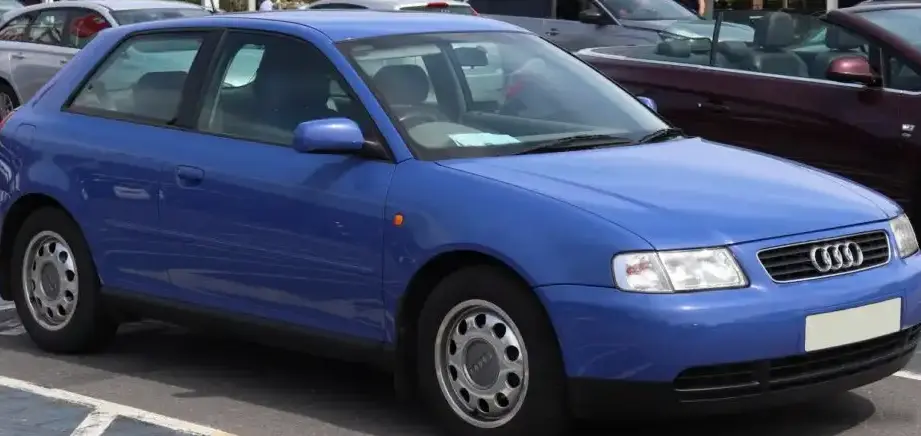
The Audi A3 Sportback (8PA) 2.0 TFSI, produced from 2004 to 2008, represented a significant step forward for Audi’s compact hatchback offering. Positioned as a mid-to-upper trim level within the 8PA A3 Sportback range, this variant combined a potent turbocharged engine with a sporty character. It was a key model in establishing the A3 as a premium competitor in the European market, offering a blend of performance, practicality, and sophisticated design. The 8PA generation, built on the Volkswagen Group’s A5 (PQ35) platform, aimed to appeal to a younger, more discerning buyer than previous A3 iterations.
Technical Specifications
| Brand | Audi |
| Model | A3 |
| Generation | A3 Sportback (8PA) |
| Type (Engine) | 2.0 TFSI (200 Hp) |
| Start of production | 2004 |
| End of production | 2008 |
| Powertrain Architecture | Internal Combustion engine |
| Body type | Hatchback |
| Seats | 5 |
| Doors | 5 |
| Fuel consumption (urban) | 10.6 l/100 km (22.2 US mpg) |
| Fuel consumption (extra urban) | 6 l/100 km (39.2 US mpg) |
| Fuel consumption (combined) | 7.7 l/100 km (30.5 US mpg) |
| Fuel Type | Petrol (Gasoline) |
| Acceleration 0 – 100 km/h | 7.2 sec |
| Acceleration 0 – 62 mph | 7.2 sec |
| Acceleration 0 – 60 mph | 6.8 sec |
| Maximum speed | 236 km/h (146.64 mph) |
| Emission standard | Euro 4 |
| Weight-to-power ratio | 6.8 kg/Hp |
| Weight-to-torque ratio | 4.9 kg/Nm |
| Power | 200 Hp @ 5100-6000 rpm |
| Torque | 280 Nm @ 1800-5000 rpm (206.52 lb.-ft.) |
| Engine layout | Front, Transverse |
| Engine Model/Code | AXX, BPY, BWA |
| Engine displacement | 1984 cm3 (121.07 cu. in.) |
| Number of cylinders | 4 |
| Engine configuration | Inline |
| Cylinder Bore | 82.5 mm (3.25 in.) |
| Piston Stroke | 92.8 mm (3.65 in.) |
| Compression ratio | 10.5:1 |
| Number of valves per cylinder | 4 |
| Fuel injection system | Direct injection |
| Engine aspiration | Turbocharger, Intercooler |
| Valvetrain | DOHC |
| Engine oil capacity | 4.5 l (4.76 US qt | 3.96 UK qt) |
| Kerb Weight | 1360 kg (2998.29 lbs.) |
| Max. weight | 1920 kg (4232.88 lbs.) |
| Max load | 560 kg (1234.59 lbs.) |
| Trunk (boot) space – minimum | 370 l (13.07 cu. ft.) |
| Trunk (boot) space – maximum | 1120 l (39.55 cu. ft.) |
| Fuel tank capacity | 55 l (14.53 US gal | 12.1 UK gal) |
| Length | 4286 mm (168.74 in.) |
| Width | 1765 mm (69.49 in.) |
| Height | 1423 mm (56.02 in.) |
| Wheelbase | 2578 mm (101.5 in.) |
| Front track | 1534 mm (60.39 in.) |
| Rear track | 1507 mm (59.33 in.) |
| Drag coefficient (Cd) | 0.33 |
| Minimum turning circle | 10.7 m (35.1 ft.) |
| Drivetrain Architecture | Front wheel drive |
| Number of gears | 6 |
| Gearbox type | Manual transmission |
| Front suspension | Spring Strut |
| Rear suspension | Transverse stabilizer |
| Front brakes | Ventilated discs |
| Rear brakes | Disc |
| Assisting systems | ABS (Anti-lock braking system) |
| Steering type | Steering rack and pinion |
| Tires size | 225/45 R17 |
| Wheel rims size | 7.5J x 17 |
Introduction
The Audi A3 Sportback 2.0 TFSI (8PA) debuted in 2004 as part of the second-generation A3 family. This five-door hatchback aimed to provide a more practical and versatile alternative to the three-door A3, while maintaining the brand’s reputation for quality and refinement. The 2.0 TFSI engine, a key component of the Volkswagen Group’s new generation of direct-injection, turbocharged powerplants, was offered alongside naturally aspirated and diesel options. This particular variant was positioned as a performance-oriented choice, appealing to drivers seeking a balance between spirited driving and everyday usability. It was a popular choice in Europe, where compact hatchbacks dominate the market, and began to gain traction in other regions as Audi expanded its global presence.
Powertrain & Engine Architecture
At the heart of the A3 2.0 TFSI lies the EA888 engine family, specifically the AXX, BPY, or BWA engine codes depending on the production year and market. This 1984cc inline-four cylinder engine utilizes direct fuel injection (FSI – Fuel Stratified Injection) and a K03 turbocharger with an intercooler. The direct injection system allows for precise fuel delivery, improving efficiency and reducing emissions. The engine features a double overhead camshaft (DOHC) valvetrain with four valves per cylinder, optimizing airflow for increased power output. The 2.0 TFSI produces 200 horsepower at 5100-6000 rpm and 280 Nm (206.52 lb-ft) of torque between 1800-5000 rpm. The engine is transversely mounted, driving the front wheels. The standard transmission for this variant was a 6-speed manual gearbox, offering precise shifts and a direct connection to the engine. While a S-Tronic dual-clutch transmission (DSG) was available as an option, the manual was favored by enthusiasts for its engaging driving experience.
Driving Characteristics
The 2.0 TFSI-equipped A3 Sportback delivered a noticeably more engaging driving experience compared to lower-powered variants. Acceleration from 0-60 mph took approximately 6.8 seconds, and the car could reach a top speed of 146.64 mph. The turbocharger provides a surge of power in the mid-range, making overtaking maneuvers effortless. The 6-speed manual transmission allows the driver to fully exploit the engine’s powerband. While not as raw or focused as dedicated hot hatches like the Golf GTI or Audi S3, the A3 2.0 TFSI offered a comfortable and refined ride, making it suitable for daily commuting. The steering is precise and well-weighted, providing good feedback to the driver. The suspension, while tuned for comfort, maintains good body control in corners.
Equipment & Trim Levels
The A3 Sportback 2.0 TFSI typically came well-equipped, reflecting Audi’s premium positioning. Standard features included air conditioning, power windows, central locking, and an integrated audio system. Higher trim levels offered options such as leather upholstery, sunroof, automatic climate control, and a navigation system. Interior materials were of high quality, with a focus on creating a sophisticated and comfortable cabin. The dashboard layout was clean and functional, with intuitive controls. Sport trim packages added features like sport seats, a three-spoke steering wheel, and aluminum interior trim.
Chassis & Braking
The 8PA A3 Sportback utilized a MacPherson strut front suspension and a multi-link rear suspension. This setup provided a good balance between ride comfort and handling precision. The front brakes were ventilated discs, while the rear brakes were solid discs. Anti-lock Braking System (ABS) was standard. The chassis was relatively lightweight, contributing to the car’s agile handling. The standard tire size was 225/45 R17, providing good grip in both wet and dry conditions.
Market Reception & Comparison
The Audi A3 Sportback 2.0 TFSI was generally well-received by automotive critics. It was praised for its refined interior, comfortable ride, and strong performance. Compared to the base 1.6-liter A3, the 2.0 TFSI offered a significant boost in power and acceleration. It also provided a more compelling alternative to rivals like the BMW 1 Series and Mercedes-Benz A-Class. Fuel economy was respectable for a performance-oriented hatchback, averaging around 30.5 US mpg in combined driving. However, some critics noted that the engine could be somewhat noisy under hard acceleration. Compared to the diesel-powered A3 variants, the 2.0 TFSI offered more spirited performance but at the expense of fuel efficiency.
Legacy
The 2.0 TFSI engine proved to be a durable and reliable powerplant, although early versions were susceptible to carbon buildup on the intake valves, requiring periodic cleaning. The 8PA A3 Sportback remains a popular choice in the used car market today, offering a blend of style, practicality, and performance at an affordable price. The 2.0 TFSI engine’s reputation for tunability has also made it a favorite among enthusiasts, with many owners opting to remap the engine for increased power output. The 8PA A3 Sportback 2.0 TFSI laid the foundation for future generations of Audi’s compact hatchback, cementing its position as a leading contender in the premium segment.