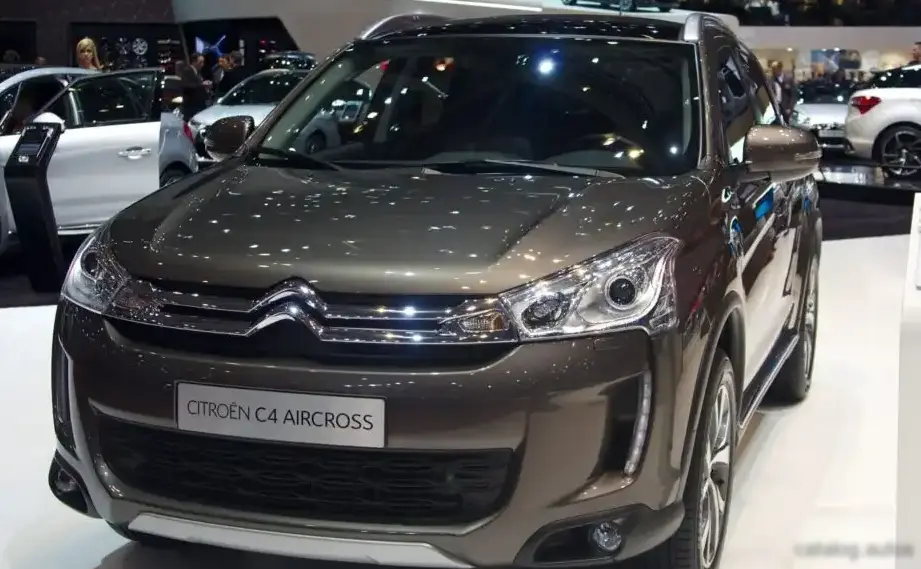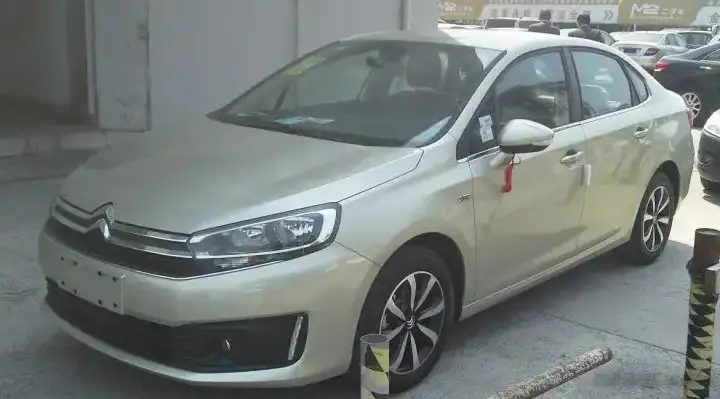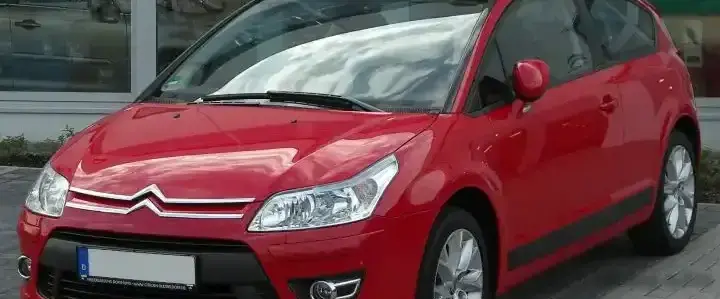
The Citroen C4 I Coupe, specifically the Phase II model produced between 2008 and 2010, represented Citroen’s entry into the compact coupe market. This variant, equipped with a 1.6-liter 16-valve petrol engine producing 109 horsepower and paired with a four-speed automatic transmission, was positioned as a comfortable and practical option for buyers prioritizing ease of use over outright performance. It sat within the broader C4 I range, which also included hatchback and sedan body styles, and various engine options including diesel variants and higher-powered petrol engines. The Phase II update brought minor cosmetic revisions and refinements to the interior compared to the initial C4 Coupe launch.
Technical Specifications
| Brand | Citroen |
| Model | C4 |
| Generation | C4 I Coupe (Phase II, 2008) |
| Type (Engine) | 1.6i 16V (109 Hp) Automatic |
| Start of production | 2008 |
| End of production | 2010 |
| Powertrain Architecture | Internal Combustion engine |
| Body type | Coupe |
| Seats | 5 |
| Doors | 3 |
| Fuel consumption (urban) | 10.6 l/100 km (22.2 US mpg, 26.6 UK mpg, 9.4 km/l) |
| Fuel consumption (extra urban) | 5.8 l/100 km (40.6 US mpg, 48.7 UK mpg, 17.2 km/l) |
| Fuel consumption (combined) | 7.6 l/100 km (30.9 US mpg, 37.2 UK mpg, 13.2 km/l) |
| CO2 emissions | 180 g/km |
| Fuel Type | Petrol (Gasoline) |
| Acceleration 0 – 100 km/h | 13.1 sec |
| Acceleration 0 – 62 mph | 13.1 sec |
| Acceleration 0 – 60 mph | 12.4 sec |
| Maximum speed | 188 km/h (116.82 mph) |
| Emission standard | Euro 4 |
| Weight-to-power ratio | 11.7 kg/Hp, 85.3 Hp/tonne |
| Weight-to-torque ratio | 8.7 kg/Nm, 115 Nm/tonne |
| Power | 109 Hp @ 5750 rpm |
| Power per litre | 68.7 Hp/l |
| Torque | 147 Nm @ 4000 rpm (108.42 lb.-ft. @ 4000 rpm) |
| Engine layout | Front, Transverse |
| Engine Model/Code | NFU TU5JP4 |
| Engine displacement | 1587 cm3 (96.84 cu. in.) |
| Number of cylinders | 4 |
| Engine configuration | Inline |
| Cylinder Bore | 78.5 mm (3.09 in.) |
| Piston Stroke | 82 mm (3.23 in.) |
| Compression ratio | 9.6:1 |
| Number of valves per cylinder | 4 |
| Fuel injection system | Multi-port manifold injection |
| Engine aspiration | Naturally aspirated engine |
| Valvetrain | DOHC |
| Engine oil capacity | 3.25 l (3.43 US qt, 2.86 UK qt) |
| Coolant | 6.2 l (6.55 US qt, 5.46 UK qt) |
| Kerb Weight | 1278 kg (2817.51 lbs.) |
| Max. weight | 1798 kg (3963.91 lbs.) |
| Max load | 520 kg (1146.4 lbs.) |
| Trunk (boot) space – minimum | 314 l (11.09 cu. ft.) |
| Trunk (boot) space – maximum | 1083 l (38.25 cu. ft.) |
| Fuel tank capacity | 60 l (15.85 US gal, 13.2 UK gal) |
| Max. roof load | 75 kg (165.35 lbs.) |
| Permitted trailer load with brakes (8%) | 1400 kg (3086.47 lbs.) |
| Permitted trailer load with brakes (12%) | 1200 kg (2645.55 lbs.) |
| Permitted trailer load without brakes | 676 kg (1490.32 lbs.) |
| Permitted towbar download | 63 kg (138.89 lbs.) |
| Length | 4288 mm (168.82 in.) |
| Width | 1769 mm (69.65 in.) |
| Width including mirrors | 1964 mm (77.32 in.) |
| Height | 1456 mm (57.32 in.) |
| Wheelbase | 2608 mm (102.68 in.) |
| Front track | 1497 mm (58.94 in.) |
| Rear (Back) track | 1502 mm (59.13 in.) |
| Front overhang | 950 mm (37.4 in.) |
| Rear overhang | 730 mm (28.74 in.) |
| Minimum turning circle | 11.3 m (37.07 ft.) |
| Drivetrain Architecture | Front wheel drive |
| Number of gears and type of gearbox | 4 gears, automatic transmission |
| Front suspension | Independent, type McPherson with coil spring and anti-roll bar |
| Rear suspension | Semi-independent, coil spring |
| Front brakes | Ventilated discs |
| Rear brakes | Disc |
| Assisting systems | ABS (Anti-lock braking system) |
| Steering type | Steering rack and pinion |
| Tires size | 205/55 R16 |
| Wheel rims size | 16 |
Powertrain & Engine Architecture
The heart of this C4 Coupe variant is the Citroen NFU (or sometimes designated TU5JP4) 1.6-liter inline-four cylinder petrol engine. This engine, a common fixture in many PSA Group vehicles of the era (Peugeot, Citroen, and formerly, Saab), utilizes a multi-point fuel injection system and a double overhead camshaft (DOHC) valvetrain. The 16 valves (four per cylinder) contribute to reasonable breathing for its displacement. The engine’s 9.6:1 compression ratio is a typical value for naturally aspirated petrol engines of this period, balancing efficiency and performance. The four-speed automatic transmission, while providing convenience, is a relatively dated design compared to more modern automatics with more gears. It’s a conventional hydraulic automatic, known for its robustness but less so for its fuel efficiency or responsiveness.
Driving Characteristics
The 109 horsepower and 147 Nm (108 lb-ft) of torque produced by this engine and transmission combination result in a leisurely driving experience. Acceleration from 0-100 km/h (0-62 mph) takes around 13.1 seconds, making it unsuitable for drivers seeking spirited performance. The four-speed automatic transmission contributes to this, with relatively large gaps between gears. Compared to the more powerful 2.0-liter petrol or 1.6 and 2.0-liter HDi diesel variants, this version feels significantly underpowered, particularly when fully loaded or tackling inclines. The automatic transmission prioritizes smooth shifts over quick responses, making it ideal for urban driving but less engaging on winding roads. The gear ratios are tuned for economy rather than acceleration.
Equipment & Trim Levels
The 1.6i 16V Automatic C4 Coupe typically came equipped with air conditioning, electric front windows, central locking, and an RDS radio as standard. Safety features included ABS brakes and front airbags. Higher trim levels, often denoted by additions like “Exclusive” or “Sport,” added features such as alloy wheels, rear parking sensors, automatic headlights and rain-sensing wipers, and upgraded interior trim materials. Interior upholstery was generally cloth, with options for partial leather trim on higher-spec models. The dashboard layout was typical of Citroen at the time, featuring a centrally mounted instrument cluster.
Chassis & Braking
The C4 Coupe’s chassis utilizes an independent McPherson strut suspension at the front and a semi-independent coil spring suspension at the rear. This setup provides a reasonable balance between ride comfort and handling. The front brakes are ventilated discs, offering adequate stopping power, while the rear brakes are solid discs. The steering is rack and pinion, providing a reasonably direct feel. Stabilizer bars are fitted to both the front and rear axles to reduce body roll during cornering. The suspension tuning is geared towards comfort, resulting in a softer ride quality compared to sportier variants.
Market Reception & Comparison
The 1.6i 16V Automatic C4 Coupe was generally viewed as a practical and affordable option, but critics often noted its lack of performance. Compared to the diesel variants, it offered lower fuel economy but a smoother, quieter driving experience. Against the higher-powered petrol models, it lacked the punch needed for more enthusiastic drivers. Its main appeal lay in its ease of use, particularly the convenience of the automatic transmission, and its relatively low purchase price. Reliability was generally good, although the four-speed automatic transmission could be prone to wear and tear over time.
Legacy
The 1.6i 16V Automatic C4 Coupe, while not a standout performer, remains a relatively affordable and accessible used car. The NFU engine is generally considered reliable, although regular maintenance is crucial. The automatic transmission is the component most likely to require attention as the vehicle ages. Today, these cars are often sought after by buyers looking for a comfortable and economical coupe, or as a first car for younger drivers. Parts availability is generally good, thanks to the widespread use of the NFU engine and the C4 platform across various PSA Group vehicles. While not a collector’s item, it represents a solid and dependable example of early 21st-century French automotive engineering.