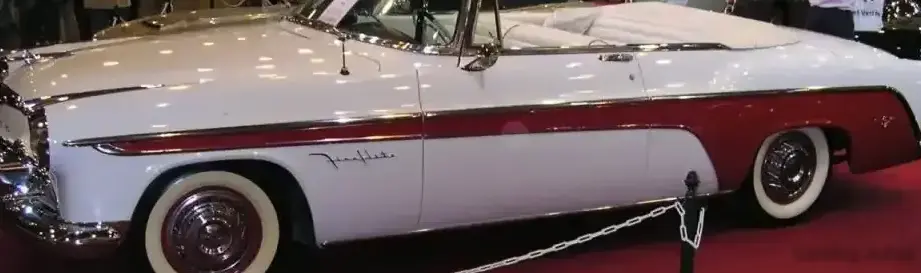
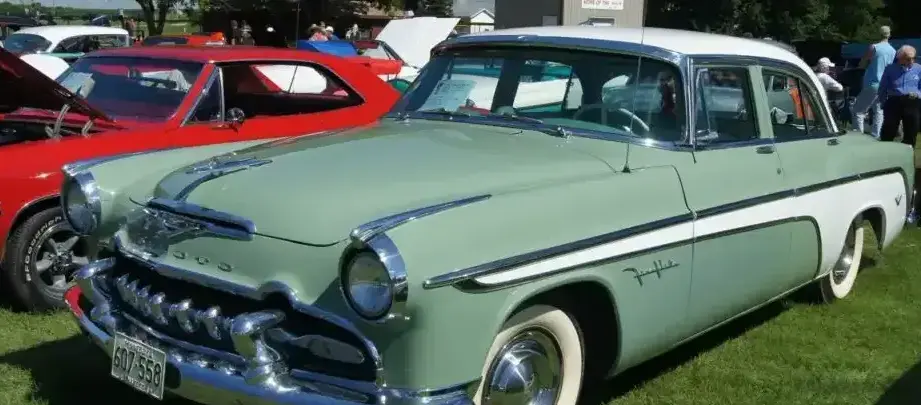
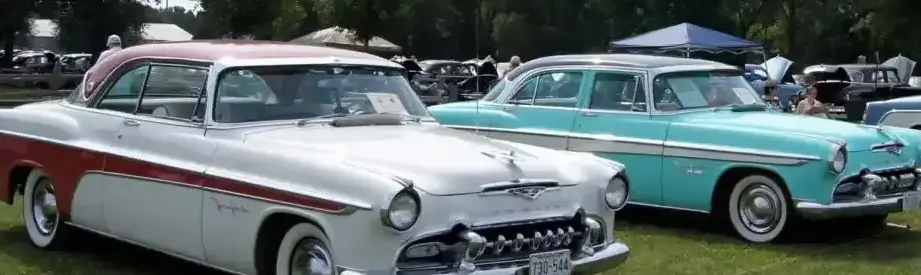
The DeSoto Fireflite I Station Wagon, specifically the 1959 facelift model equipped with the 6.3-liter (382.99 cubic inch) V8 engine producing 325 horsepower and paired with a TorqueFlite automatic transmission, represented a significant offering in the American station wagon market. Produced for the 1958 and 1959 model years, this variant occupied a premium position within the Fireflite lineup, catering to families desiring both space and substantial performance. It was part of the first generation of the Fireflite, a model intended to revitalize the DeSoto brand and compete with offerings from Buick, Oldsmobile, and Mercury.
Technical Specifications
| Brand | DeSoto |
| Model | Fireflite |
| Generation | Fireflite I Station Wagon (facelift 1959) |
| Type (Engine) | Shopper 6.3 V8 (325 Hp) TorqueFlite |
| Start of production | 1958 |
| End of production | 1959 |
| Powertrain Architecture | Internal Combustion engine |
| Body type | Station wagon (estate) |
| Seats | 6 |
| Doors | 5 |
| Fuel Type | Petrol (Gasoline) |
| Weight-to-power ratio | 6.1 kg/Hp, 162.7 Hp/tonne |
| Weight-to-torque ratio | 3.5 kg/Nm, 288.3 Nm/tonne |
| Power | 325 Hp @ 4600 rpm |
| Power per litre | 51.8 Hp/l |
| Torque | 576 Nm @ 2800 rpm, 424.84 lb.-ft. @ 2800 rpm |
| Engine displacement | 6276 cm3, 382.99 cu. in. |
| Number of cylinders | 8 |
| Engine configuration | V-engine |
| Cylinder Bore | 107.95 mm, 4.25 in. |
| Piston Stroke | 85.85 mm, 3.38 in. |
| Compression ratio | 10.1:1 |
| Number of valves per cylinder | 2 |
| Fuel injection system | Carburettor |
| Engine aspiration | Naturally aspirated engine |
| Valvetrain | OHV |
| Engine oil capacity | 4.7 l, 4.97 US qt | 4.14 UK qt |
| Coolant | 15.1 l, 15.96 US qt | 13.29 UK qt |
| Kerb Weight | 1998 kg, 4404.84 lbs |
| Fuel tank capacity | 83 l, 21.93 US gal | 18.26 UK gal |
| Length | 5591 mm, 220.12 in |
| Width | 1999 mm, 78.7 in |
| Height | 1458 mm, 57.4 in |
| Wheelbase | 3200 mm, 125.98 in |
| Front track | 1549 mm, 60.98 in |
| Rear (Back) track | 1516 mm, 59.69 in |
| Minimum turning circle (turning diameter) | 15.2 m, 49.87 ft |
| Drivetrain Architecture | The Internal combustion engine (ICE) drives the rear wheels of the vehicle. |
| Drive wheel | Rear wheel drive |
| Number of gears and type of gearbox | 3 gears, automatic transmission TorqueFlite |
| Front suspension | Independent torsion bar, double wishbone |
| Rear suspension | Leaf spring |
| Front brakes | Drum, 305 mm |
| Rear brakes | Drum, 305 mm |
| Steering type | Worm-reduction unit |
Powertrain & Engine Architecture
The heart of this Fireflite variant was the DeSoto’s 6.3-liter (382.99 cu. in.) V8 engine, internally known as the “Shopper” V8. This engine featured a cast iron block and aluminum cylinder heads. It utilized a carbureted fuel system, a common practice for the time, and an overhead valve (OHV) valvetrain. The 10.1:1 compression ratio contributed to the engine’s respectable power output. The TorqueFlite automatic transmission, a three-speed unit, was Chrysler Corporation’s primary automatic offering during this period. It was known for its smoothness and durability, though it lacked the sophistication of later automatic transmissions. The TorqueFlite was a full-size automatic, designed to handle the substantial torque produced by the V8 engine.
Driving Characteristics
The 325 horsepower and 425 lb-ft of torque delivered by the 6.3-liter V8, combined with the three-speed TorqueFlite automatic, provided brisk acceleration for a full-size station wagon. While not a performance-oriented vehicle, the Fireflite offered ample power for highway cruising and passing maneuvers. The automatic transmission, while smooth, did result in some power loss compared to the available manual transmission options. The gear ratios were optimized for comfortable cruising rather than outright acceleration. Compared to other Fireflite trims, such as those with smaller engines, this variant offered a significant performance advantage. However, it wasn’t as sporty as some competitors offering more modern transmissions or higher horsepower engines.
Equipment & Trim Levels
The 1959 Fireflite Station Wagon with the 6.3-liter V8 and TorqueFlite automatic was positioned as a mid-to-upper trim level within the Fireflite range. Standard features typically included power steering, power brakes, a deluxe interior with cloth and vinyl upholstery, and a full complement of exterior chrome trim. Optional extras included air conditioning, a radio, power windows, and whitewall tires. The interior featured a spacious cabin designed to accommodate up to six passengers comfortably. The dashboard layout was typical of the late 1950s, with a prominent instrument cluster and a large steering wheel.
Chassis & Braking
The Fireflite Station Wagon utilized a body-on-frame construction, common for American cars of this era. The front suspension employed an independent torsion bar and double wishbone setup, providing a relatively comfortable ride. The rear suspension consisted of leaf springs, which were robust but less sophisticated than the front suspension. Braking was accomplished via drum brakes on all four wheels. While adequate for the time, the drum brakes lacked the stopping power and fade resistance of later disc brake systems. The steering system was a worm-reduction unit, providing relatively heavy but precise steering feel.
Market Reception & Comparison
The 1959 DeSoto Fireflite Station Wagon was generally well-received by automotive critics, who praised its spacious interior, comfortable ride, and powerful engine. However, some critics noted the car’s large size and relatively dated styling. Compared to competitors like the Buick Estate Wagon and the Mercury Voyager, the Fireflite offered a comparable level of luxury and performance. Fuel economy was typical for a large American car of the late 1950s, averaging around 12-15 miles per gallon. Reliability was generally good, although the carbureted engine required periodic maintenance.
Legacy
The 1959 DeSoto Fireflite Station Wagon, particularly the 6.3-liter V8/TorqueFlite combination, represents a classic example of American automotive design and engineering from the late 1950s. While DeSoto ceased production in 1961, the Fireflite remains a sought-after vehicle among collectors and enthusiasts. The 6.3-liter V8 engine, while not known for exceptional longevity, is relatively straightforward to maintain and rebuild. Today, well-preserved examples of this Fireflite variant command respectable prices in the used car market, appealing to those seeking a nostalgic and spacious family vehicle with a touch of vintage American flair. The TorqueFlite transmission, if properly maintained, continues to provide reliable service even after decades of use.