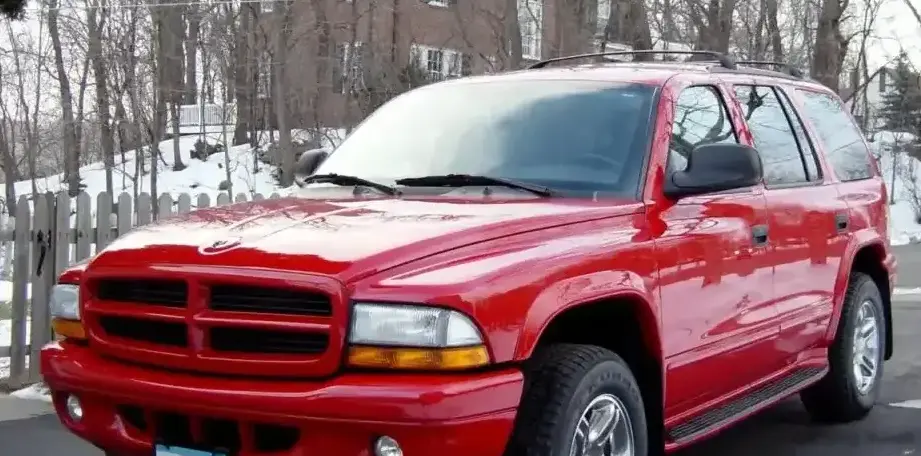
The Dodge Durango II, specifically the facelifted version introduced in 2006, represented a significant shift for the Durango nameplate. Moving away from the first generation’s association with the Dakota pickup, the second generation Durango (HB) was built on a dedicated SUV platform, offering a more refined and spacious interior. The 4.7 Magnum V8 with an automatic transmission, produced from 2007 through December 2008, occupied a middle ground in the Durango lineup, offering a balance of power and affordability. It served as a step up from the base 3.7L V6, while remaining more accessible than the higher-performance 5.7L HEMI V8 models.
Technical Specifications
| Brand | Dodge |
| Model | Durango |
| Generation | Durango II (HB, facelift 2006) |
| Type (Engine) | 4.7 Magnum V8 (303 Hp) Automatic |
| Start of production | 2007 |
| End of production | December, 2008 |
| Powertrain Architecture | Internal Combustion engine |
| Body type | SUV |
| Seats | 5-8 |
| Doors | 5 |
| Fuel consumption (urban) | 18.1 l/100 km (13 US mpg, 15.6 UK mpg) |
| Fuel consumption (extra urban) | 13.1 l/100 km (18 US mpg, 21.6 UK mpg) |
| Fuel Type | Petrol (Gasoline) |
| Emission standard | SULEV I |
| Weight-to-power ratio | 7.2 kg/Hp, 139.2 Hp/tonne |
| Weight-to-torque ratio | 4.9 kg/Nm, 205.3 Nm/tonne |
| Power | 303 Hp @ 5650 rpm |
| Power per litre | 64.5 Hp/l |
| Torque | 447 Nm @ 3950 rpm (329.69 lb.-ft. @ 3950 rpm) |
| Maximum engine speed | 6000 rpm |
| Engine layout | Front, Longitudinal |
| Engine Model/Code | EVA |
| Engine displacement | 4701 cm3 (286.87 cu. in.) |
| Number of cylinders | 8 |
| Engine configuration | V-engine |
| Cylinder Bore | 93 mm (3.66 in.) |
| Piston Stroke | 86.5 mm (3.41 in.) |
| Compression ratio | 9:1 |
| Number of valves per cylinder | 2 |
| Fuel injection system | Multi-port manifold injection |
| Engine aspiration | Naturally aspirated engine |
| Valvetrain | SOHC |
| Engine oil capacity | 5.7 l (6.02 US qt | 5.02 UK qt) |
| Coolant capacity | 12.5 l (13.21 US qt | 11 UK qt) |
| Kerb Weight | 2177 kg (4799.46 lbs.) |
| Max. weight | 2926 kg (6450.73 lbs.) |
| Max load | 749 kg (1651.26 lbs.) |
| Trunk (boot) space – minimum | 569 l (20.09 cu. ft.) |
| Trunk (boot) space – maximum | 3070 l (108.42 cu. ft.) |
| Fuel tank capacity | 102 l (26.95 US gal | 22.44 UK gal) |
| Permitted trailer load with brakes (12%) | 2744 kg (6049.48 lbs.) |
| Length | 5101 mm (200.83 in.) |
| Width | 1930 mm (75.98 in.) |
| Height | 1887 mm (74.29 in.) |
| Wheelbase | 3027 mm (119.17 in.) |
| Front track | 1636 mm (64.41 in.) |
| Rear track | 1636 mm (64.41 in.) |
| Ride height (ground clearance) | 221 mm (8.7 in.) |
| Drag coefficient (Cd) | 0.393 |
| Minimum turning circle | 12.2 m (40.03 ft.) |
| Approach angle | 26.8° |
| Departure angle | 29.9° |
| Ramp-over angle | 22.8° |
| Drivetrain Architecture | Rear wheel drive |
| Number of gears | 5 |
| Gearbox type | Automatic transmission |
| Front suspension | Independent torsion bar, double wishbone, Transverse stabilizer |
| Rear suspension | Rigid axle suspension, Transverse stabilizer, Coil spring |
| Front brakes | Ventilated discs, 336×28 mm |
| Rear brakes | Disc, 352×22 mm |
| Assisting systems | ABS (Anti-lock braking system) |
| Steering type | Steering rack and pinion |
| Power steering | Hydraulic Steering |
| Tires size | 245/70 R17; 265/65 R17; 265/60 R18; 265/50 R20 |
| Wheel rims size | 7J x 17; 8J x 18; 8J x 20 |
INTRODUCTION
The Dodge Durango II, facelifted in 2006, represented a move towards a more modern SUV design. Built from 2004 to 2009, the HB series Durango was a departure from its truck-based predecessor. The 4.7L Magnum V8 automatic configuration was introduced in 2007 and continued through the end of production in December 2008. This variant aimed to provide a balance between performance and fuel efficiency for families and individuals needing a capable SUV. It slotted between the base 3.7L V6 and the more powerful 5.7L HEMI V8 in terms of price and performance.
Powertrain & Engine Architecture
The heart of this Durango variant is the 4.7-liter Magnum V8 engine, internally designated as the EVA engine code. This engine is a 90-degree OHV (Overhead Valve) design, featuring a cast iron block and aluminum cylinder heads. It utilizes a multi-port fuel injection system, delivering fuel directly to each cylinder. The 4.7L engine produces 303 horsepower at 5650 rpm and 329.69 lb-ft of torque at 3950 rpm. The engine’s valvetrain consists of two valves per cylinder, operated by a single camshaft (SOHC). The engine is longitudinally mounted in the chassis, driving the rear wheels. The 42RE automatic transmission, a four-speed unit, was the standard transmission paired with the 4.7L Magnum V8. This transmission is known for its durability but is less efficient than more modern automatic transmissions.
Driving Characteristics
The 4.7L V8 automatic Durango offered adequate performance for everyday driving. Acceleration was respectable, but not particularly brisk, with a 0-60 mph time estimated around 8.5-9.5 seconds. The four-speed automatic transmission, while reliable, had relatively wide gear ratios. This resulted in noticeable shifts and a tendency for the engine to rev higher during acceleration compared to vehicles with more gears. The torque output of 329.69 lb-ft provided sufficient power for towing and hauling, making it a practical choice for those needing to transport cargo or trailers. Compared to the 3.7L V6, the 4.7L offered a significant improvement in acceleration and towing capacity. However, it lacked the outright power and responsiveness of the 5.7L HEMI V8.
Equipment & Trim Levels
The 4.7L Durango typically came standard with features such as air conditioning, power windows and locks, a CD player, and cloth upholstery. Higher trim levels, such as the SLT and Limited, added features like leather upholstery, heated seats, a premium sound system, and alloy wheels. Optional extras included a DVD entertainment system, a sunroof, and a navigation system. The interior design was functional and spacious, offering comfortable seating for up to seven passengers depending on the seating configuration. The dashboard layout was straightforward and easy to use, with clearly labeled controls.
Chassis & Braking
The Durango II utilized a body-on-frame construction, providing a robust and durable chassis. The front suspension consisted of an independent torsion bar setup with double wishbones and a transverse stabilizer bar. The rear suspension employed a rigid axle with coil springs and a transverse stabilizer bar. This suspension setup provided a comfortable ride, but handling was not as precise as more modern SUVs with independent rear suspensions. Braking duties were handled by ventilated discs at the front and discs at the rear. Anti-lock brakes (ABS) were standard. The Durango’s curb weight of approximately 4800 lbs contributed to its solid feel on the road.
Market Reception & Comparison
The 4.7L Durango received mixed reviews. Critics praised its spacious interior, comfortable ride, and towing capacity. However, the fuel economy was a common complaint, averaging around 13-18 mpg in real-world driving. Compared to the 3.7L V6, the 4.7L offered a noticeable performance upgrade, but at the cost of increased fuel consumption. The 5.7L HEMI V8 provided significantly more power, but also came with a higher price tag and even lower fuel economy. In terms of reliability, the 4.7L Magnum V8 was generally considered to be a durable engine, but issues with the automatic transmission and cooling system were occasionally reported.
Legacy
The Dodge Durango II, particularly the 4.7L V8 automatic variant, remains a popular choice in the used car market. Its affordability, spaciousness, and towing capacity make it a practical option for families and individuals needing a versatile SUV. While the four-speed automatic transmission is dated by today’s standards, it is known for its reliability. The 4.7L Magnum V8 is also a relatively durable engine, although regular maintenance is essential to prevent issues. Today, these Durangos are often found with higher mileage, and careful inspection of the transmission and cooling system is recommended before purchase. The Durango II helped solidify the Durango’s reputation as a capable and family-friendly SUV.