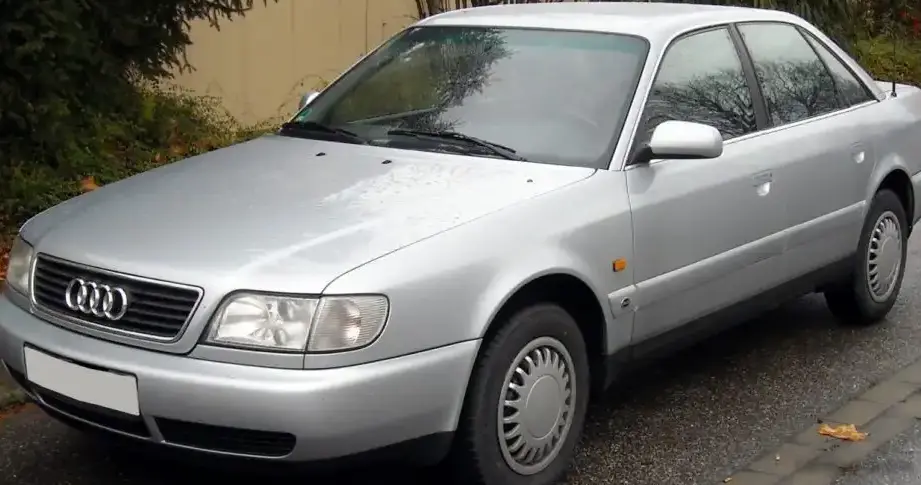
The Audi A6 Avant (4B, C5) 2.5 TDI V6, produced between 1998 and 2000, represents a significant iteration of Audi’s mid-size executive wagon. Positioned within the C5 generation of the A6, which spanned from 1997 to 2004, the Avant (wagon) body style offered a practical alternative to the sedan, appealing to buyers needing increased cargo capacity without sacrificing the luxury and refinement associated with the Audi brand. This particular variant, equipped with the 2.5-liter V6 turbodiesel engine producing 150 horsepower, was a popular choice in European markets where diesel engines were favored for their fuel efficiency and torque. It served as a middle-ground option, offering more performance than the entry-level four-cylinder diesels, but at a lower price point than the more powerful V8 models.
Technical Specifications
| Brand | Audi |
| Model | A6 |
| Generation | A6 Avant (4B,C5) |
| Type (Engine) | 2.5 TDI V6 (150 Hp) |
| Start of production | 1998 |
| End of production | 2000 |
| Powertrain Architecture | Internal Combustion engine |
| Body type | Station wagon (estate) |
| Seats | 5 |
| Doors | 5 |
| Fuel consumption (urban) | 10 l/100 km (23.5 US mpg, 28.2 UK mpg, 10 km/l) |
| Fuel consumption (extra urban) | 5.3 l/100 km (44.4 US mpg, 53.3 UK mpg, 18.9 km/l) |
| Fuel consumption (combined) | 7 l/100 km (33.6 US mpg, 40.4 UK mpg, 14.3 km/l) |
| CO2 emissions | 189 g/km |
| Fuel Type | Diesel |
| Acceleration 0 – 100 km/h | 9.9 sec |
| Acceleration 0 – 62 mph | 9.9 sec |
| Acceleration 0 – 60 mph | 9.4 sec |
| Maximum speed | 216 km/h (134.22 mph) |
| Weight-to-power ratio | 10.5 kg/Hp, 95.2 Hp/tonne |
| Weight-to-torque ratio | 5.1 kg/Nm, 196.8 Nm/tonne |
| Power | 150 Hp @ 4000 rpm |
| Power per litre | 60.1 Hp/l |
| Torque | 310 Nm @ 1500-3200 rpm (228.64 lb.-ft. @ 1500-3200 rpm) |
| Engine layout | Front, Longitudinal |
| Engine Model/Code | AFB, AKN |
| Engine displacement | 2496 cm3 (152.32 cu. in.) |
| Number of cylinders | 6 |
| Engine configuration | V-engine |
| Cylinder Bore | 78.3 mm (3.08 in.) |
| Piston Stroke | 86.4 mm (3.4 in.) |
| Compression ratio | 19.5:1 |
| Number of valves per cylinder | 4 |
| Fuel injection system | Direct injection |
| Engine aspiration | Turbocharger |
| Valvetrain | DOHC |
| Engine oil capacity | 5.5 l (5.81 US qt | 4.84 UK qt) |
| Coolant | 6 l (6.34 US qt | 5.28 UK qt) |
| Kerb Weight | 1575 kg (3472.28 lbs.) |
| Max. weight | 2155 kg (4750.96 lbs.) |
| Max load | 580 kg (1278.68 lbs.) |
| Trunk (boot) space – minimum | 455 l (16.07 cu. ft.) |
| Trunk (boot) space – maximum | 1590 l (56.15 cu. ft.) |
| Fuel tank capacity | 70 l (18.49 US gal | 15.4 UK gal) |
| Max. roof load | 100 kg (220.46 lbs.) |
| Permitted trailer load with brakes (8%) | 1900 kg (4188.78 lbs.) |
| Permitted trailer load with brakes (12%) | 1700 kg (3747.86 lbs.) |
| Permitted trailer load without brakes | 750 kg (1653.47 lbs.) |
| Permitted towbar download | 85 kg (187.39 lbs.) |
| Length | 4796 mm (188.82 in.) |
| Width | 1810 mm (71.26 in.) |
| Height | 1479 mm (58.23 in.) |
| Wheelbase | 2760 mm (108.66 in.) |
| Front track | 1540 mm (60.63 in.) |
| Rear (Back) track | 1569 mm (61.77 in.) |
| Drag coefficient (Cd) | 0.29 |
| Minimum turning circle (turning diameter) | 11.68 m (38.32 ft.) |
| Drivetrain Architecture | The Internal combustion engine (ICE) drives the front wheels of the vehicle. |
| Drive wheel | Front wheel drive |
| Number of gears and type of gearbox | 6 gears, manual transmission |
| Front suspension | Independent multi-link suspension |
| Rear suspension | Semi-independent, coil spring |
| Front brakes | Ventilated discs |
| Rear brakes | Disc |
| Assisting systems | ABS (Anti-lock braking system) |
| Steering type | Steering rack and pinion |
| Power steering | Hydraulic Steering |
| Tires size | 205/60 R15 |
| Wheel rims size | 6J x 15 |
Powertrain & Engine Architecture
The heart of this A6 Avant variant is the 2.5-liter V6 TDI engine, identified by engine codes AFB and AKN. This engine is a 24-valve, direct-injection diesel featuring a turbocharger and intercooler. Direct injection, a relatively new technology at the time, allowed for more precise fuel delivery and improved combustion efficiency. The engine utilized a Bosch EDC (Electronic Diesel Control) system to manage fuel injection timing and quantity. The valvetrain employed a double overhead camshaft (DOHC) design, optimizing airflow into and out of the cylinders. The engine’s robust construction and the inherent torque characteristics of a diesel V6 provided a smooth and relatively quiet driving experience for a diesel engine of that era. The 6-speed manual transmission was standard, offering well-spaced gear ratios to maximize the engine’s torque output and provide reasonable fuel economy.
Driving Characteristics
The 150 hp and 310 Nm (228.64 lb-ft) of torque delivered by the 2.5 TDI V6 provided a comfortable and capable driving experience. While not overtly sporty, the engine offered ample power for everyday driving and highway cruising. Acceleration from 0-60 mph took approximately 9.4 seconds, and top speed was around 134 mph. The turbocharger provided a noticeable boost in power at lower RPMs, eliminating much of the turbo lag common in earlier turbocharged diesels. The 6-speed manual transmission allowed drivers to keep the engine in its optimal power band, enhancing responsiveness. Compared to the more powerful V8 models, this variant prioritized fuel efficiency and usability over outright performance. It also offered a more refined driving experience than the smaller displacement four-cylinder diesel options.
Equipment & Trim Levels
The A6 Avant 2.5 TDI V6 typically came equipped with a respectable level of standard features. These included power windows, power locks, central locking, air conditioning, and an upgraded audio system. Interior upholstery was typically cloth, although leather was available as an option. Trim levels varied by market, but generally, this variant occupied a mid-range position in the A6 lineup. Optional extras included sunroof, heated seats, automatic climate control, and upgraded alloy wheels. The Avant body style itself added to the appeal, offering a larger cargo area and increased practicality compared to the sedan.
Chassis & Braking
The C5 A6 Avant featured an independent multi-link front suspension and a semi-independent coil spring rear suspension. This setup provided a good balance between ride comfort and handling. The front brakes were ventilated discs, while the rear brakes were solid discs. Anti-lock Braking System (ABS) was standard. The chassis was designed to provide a stable and predictable driving experience, even when fully loaded. Stabilizer bars were fitted front and rear to reduce body roll during cornering.
Market Reception & Comparison
The Audi A6 Avant 2.5 TDI V6 was well-received in European markets, particularly by buyers who valued fuel efficiency, practicality, and a premium driving experience. Critics praised the engine’s smooth power delivery and the Avant’s spacious interior. Compared to the petrol-powered A6 variants, the diesel offered significantly better fuel economy. Against competitors like the BMW 5 Series Touring and Mercedes-Benz E-Class Estate, the A6 Avant offered a compelling combination of luxury, performance, and practicality. The 2.5 TDI V6 struck a good balance between cost and performance, making it a popular choice for families and business users.
Legacy
The 2.5 TDI V6 engine, in both AFB and AKN forms, proved to be a durable and reliable powerplant. While diesel engines are susceptible to issues related to fuel quality and maintenance, these engines generally held up well over time. Today, well-maintained examples of the A6 Avant 2.5 TDI V6 are sought after by enthusiasts and collectors. The combination of classic Audi styling, a robust diesel engine, and the practicality of the Avant body style makes it a desirable used car. Parts availability remains relatively good, although some components may be becoming increasingly difficult to find. The C5 A6 Avant continues to be recognized as a well-engineered and refined vehicle that offered a compelling alternative to its competitors.