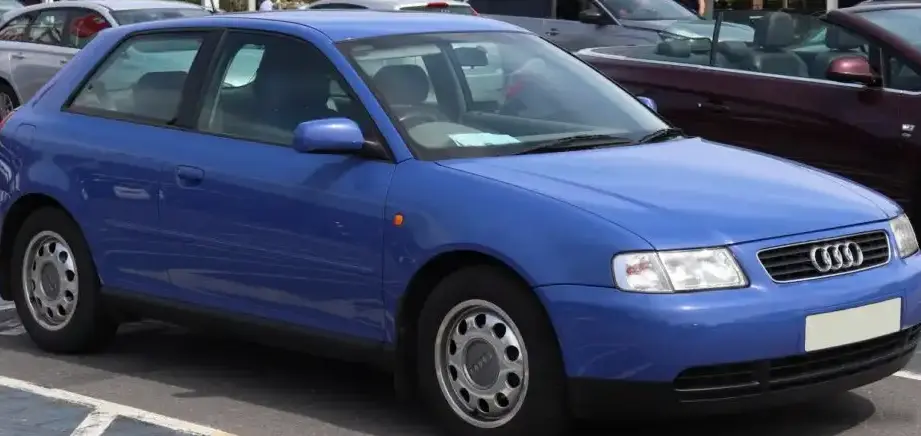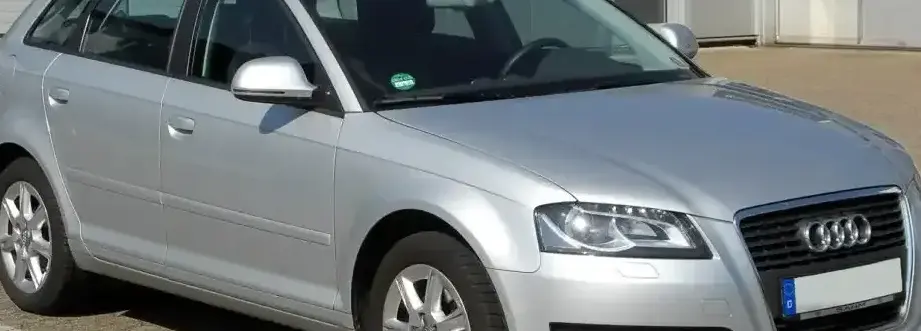
The Audi A3 Sportback (8PA), particularly the facelifted version introduced in 2008, represented Audi’s entry into the premium compact hatchback segment. This generation A3, built on the Volkswagen Group’s A5 (PQ35) platform – also known as the 1HX0/A3 platform – aimed to blend practicality with a more upscale driving experience. The 1.6-liter (102 horsepower) variant, produced from 2008 to 2010, served as the entry point to the A3 Sportback range, offering a balance of affordability and Audi’s established build quality. It was positioned as a more economical alternative to the higher-performance and more expensive engine options available, such as the 2.0 TFSI.
Technical Specifications
| Brand | Audi |
| Model | A3 |
| Generation | A3 Sportback (8PA, facelift 2008) |
| Type (Engine) | 1.6 (102 Hp) |
| Start of production | 2008 |
| End of production | 2010 |
| Powertrain Architecture | Internal Combustion engine |
| Body type | Hatchback |
| Seats | 5 |
| Doors | 5 |
| Fuel consumption (urban) | 9.5 l/100 km (24.8 US mpg, 29.7 UK mpg, 10.5 km/l) |
| Fuel consumption (extra urban) | 5.4 l/100 km (43.6 US mpg, 52.3 UK mpg, 18.5 km/l) |
| Fuel consumption (combined) | 6.9 l/100 km (34.1 US mpg, 40.9 UK mpg, 14.5 km/l) |
| CO2 emissions | 164 g/km |
| Fuel Type | Petrol (Gasoline) |
| Acceleration 0 – 100 km/h | 12.1 sec |
| Acceleration 0 – 62 mph | 12.1 sec |
| Acceleration 0 – 60 mph | 11.5 sec |
| Maximum speed | 185 km/h (114.95 mph) |
| Emission standard | Euro 4 |
| Weight-to-power ratio | 12 kg/Hp, 83.3 Hp/tonne |
| Weight-to-torque ratio | 8.3 kg/Nm, 120.8 Nm/tonne |
| Power | 102 Hp @ 5600 rpm |
| Power per litre | 63.9 Hp/l |
| Torque | 148 Nm @ 3800 rpm (109.16 lb.-ft. @ 3800 rpm) |
| Engine layout | Front, Transverse |
| Engine Model/Code | BSE, BSF, CCSA, CMXA |
| Engine displacement | 1595 cm3 (97.33 cu. in.) |
| Number of cylinders | 4 |
| Engine configuration | Inline |
| Cylinder Bore | 81 mm (3.19 in.) |
| Piston Stroke | 77.4 mm (3.05 in.) |
| Compression ratio | 10.3:1 |
| Number of valves per cylinder | 2 |
| Fuel injection system | Multi-port manifold injection |
| Engine aspiration | Naturally aspirated engine |
| Valvetrain | SOHC |
| Engine oil capacity | 4.6 l (4.86 US qt | 4.05 UK qt) |
| Kerb Weight | 1225 kg (2700.66 lbs.) |
| Max. weight | 1785 kg (3935.25 lbs.) |
| Max load | 560 kg (1234.59 lbs.) |
| Trunk (boot) space – minimum | 552 l (19.49 cu. ft.) |
| Trunk (boot) space – maximum | 1104 l (38.99 cu. ft.) |
| Fuel tank capacity | 55 l (14.53 US gal | 12.1 UK gal) |
| Length | 4292 mm (168.98 in.) |
| Width | 1765 mm (69.49 in.) |
| Height | 1423 mm (56.02 in.) |
| Wheelbase | 2578 mm (101.5 in.) |
| Front track | 1534 mm (60.39 in.) |
| Rear (Back) track | 1507 mm (59.33 in.) |
| Ride height (ground clearance) | 110 mm (4.33 in.) |
| Drag coefficient (Cd) | 0.31 |
| Minimum turning circle | 10.7 m (35.1 ft.) |
| Drivetrain Architecture | The Internal combustion engine (ICE) drives the front wheels of the vehicle. |
| Drive wheel | Front wheel drive |
| Number of gears and type of gearbox | 5 gears, manual transmission |
| Front suspension | Spring Strut |
| Rear suspension | Transverse stabilizer |
| Front brakes | Ventilated discs |
| Rear brakes | Disc |
| Assisting systems | ABS (Anti-lock braking system) |
| Steering type | Steering rack and pinion |
| Tires size | 205/55 R16; 225/45 R17 |
| Wheel rims size | 6.5J x 16; 7.5J x 17 |
Powertrain & Engine Architecture
The heart of this A3 Sportback variant is the 1.6-liter inline-four cylinder engine, identified by engine codes such as BSE, BSF, CCSA, and CMXA. This engine is a naturally aspirated unit, meaning it doesn’t rely on a turbocharger or supercharger for forced induction. It utilizes a multi-port fuel injection system, delivering fuel directly into the intake ports. The engine features a single overhead camshaft (SOHC) valvetrain, operating two valves per cylinder. This configuration prioritized simplicity and reliability over outright performance. The engine’s 102 horsepower and 148 Nm (109 lb-ft) of torque were modest, but sufficient for everyday driving. The engine was typically paired with a five-speed manual transmission, although an automatic transmission option was also available, albeit less common.
Driving Characteristics
The 1.6-liter A3 Sportback with the manual transmission offered a reasonably engaging driving experience, though it wasn’t particularly quick. Acceleration from 0 to 60 mph took around 11.5 to 12.1 seconds, and top speed was limited to 185 km/h (115 mph). The automatic transmission, while providing convenience, noticeably dulled performance due to its less efficient power delivery and typically wider gear ratios. The engine required frequent downshifts to maintain momentum, especially when overtaking or climbing hills. Compared to the more powerful 2.0 TFSI variants, the 1.6-liter felt significantly underpowered. However, it offered a more relaxed and fuel-efficient driving experience, making it suitable for urban commuting and longer journeys where outright speed wasn’t a priority.
Equipment & Trim Levels
The base-level 1.6-liter A3 Sportback typically came equipped with a respectable array of standard features. These included air conditioning, power windows, central locking, and an integrated audio system. Interior upholstery was generally cloth, with a functional, if not luxurious, dashboard layout. Optional extras included alloy wheels, a sunroof, parking sensors, and upgraded audio systems. Higher trim levels, such as SE and S-line, added features like sport seats, leather trim, and more sophisticated infotainment systems. The 1.6L model was often seen as a blank canvas for buyers who wanted to add options to personalize their vehicle.
Chassis & Braking
The A3 Sportback’s chassis featured a MacPherson strut front suspension and a multi-link rear suspension, providing a comfortable and controlled ride. The front brakes were ventilated discs, offering good stopping power, while the rear brakes were typically solid discs. Anti-lock Braking System (ABS) was standard. The suspension was tuned for comfort rather than outright sportiness, prioritizing ride quality over sharp handling. Stabilizer bars were fitted to both the front and rear axles to reduce body roll during cornering.
Market Reception & Comparison
The 1.6-liter A3 Sportback was generally well-received as an affordable and practical entry point into the Audi brand. Critics praised its build quality, comfortable ride, and fuel efficiency. However, the engine’s lack of power was a common criticism, particularly when compared to the more potent engine options available. In terms of fuel economy, the 1.6-liter offered a significant advantage over the 2.0 TFSI models, achieving around 34.1 US mpg in combined driving. Reliability was generally good, although regular maintenance was essential to ensure long-term durability.
Legacy
The 1.6-liter engine, while not known for its performance, proved to be a reliable and durable unit. Today, used examples of the A3 Sportback 1.6 are relatively common and can be found at affordable prices. The engine’s simplicity makes it relatively easy and inexpensive to maintain. However, potential buyers should be aware of the engine’s modest power output and the potential for age-related wear and tear. The A3 Sportback 1.6 remains a popular choice for those seeking a practical, well-built, and economical compact hatchback.