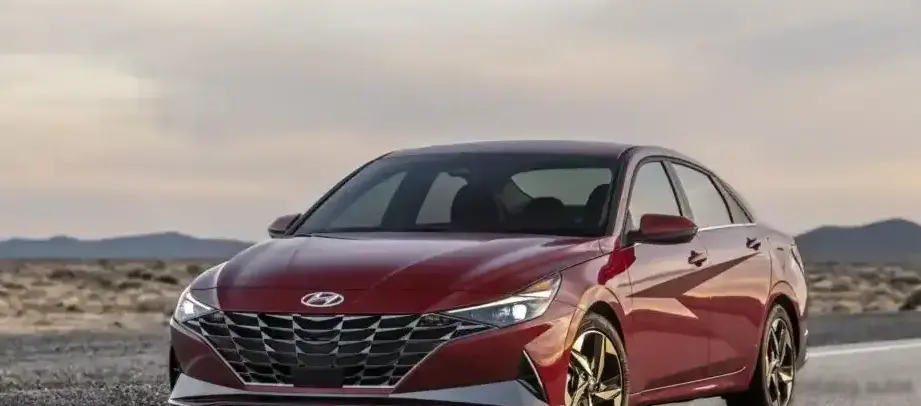
The Hyundai Elantra VII (CN7) G2.0 Smartstream Automatic, produced from March 2020 through 2023, represents a significant iteration in Hyundai’s long-running compact sedan lineage. Positioned as a mainstream offering within the CN7 generation, which debuted Hyundai’s Sensuous Sportiness design language, this variant aimed to balance fuel efficiency, comfortable driving dynamics, and modern features for the North American and global markets. It served as a key volume seller, bridging the gap between the base engine options and the more performance-oriented N Line models. The CN7 Elantra marked a departure from previous generations with its more angular styling and a focus on interior space and technology.
Technical Specifications
| Brand | Hyundai |
| Model | Elantra |
| Generation | Elantra VII (CN7) |
| Type (Engine) | G2.0 Smartstream (159 Hp) Automatic |
| Start of production | March, 2020 |
| End of production | 2023 |
| Powertrain Architecture | Internal Combustion engine |
| Body type | Sedan |
| Seats | 5 |
| Doors | 4 |
| Fuel Type | Petrol (Gasoline) |
| Weight-to-power ratio | 7.6 kg/Hp, 131.7 Hp/tonne |
| Weight-to-torque ratio | 6.3 kg/Nm, 158.2 Nm/tonne |
| Power | 159 Hp @ 6200 rpm |
| Power per litre | 79.5 Hp/l |
| Torque | 191 Nm @ 4500 rpm, 140.87 lb.-ft. @ 4500 rpm |
| Engine layout | Front, Transverse |
| Engine Model/Code | G4NS |
| Engine displacement | 1999 cm3, 121.99 cu. in. |
| Number of cylinders | 4 |
| Engine configuration | Inline |
| Number of valves per cylinder | 4 |
| Fuel injection system | Multi-port manifold injection |
| Engine aspiration | Naturally aspirated engine |
| Valvetrain | DOHC |
| Engine oil capacity | 4.3 l, 4.54 US qt | 3.78 UK qt |
| Coolant | 7.4 l, 7.82 US qt | 6.51 UK qt |
| Kerb Weight | 1207-1290 kg, 2660.98 – 2843.96 lbs. |
| Max. weight | 1770 kg, 3902.18 lbs. |
| Max load | 480-563 kg, 1058.22 – 1241.2 lbs. |
| Length | 4675 mm, 184.06 in. |
| Width | 1825 mm, 71.85 in. |
| Height | 1430 mm, 56.3 in. |
| Wheelbase | 2720 mm, 107.09 in. |
| Front track | 1579-1593 mm, 62.17 – 62.72 in. |
| Rear (Back) track | 1590-1604 mm, 62.6 – 63.15 in. |
| Drivetrain Architecture | The Internal combustion engine (ICE) drives the front wheels of the vehicle. |
| Drive wheel | Front wheel drive |
| Number of gears and type of gearbox | 6 gears, automatic transmission |
| Front suspension | Independent type McPherson |
| Rear suspension | Torsion |
| Front brakes | Ventilated discs |
| Rear brakes | Disc |
| Assisting systems | ABS (Anti-lock braking system) |
| Steering type | Steering rack and pinion |
| Tires size | 195/65 R15; 205/55 R16; 225/45 R17 |
| Wheel rims size | 6.0J x 15; 6.5J x 16; 7.0J x 17 |
Powertrain & Engine Architecture
At the heart of the Elantra VII G2.0 Smartstream Automatic lies the Hyundai G4NS engine, a 2.0-liter naturally aspirated inline-four cylinder powerplant. This engine is part of Hyundai’s Smartstream family, designed for improved fuel efficiency and reduced emissions. The G4NS utilizes a multi-point fuel injection system, delivering fuel directly into the intake ports. The engine features a dual overhead camshaft (DOHC) valvetrain with four valves per cylinder, optimizing airflow for enhanced performance. The engine’s output of 159 horsepower at 6,200 rpm and 191 Nm (140.87 lb-ft) of torque at 4,500 rpm is respectable for its class. Paired with this engine is a six-speed automatic transmission, chosen for its smooth operation and ease of use. This transmission is a conventional torque-converter automatic, prioritizing comfort over outright sportiness. The transmission’s gear ratios are tuned for fuel economy and everyday drivability, rather than aggressive acceleration.
Driving Characteristics
The 2.0-liter engine and six-speed automatic combination delivers a comfortable and predictable driving experience. Acceleration is adequate for most daily driving situations, but it’s not particularly brisk. The automatic transmission shifts smoothly, though it can sometimes feel hesitant during quick overtaking maneuvers. Compared to the available manual transmission, the automatic sacrifices some responsiveness. The gear ratios are optimized for fuel efficiency, meaning the engine often operates at lower RPMs during highway cruising. Compared to the more powerful turbocharged engines offered in the Elantra N Line, this variant prioritizes fuel economy and a relaxed driving experience. The steering is light and easy, making it well-suited for city driving, but it lacks the feedback desired by more enthusiastic drivers.
Equipment & Trim Levels
The G2.0 Smartstream Automatic trim typically included a generous array of standard features. These commonly included air conditioning, power windows and locks, a touchscreen infotainment system with Apple CarPlay and Android Auto compatibility, and a rearview camera. Higher trim levels added features such as heated front seats, a sunroof, automatic climate control, and advanced driver-assistance systems (ADAS) like lane keeping assist and adaptive cruise control. Interior upholstery was typically cloth, with leather options available on higher trims. Dashboard configurations were generally clean and modern, with a focus on user-friendliness. Optional extras included premium audio systems, navigation, and various cosmetic enhancements.
Chassis & Braking
The Elantra VII utilizes a front-wheel-drive platform with an independent McPherson strut suspension in the front and a torsion beam suspension in the rear. This suspension setup provides a comfortable ride quality, absorbing bumps and imperfections in the road effectively. The front brakes are ventilated discs, providing adequate stopping power, while the rear brakes are solid discs. Anti-lock braking system (ABS) is standard, enhancing safety during emergency braking situations. Stabilizer bars are included both front and rear, helping to reduce body roll during cornering. The chassis is designed to balance ride comfort with handling stability, making it a competent performer in everyday driving conditions.
Market Reception & Comparison
The Hyundai Elantra VII G2.0 Smartstream Automatic was generally well-received by automotive critics. It was praised for its comfortable ride, spacious interior, and long list of standard features. Fuel economy was also a strong point, with the 2.0-liter engine achieving competitive MPG figures. However, some critics noted that the engine lacked the punch of the turbocharged options, and the automatic transmission could feel sluggish at times. Compared to rivals like the Honda Civic and Toyota Corolla, the Elantra offered a compelling value proposition, often undercutting its competitors in price while offering similar or better features. Reliability reports have been generally positive, with the G4NS engine proving to be a durable and dependable unit.
Legacy
The Hyundai Elantra VII G2.0 Smartstream Automatic has established itself as a reliable and affordable option in the used car market. The G4NS engine is known for its longevity, and the six-speed automatic transmission is generally trouble-free. Maintenance costs are relatively low, making it an attractive choice for budget-conscious buyers. While it may not offer the performance of more expensive trims, the 2.0-liter Automatic provides a comfortable and practical transportation solution for a wide range of drivers. Its blend of value, features, and reliability has cemented its place as a popular choice in the compact sedan segment.