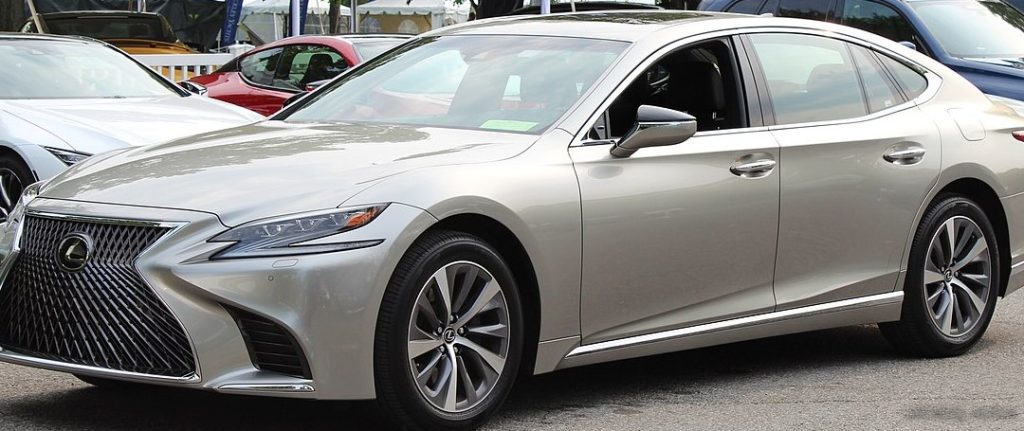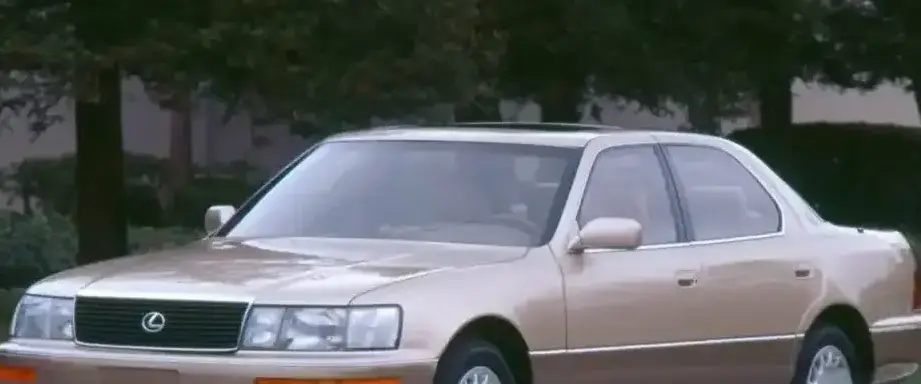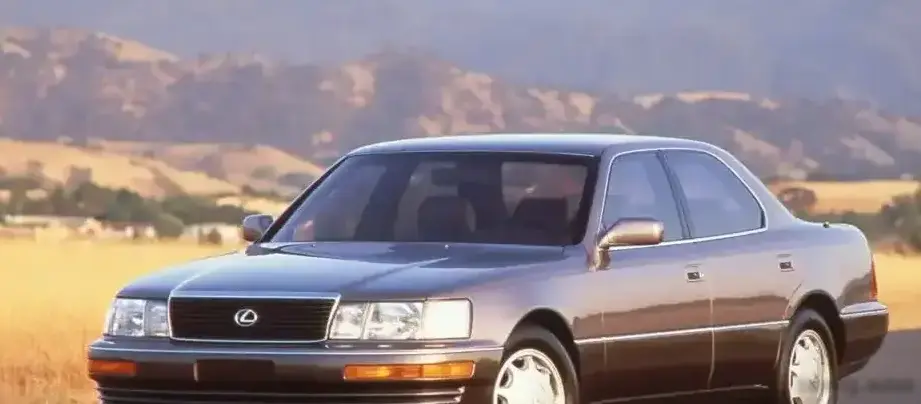
The Lexus LS 400, launched in 1989, represented Toyota’s ambitious entry into the luxury car market, directly challenging established German brands. The second generation, produced from 1994 to 2000 (model years 1995-2000), refined the original’s formula, focusing on enhanced refinement, performance, and technology. The 1994-1997 LS 400, specifically equipped with the 4.0-liter 1UZ-FE V8 engine and a four-speed automatic transmission, occupied the core of the LS lineup, offering a balance of power, luxury, and reliability. This variant was the most commonly purchased LS 400 during this period, serving as the benchmark for the model range.
Technical Specifications
| Brand | Lexus |
| Model | LS |
| Generation | LS II |
| Type (Engine) | 400 V8 (264 Hp) Automatic |
| Start of production | 1994 |
| End of production | 1997 |
| Powertrain Architecture | Internal Combustion engine |
| Body type | Sedan |
| Seats | 5 |
| Doors | 4 |
| Fuel consumption (urban) | 12.4 l/100 km (19 US mpg, 22.8 UK mpg) |
| Fuel consumption (extra urban) | 9.4 l/100 km (25 US mpg, 30.1 UK mpg) |
| Fuel consumption (combined) | 10.7 l/100 km (22 US mpg, 26.4 UK mpg) |
| Fuel Type | Petrol (Gasoline) |
| Acceleration 0 – 100 km/h | 7.7 sec |
| Acceleration 0 – 62 mph | 7.7 sec |
| Acceleration 0 – 60 mph | 7.3 sec |
| Maximum speed | 241 km/h (149.75 mph) |
| Weight-to-power ratio | 6.4 kg/Hp, 156.2 Hp/tonne |
| Weight-to-torque ratio | 4.6 kg/Nm, 216.6 Nm/tonne |
| Power | 264 Hp @ 5300 rpm |
| Power per litre | 66.5 Hp/l |
| Torque | 366 Nm @ 4500 rpm (269.95 lb.-ft. @ 4500 rpm) |
| Engine layout | Front, Longitudinal |
| Engine Model/Code | 1UZ-FE |
| Engine displacement | 3969 cm3 (242.2 cu. in.) |
| Number of cylinders | 8 |
| Engine configuration | V-engine |
| Cylinder Bore | 87.5 mm (3.44 in.) |
| Piston Stroke | 82.5 mm (3.25 in.) |
| Compression ratio | 10.4:1 |
| Number of valves per cylinder | 4 |
| Fuel injection system | Multi-port manifold injection |
| Engine aspiration | Naturally aspirated engine |
| Valvetrain | DOHC |
| Engine oil capacity | 5.1 l (5.39 US qt | 4.49 UK qt) |
| Coolant | 11 l (11.62 US qt | 9.68 UK qt) |
| Kerb Weight | 1690 kg (3725.81 lbs.) |
| Trunk (boot) space – minimum | 463 l (16.35 cu. ft.) |
| Fuel tank capacity | 85 l (22.45 US gal | 18.7 UK gal) |
| Length | 4995 mm (196.65 in.) |
| Width | 1830 mm (72.05 in.) |
| Height | 1440 mm (56.69 in.) |
| Wheelbase | 2850 mm (112.2 in.) |
| Front track | 1575 mm (62.01 in.) |
| Rear (Back) track | 1575 mm (62.01 in.) |
| Ride height (ground clearance) | 140 mm (5.51 in.) |
| Drag coefficient (Cd) | 0.3 |
| Minimum turning circle (turning diameter) | 11.4 m (37.4 ft.) |
| Drivetrain Architecture | The Internal combustion engine (ICE) drives the rear wheels of the vehicle. |
| Drive wheel | Rear wheel drive |
| Number of gears and type of gearbox | 4 gears, automatic transmission |
| Front suspension | Double wishbone |
| Rear suspension | Double wishbone |
| Front brakes | Ventilated discs |
| Rear brakes | Disc |
| Assisting systems | ABS (Anti-lock braking system) |
| Steering type | Steering rack and pinion |
| Power steering | Hydraulic Steering |
| Tires size | 225/60 R16 |
| Wheel rims size | 7J x 16 |
Powertrain & Engine Architecture
The heart of the 1994-1997 LS 400 was the 1UZ-FE, a 3.969-liter (242.2 cubic inch) naturally aspirated V8 engine. This engine was notable for its exceptionally smooth operation and durability. It featured a cast-iron block with an aluminum cylinder head, employing dual overhead camshafts (DOHC) and four valves per cylinder. The 1UZ-FE utilized a multi-port fuel injection system, delivering precise fuel metering for optimal combustion. The engine produced 264 horsepower at 5300 rpm and 366 lb-ft of torque at 4500 rpm. Paired with the 1UZ-FE was a four-speed automatic transmission, designed for smooth and refined shifts. This transmission was electronically controlled, adapting to driving conditions for optimal performance and efficiency. The transmission’s gear ratios were tuned for a balance of acceleration and highway cruising, prioritizing comfort over outright sportiness.
Driving Characteristics
The LS 400 1.8L Automatic offered a distinctly comfortable and refined driving experience. Acceleration was brisk, with a 0-60 mph time of around 7.3 seconds, respectable for a full-size luxury sedan of the era. However, it wasn’t designed for aggressive driving. The automatic transmission prioritized smooth shifts and relaxed cruising, sometimes feeling slightly hesitant during quick overtaking maneuvers compared to the available five-speed manual transmission. The emphasis was on providing a serene and isolated cabin experience, minimizing noise, vibration, and harshness. The rear-wheel-drive configuration contributed to balanced handling, although the car’s weight limited its agility in corners.
Equipment & Trim Levels
The 1994-1997 LS 400 came standard with a comprehensive list of luxury features. These included leather upholstery, power-adjustable front seats with memory function, a premium sound system, automatic climate control, and power windows, locks, and mirrors. Wood trim adorned the interior, enhancing the sense of luxury. Optional extras included a navigation system (a relatively new feature at the time), a rear-seat entertainment system, and upgraded leather options. The LS 400 was positioned as a fully equipped luxury vehicle, with few compromises in terms of comfort and convenience.
Chassis & Braking
The LS 400 featured a robust chassis with an independent double wishbone suspension at both the front and rear. This suspension design provided a comfortable ride and good handling characteristics. The car was equipped with ventilated disc brakes at all four corners, providing ample stopping power. An Anti-lock Braking System (ABS) was standard, enhancing safety and control during emergency braking situations. The steering was a rack-and-pinion system with hydraulic power assistance, offering precise and responsive steering feel. The LS 400’s relatively heavy weight (approximately 3,726 lbs) necessitated a strong braking system and a well-tuned suspension to maintain stability and control.
Market Reception & Comparison
The LS 400 was widely praised by automotive critics for its refinement, build quality, and reliability. The 1.8L Automatic variant was particularly well-received for its ease of use and comfortable driving experience. Compared to its European rivals, such as the Mercedes-Benz S-Class and BMW 7 Series, the LS 400 offered a compelling value proposition, providing similar levels of luxury and performance at a lower price point. Fuel economy was average for a V8-powered luxury sedan of the time, with combined fuel consumption around 22 mpg. Reliability was a key strength of the LS 400, with many owners reporting trouble-free ownership experiences even after many years and high mileage.
Legacy
The 1994-1997 Lexus LS 400, particularly the 4.0-liter V8 Automatic variant, has earned a reputation as a remarkably durable and reliable luxury car. These vehicles are still found on the road today, often with high mileage and minimal mechanical issues. The 1UZ-FE engine is renowned for its longevity, and the four-speed automatic transmission is generally considered to be robust and dependable. In the used car market, these LS 400s are sought after by enthusiasts who appreciate their classic luxury, smooth ride, and legendary reliability. They represent a significant milestone in Lexus’s history, establishing the brand as a serious contender in the luxury car segment.