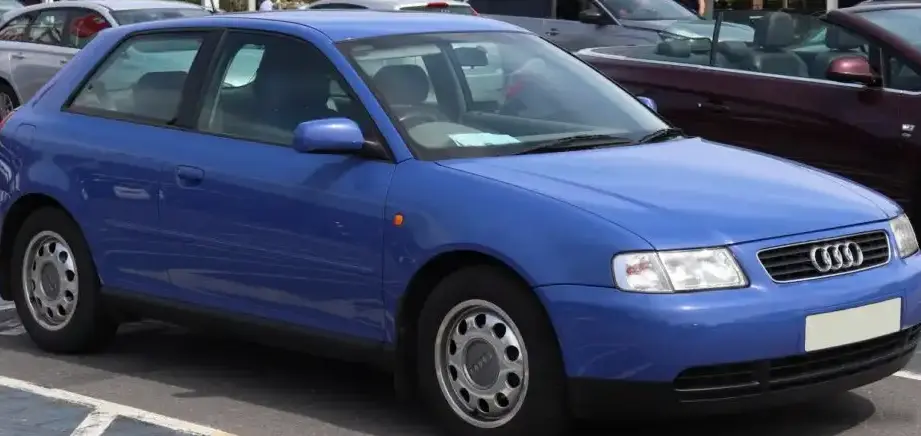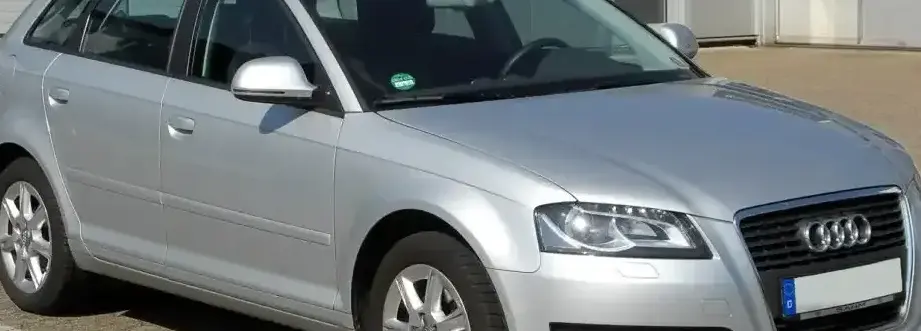
The Audi A3 Sportback (8PA, facelift) 1.6 TDI with 105 horsepower and a Diesel Particulate Filter (DPF) equipped with a Start/Stop system, was a key variant in Audi’s compact hatchback lineup from 2009 to 2012. Positioned as an entry-level offering within the 8PA generation A3 Sportback range, it aimed to provide a balance of fuel efficiency, practicality, and Audi’s signature refinement. This model played a significant role in the European market, where demand for economical diesel hatchbacks was high, and represented Audi’s commitment to reducing emissions through technologies like the DPF and Start/Stop system.
Technical Specifications
| Brand | Audi |
| Model | A3 |
| Generation | A3 Sportback (8PA, facelift 2008) |
| Type (Engine) | 1.6 TDI (105 Hp) DPF start/stop |
| Start of production | 2009 |
| End of production | 2012 |
| Powertrain Architecture | Internal Combustion engine |
| Body type | Hatchback |
| Seats | 5 |
| Doors | 5 |
| Fuel consumption (urban) | 5.1 l/100 km (46.1 US mpg, 55.4 UK mpg, 19.6 km/l) |
| Fuel consumption (extra urban) | 3.8 l/100 km (61.9 US mpg, 74.3 UK mpg, 26.3 km/l) |
| Fuel consumption (combined) | 4.2 l/100 km (56 US mpg, 67.3 UK mpg, 23.8 km/l) |
| CO2 emissions | 112 g/km |
| Fuel Type | Diesel |
| Acceleration 0 – 100 km/h | 11.7 sec |
| Acceleration 0 – 62 mph | 11.7 sec |
| Acceleration 0 – 60 mph | 11.1 sec |
| Maximum speed | 194 km/h (120.55 mph) |
| Emission standard | Euro 5 |
| Weight-to-power ratio | 12.6 kg/Hp, 79.5 Hp/tonne |
| Weight-to-torque ratio | 5.3 kg/Nm, 189.4 Nm/tonne |
| Power | 105 Hp @ 4200 rpm |
| Power per litre | 65.7 Hp/l |
| Torque | 250 Nm @ 1500-2500 rpm (184.39 lb.-ft. @ 1500-2500 rpm) |
| Engine layout | Front, Transverse |
| Engine Model/Code | CAYC |
| Engine displacement | 1598 cm3 (97.52 cu. in.) |
| Number of cylinders | 4 |
| Engine configuration | Inline |
| Cylinder Bore | 79.5 mm (3.13 in.) |
| Piston Stroke | 80.5 mm (3.17 in.) |
| Compression ratio | 16.5:1 |
| Number of valves per cylinder | 4 |
| Fuel injection system | Diesel Commonrail |
| Engine aspiration | Turbocharger, Intercooler |
| Valvetrain | DOHC |
| Engine oil capacity | 4.3 l (4.54 US qt | 3.78 UK qt) |
| Coolant | 8 l (8.45 US qt | 7.04 UK qt) |
| Kerb Weight | 1320 kg (2910.1 lbs.) |
| Max. weight | 1880 kg (4144.69 lbs.) |
| Max load | 560 kg (1234.59 lbs.) |
| Trunk (boot) space – minimum | 552 l (19.49 cu. ft.) |
| Trunk (boot) space – maximum | 1104 l (38.99 cu. ft.) |
| Fuel tank capacity | 55 l (14.53 US gal | 12.1 UK gal) |
| Length | 4292 mm (168.98 in.) |
| Width | 1765 mm (69.49 in.) |
| Height | 1423 mm (56.02 in.) |
| Wheelbase | 2578 mm (101.5 in.) |
| Front track | 1534 mm (60.39 in.) |
| Rear (Back) track | 1507 mm (59.33 in.) |
| Ride height (ground clearance) | 110 mm (4.33 in.) |
| Drag coefficient (Cd) | 0.31 |
| Minimum turning circle (turning diameter) | 10.7 m (35.1 ft.) |
| Drivetrain Architecture | The Internal combustion engine (ICE) drives the front wheels of the vehicle. |
| Drive wheel | Front wheel drive |
| Number of gears and type of gearbox | 5 gears, manual transmission |
| Front suspension | Spring Strut |
| Rear suspension | Transverse stabilizer |
| Front brakes | Ventilated discs |
| Rear brakes | Disc |
| Assisting systems | ABS (Anti-lock braking system) |
| Steering type | Steering rack and pinion |
| Tires size | 205/55 R16 |
| Wheel rims size | 6.5J x 16 |
INTRODUCTION
The Audi A3 Sportback (8PA) received a significant facelift in 2008, bringing with it revised styling, updated technology, and a refined engine lineup. The 1.6 TDI 105 hp variant, introduced in 2009, was a direct response to growing demand for fuel-efficient diesel options. This model sat at the entry point of the A3 Sportback range, offering a more affordable alternative to the more powerful petrol and diesel engines available. It was primarily marketed towards buyers seeking a practical, economical, and stylish hatchback for daily commuting and urban driving. The 8PA A3 Sportback competed directly with rivals like the Volkswagen Golf, Ford Focus, and Opel/Vauxhall Astra.
Powertrain & Engine Architecture
The heart of this A3 Sportback is the CAYC engine code, a 1.6-liter inline-four cylinder diesel engine. This engine utilizes a common rail direct injection system, delivering fuel directly into the combustion chamber at extremely high pressure for improved efficiency and reduced emissions. The engine features a turbocharger with an intercooler, which forces more air into the cylinders, boosting power output. The valvetrain employs a dual overhead camshaft (DOHC) design with four valves per cylinder, optimizing gas flow for enhanced performance. The 105 horsepower and 250 Nm (184 lb-ft) of torque are respectable figures for a 1.6-liter diesel, providing adequate performance for everyday driving. The engine is paired with a five-speed manual transmission, chosen for its simplicity and contribution to fuel economy. While an automatic transmission was available on other A3 variants, it wasn’t offered with this specific 1.6 TDI engine.
Driving Characteristics
The 1.6 TDI 105 hp A3 Sportback delivers a driving experience focused on efficiency and usability rather than outright performance. Acceleration from 0-60 mph takes around 11.1 seconds, and the top speed is 194 km/h (120.55 mph). The engine provides a usable amount of torque from low RPMs, making it suitable for navigating city streets and overtaking on the highway. However, it does require downshifting to maintain momentum when climbing hills or carrying a full load. Compared to the more powerful 2.0 TDI variants, the 1.6 TDI feels noticeably slower, but it offers a smoother and more refined driving experience. The five-speed manual transmission is precise and easy to use, and the gear ratios are well-matched to the engine’s power delivery.
Equipment & Trim Levels
The 1.6 TDI 105 hp A3 Sportback typically came equipped with a reasonable level of standard features. These included air conditioning, power windows, central locking, an integrated audio system, and alloy wheels. Safety features such as ABS, electronic stability control, and multiple airbags were also standard. Higher trim levels offered options like climate control, a multi-function steering wheel, parking sensors, and upgraded upholstery. Interior materials were generally of good quality, reflecting Audi’s reputation for build quality. The standard upholstery was cloth, but leather options were available at an extra cost. The dashboard layout was clean and functional, with easy-to-read gauges and intuitive controls.
Chassis & Braking
The A3 Sportback’s chassis features a MacPherson strut front suspension and a multi-link rear suspension, providing a comfortable and controlled ride. The suspension setup is tuned for a balance between comfort and handling, offering a good compromise for everyday driving. The front brakes are ventilated discs, providing ample stopping power, while the rear brakes are solid discs. ABS (Anti-lock Braking System) is standard, enhancing safety during emergency braking situations. The steering is precise and responsive, providing good feedback to the driver. The 1.6 TDI variant, being one of the lighter A3 models, benefits from a slightly more agile feel compared to its heavier counterparts.
Market Reception & Comparison
The 1.6 TDI 105 hp A3 Sportback was generally well-received by automotive critics, who praised its fuel efficiency, comfortable ride, and refined interior. However, some critics noted that the engine lacked the punch of the more powerful options. Compared to the 2.0 TDI variants, the 1.6 TDI offered significantly better fuel economy, but at the expense of performance. The 1.6 TDI also proved to be more reliable than some of the more complex engine options, with fewer reported issues. Its lower price point made it an attractive option for budget-conscious buyers.
Legacy
The 1.6 TDI CAYC engine, while not known for being a powerhouse, has proven to be a relatively reliable unit when properly maintained. Common issues include DPF clogging (particularly with frequent short trips) and potential problems with the fuel injectors. However, these issues are generally manageable with regular servicing and preventative maintenance. In the used car market, the 1.6 TDI A3 Sportback remains a popular choice for buyers seeking an economical and practical hatchback. Its affordability, fuel efficiency, and Audi badge appeal continue to make it a compelling option, even years after production ended. The model represents a key step in Audi’s efforts to offer more fuel-efficient and environmentally friendly vehicles.