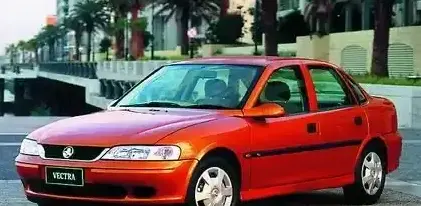
The Holden Vectra (B) 2.5 i V6 24V, produced between 1999 and 2000, represented the top-of-the-line performance offering within the Vectra B range sold in Australia and New Zealand. Positioned as the flagship model, it aimed to provide a more refined and powerful alternative to the more common four-cylinder variants. The Vectra B, built on the GM260 platform (internally known as the 1HX0/A3 platform), was Holden’s entry into the mid-size family car segment, competing with vehicles like the Ford Mondeo and Toyota Camry. This particular V6 variant was relatively short-lived, discontinued as Holden rationalized its lineup.
Technical Specifications
| Brand | Holden |
| Model | Vectra |
| Generation | Vectra (B) |
| Type (Engine) | 2.5 i V6 24V (170 Hp) |
| Start of production | 1999 |
| End of production | 2000 |
| Powertrain Architecture | Internal Combustion engine |
| Body type | Sedan |
| Seats | 5 |
| Doors | 4 |
| Fuel consumption (combined) | 8.5 l/100 km |
| Fuel consumption (US mpg) | 27.7 US mpg |
| Fuel consumption (UK mpg) | 33.2 UK mpg |
| Fuel consumption (km/l) | 11.8 km/l |
| Fuel Type | Petrol (Gasoline) |
| Acceleration 0 – 100 km/h | 8.8 sec |
| Acceleration 0 – 62 mph | 8.8 sec |
| Acceleration 0 – 60 mph | 8.4 sec |
| Maximum speed | 230 km/h (142.92 mph) |
| Weight-to-power ratio | 8.1 kg/Hp, 124.1 Hp/tonne |
| Weight-to-torque ratio | 6 kg/Nm, 167.9 Nm/tonne |
| Power | 170 Hp @ 5800 rpm |
| Power per litre | 68.1 Hp/l |
| Torque | 230 Nm @ 3200 rpm (169.64 lb.-ft. @ 3200 rpm) |
| Engine layout | Front, Transverse |
| Engine displacement | 2498 cm3 (152.44 cu. in.) |
| Number of cylinders | 6 |
| Engine configuration | V-engine |
| Number of valves per cylinder | 4 |
| Fuel injection system | Multi-port manifold injection |
| Engine aspiration | Naturally aspirated engine |
| Valvetrain | DOHC |
| Kerb Weight | 1370 kg (3020.33 lbs) |
| Trunk (boot) space – minimum | 500 l (17.66 cu. ft.) |
| Fuel tank capacity | 60 l (15.85 US gal | 13.2 UK gal) |
| Length | 4477 mm (176.26 in) |
| Width | 1707 mm (67.2 in) |
| Height | 1428 mm (56.22 in) |
| Wheelbase | 2640 mm (103.94 in) |
| Front track | 1484 mm (58.43 in) |
| Rear (Back) track | 1470 mm (57.87 in) |
| Drivetrain Architecture | The Internal combustion engine (ICE) drives the front wheels of the vehicle. |
| Drive wheel | Front wheel drive |
| Number of gears and type of gearbox | 5 gears, manual transmission |
| Front suspension | Coil spring |
| Rear suspension | Coil spring |
| Front brakes | Ventilated discs |
| Rear brakes | Disc |
| Assisting systems | ABS (Anti-lock braking system) |
| Steering type | Steering rack and pinion |
| Power steering | Hydraulic Steering |
| Tires size | 195/65 R15 V |
Powertrain & Engine Architecture
The heart of the Vectra 2.5 i V6 was the 2.5-liter (2498 cc) naturally aspirated V6 engine. This engine, derived from Holden’s Family II engine architecture, featured a 60-degree V-angle and a dual overhead camshaft (DOHC) design with four valves per cylinder. The engine utilized multi-port fuel injection to deliver fuel directly into the intake ports, optimizing combustion efficiency. The engine code is not widely documented, but it is a variant of the Holden V6 family. The engine produced 170 horsepower at 5800 rpm and 230 Nm (169.64 lb-ft) of torque at 3200 rpm. The engine was paired exclusively with a five-speed manual transmission in the Australian market, offering a more engaging driving experience than the automatic transmissions available in some other regions.
Driving Characteristics
The 2.5-liter V6 significantly altered the driving experience compared to the base four-cylinder Vectra models. The increased power and torque provided noticeably quicker acceleration – 0-60 mph in approximately 8.4 seconds – and more effortless highway cruising. The five-speed manual transmission allowed drivers to fully exploit the engine’s powerband. While not a sports car, the V6 Vectra offered a good balance of performance and comfort. The front-wheel-drive configuration, however, could exhibit some torque steer under hard acceleration. The gear ratios were tuned for a blend of responsiveness and fuel efficiency, with a relatively tall fifth gear for relaxed highway driving.
Equipment & Trim Levels
The 2.5 i V6 variant was generally well-equipped, reflecting its position as the premium trim level. Standard features typically included air conditioning, power windows and mirrors, central locking, an upgraded stereo system, and alloy wheels. Interior upholstery was typically cloth, though leather options were sometimes available. The dashboard layout was consistent with other Vectra B models, featuring a straightforward and functional design. Optional extras could include a sunroof, upgraded sound system, and side airbags.
Chassis & Braking
The Vectra B utilized a MacPherson strut front suspension and a multi-link rear suspension, providing a comfortable ride and reasonably controlled handling. The V6 model benefited from slightly stiffer suspension components compared to the base models to manage the increased weight and power. Braking duties were handled by ventilated disc brakes at the front and solid disc brakes at the rear. Anti-lock Braking System (ABS) was standard, enhancing safety and control during emergency braking situations. The steering was rack and pinion with hydraulic power assistance, providing a responsive and precise feel.
Market Reception & Comparison
The Holden Vectra 2.5 i V6 was generally well-received by Australian automotive critics. It was praised for its smooth and powerful engine, comfortable ride, and relatively spacious interior. However, some reviewers noted that the front-wheel-drive configuration limited its handling potential compared to rear-wheel-drive competitors. Compared to the four-cylinder Vectra models, the V6 offered a significant performance upgrade, but at a higher purchase price and with slightly increased fuel consumption. The V6 was also positioned as a more direct competitor to vehicles like the Ford Mondeo V6, offering a similar level of performance and refinement.
Legacy
The Holden Vectra 2.5 i V6, while a relatively short-lived model, remains a sought-after variant among enthusiasts. The robust Holden V6 engine is known for its reliability, provided it is properly maintained. Today, well-maintained examples are becoming increasingly rare and are often valued for their combination of performance, comfort, and classic Australian motoring heritage. Common issues with these vehicles, as with many cars of this era, include age-related wear and tear on suspension components, potential for oil leaks, and the need for regular maintenance of the fuel injection system. The manual transmission version is particularly desirable due to its more engaging driving experience.