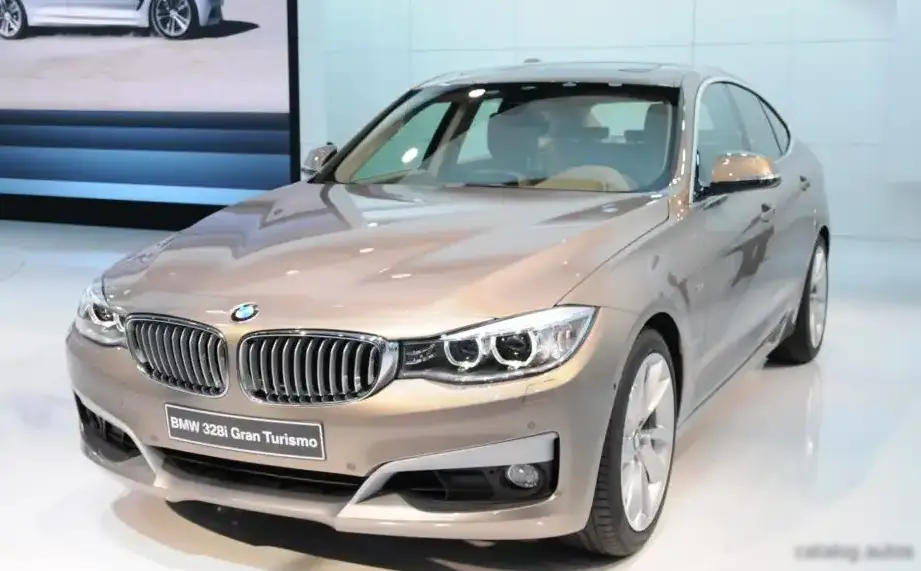
The BMW 3 Series Gran Turismo (F34) 318d, produced from 2013 to 2015, represented BMW’s attempt to blend the practicality of a hatchback with the styling of a coupe. Positioned as a more spacious and versatile alternative to the standard 3 Series sedan and wagon, the Gran Turismo aimed to appeal to buyers seeking a premium, comfortable, and relatively fuel-efficient vehicle. The 318d variant, powered by a 2.0-liter turbocharged diesel engine producing 143 horsepower, served as the entry-level offering in the Gran Turismo lineup, prioritizing economy and refinement over outright performance. It was a key model for BMW in the European market, where diesel engines held significant popularity, and offered a unique proposition within the premium compact executive class.
Technical Specifications
| Brand | BMW |
| Model | 3 Series |
| Generation | 3 Series Gran Turismo (F34) |
| Type (Engine) | 318d (143 Hp) |
| Start of production | 2013 |
| End of production | 2015 |
| Powertrain Architecture | Internal Combustion engine |
| Body type | Grand Tourer |
| Seats | 5 |
| Doors | 5 |
| Fuel consumption (urban) | 5.5 l/100 km (42.8 US mpg, 51.4 UK mpg, 18.2 km/l) |
| Fuel consumption (extra urban) | 4 l/100 km (58.8 US mpg, 70.6 UK mpg, 25 km/l) |
| Fuel consumption (combined) | 4.5 l/100 km (52.3 US mpg, 62.8 UK mpg, 22.2 km/l) |
| CO2 emissions | 119 g/km |
| Fuel Type | Diesel |
| Acceleration 0 – 100 km/h | 9.7 sec |
| Acceleration 0 – 62 mph | 9.7 sec |
| Acceleration 0 – 60 mph | 9.2 sec |
| Maximum speed | 210 km/h (130.49 mph) |
| Emission standard | Euro 5 |
| Weight-to-power ratio | 10.8 kg/Hp, 92.9 Hp/tonne |
| Weight-to-torque ratio | 4.8 kg/Nm, 207.8 Nm/tonne |
| Power | 143 Hp @ 4000 rpm |
| Power per litre | 71.7 Hp/l |
| Torque | 320 Nm @ 1750-2500 rpm (236.02 lb.-ft. @ 1750-2500 rpm) |
| Engine layout | Front, Longitudinal |
| Engine Model/Code | N47D20C |
| Engine displacement | 1995 cm3 (121.74 cu. in.) |
| Number of cylinders | 4 |
| Engine configuration | Inline |
| Cylinder Bore | 84 mm (3.31 in.) |
| Piston Stroke | 90 mm (3.54 in.) |
| Compression ratio | 16.5:1 |
| Number of valves per cylinder | 4 |
| Fuel injection system | Diesel Commonrail |
| Engine aspiration | Twin-power turbo, Intercooler |
| Engine oil capacity | 5.2 l (5.49 US qt | 4.58 UK qt) |
| Coolant | 7 l (7.4 US qt | 6.16 UK qt) |
| Kerb Weight | 1540 kg (3395.12 lbs.) |
| Max. weight | 2110 kg (4651.75 lbs.) |
| Max load | 570 kg (1256.63 lbs.) |
| Trunk (boot) space – minimum | 520 l (18.36 cu. ft.) |
| Trunk (boot) space – maximum | 1600 l (56.5 cu. ft.) |
| Fuel tank capacity | 57 l (15.06 US gal | 12.54 UK gal) |
| Max. roof load | 75 kg (165.35 lbs.) |
| Permitted trailer load with brakes (12%) | 1600 kg (3527.4 lbs.) |
| Permitted trailer load without brakes | 745 kg (1642.44 lbs.) |
| Permitted towbar download | 75 kg (165.35 lbs.) |
| Length | 4824 mm (189.92 in.) |
| Width | 1828 mm (71.97 in.) |
| Height | 1508 mm (59.37 in.) |
| Wheelbase | 2920 mm (114.96 in.) |
| Front track | 1541 mm (60.67 in.) |
| Rear (Back) track | 1586 mm (62.44 in.) |
| Ride height (ground clearance) | 165 mm (6.5 in.) |
| Drag coefficient (Cd) | 0.28 |
| Minimum turning circle (turning diameter) | 11.8 m (38.71 ft.) |
| Drivetrain Architecture | The Internal combustion engine (ICE) drives the rear wheels of the vehicle. |
| Drive wheel | Rear wheel drive |
| Number of gears and type of gearbox | 6 gears, manual transmission |
| Front suspension | Independent coil spring |
| Rear suspension | Independent multi-link suspension |
| Front brakes | Ventilated discs |
| Rear brakes | Ventilated discs |
| Assisting systems | ABS (Anti-lock braking system) |
| Steering type | Steering rack and pinion |
| Power steering | Electric Steering |
| Tires size | 225/55 R17 97V |
| Wheel rims size | 8 J x 17 |
Powertrain & Engine Architecture
The heart of the 318d Gran Turismo is the N47D20C, a 2.0-liter inline-four diesel engine. This engine was a mainstay in BMW’s lineup during the early 2010s, known for its efficiency and relatively smooth operation. It utilizes a second-generation common rail direct injection system, delivering fuel at pressures up to 1800 bar for optimized combustion. The N47D20C also features a single twin-scroll turbocharger with variable geometry turbine (VGT) technology, enhancing low-end torque and responsiveness. The engine’s aluminum alloy cylinder head incorporates four valves per cylinder, contributing to improved breathing and power output. The 318d was typically paired with a six-speed manual transmission, although an optional eight-speed automatic transmission was also available. The automatic transmission offered smoother shifts and enhanced fuel economy, but at the expense of some driver engagement.
Driving Characteristics
The 318d Gran Turismo, with its 143 horsepower and 320 Nm (236 lb-ft) of torque, offered a comfortable and relaxed driving experience. Acceleration from 0 to 60 mph took around 9.2 seconds, which was adequate for everyday driving but not particularly sporty. The engine’s peak torque was available from 1750-2500 rpm, providing ample pulling power for overtaking and highway cruising. Compared to the more powerful 320d or 335i Gran Turismo models, the 318d felt noticeably less energetic. However, its lighter weight and lower power output also contributed to better fuel economy. The Gran Turismo’s suspension, tuned for comfort, absorbed bumps and imperfections in the road well, providing a smooth and refined ride. The rear-wheel-drive configuration offered balanced handling, although it wasn’t as engaging as some of BMW’s more performance-oriented models.
Equipment & Trim Levels
The 318d Gran Turismo typically came equipped with a generous array of standard features, including automatic climate control, power windows and mirrors, a multi-function steering wheel, and a BMW Professional radio system. Upholstery was typically cloth, although leather options were available. Higher trim levels, such as Sport and Luxury, added features like sport seats, upgraded interior trim, and larger alloy wheels. Optional extras included a navigation system, a panoramic sunroof, adaptive headlights, and a premium sound system. The Gran Turismo’s spacious interior and large trunk (520-1600 liters) made it a practical choice for families and those who frequently transported luggage or cargo.
Chassis & Braking
The F34 Gran Turismo utilized BMW’s modular platform, sharing its underpinnings with the 3 Series sedan and wagon. The suspension consisted of independent coil springs at the front and an independent multi-link setup at the rear. The 318d typically featured ventilated disc brakes on all four wheels, providing adequate stopping power. Anti-lock braking system (ABS) and electronic stability control (ESC) were standard safety features. The Gran Turismo’s chassis was designed to prioritize comfort and stability, rather than outright sportiness. The steering was precise and well-weighted, providing a confident feel on the road.
Market Reception & Comparison
The 318d Gran Turismo received mixed reviews from automotive critics. While praised for its spacious interior, comfortable ride, and fuel efficiency, it was often criticized for its relatively modest performance and somewhat awkward styling. Compared to the 320d Gran Turismo, the 318d offered lower running costs but lacked the extra power and refinement. Against competitors like the Audi A5 Sportback and Volkswagen Passat CC, the Gran Turismo offered a more premium driving experience but was often more expensive. However, its unique blend of practicality and style appealed to a niche segment of buyers.
Legacy
The N47D20C engine, while generally reliable, has been known to experience issues with timing chain wear and fuel injector failures. Regular maintenance and the use of high-quality oil are crucial for ensuring its longevity. Today, the 318d Gran Turismo represents an affordable entry point into the BMW premium segment. Its fuel efficiency and spacious interior continue to make it a practical choice for those seeking a comfortable and versatile vehicle. While not a performance icon, the 318d Gran Turismo remains a distinctive and well-equipped vehicle that offers a unique blend of style, practicality, and efficiency.